What happened
Banco Filipino Savings and Mortgage Bank was founded in 1963 and controlled by the Aguirre family. It grew rapidly by offering high interest rates on deposits and lending heavily for home mortgages. By the early 1980s it was one of the largest savings banks in the country, with 89 branches and more than three million depositors.
In 1984, amid a severe economic and political crisis in the Philippines under the Marcos government, Banco Filipino faced a run on deposits. The central bank provided emergency advances and placed it under conservatorship. In January 1985 the central bank closed the bank and placed it under receivership, citing insolvency.
Banco Filipino’s owners fought the closure in court. In 1991, the Supreme Court ruled that the closure had been arbitrary and done with grave abuse of discretion, because the central bank had not properly established that the bank was insolvent. The court ordered the bank reopened. It resumed operations in 1994, under the supervision of the Bangko Sentral ng Pilipinas, which had replaced the old central bank.
Banco Filipino then sought compensation and assistance. It filed claims of about ₱18.8 billion for damages caused by the illegal closure, and asked the BSP for ₱25 billion of financial assistance under a rehabilitation plan. The BSP disputed both claims. In 2002, the BSP extended about ₱3.5 billion of emergency loans to the bank, of which ₱2.6 billion remained unpaid years later.
The bank’s finances did not recover. It reported net losses from 2002 onwards, averaging about ₱2 billion a year after 2007. Many of its loans were overdue for years. Investigators later alleged unsafe and unsound practices, including questionable expenses by directors and officers. The bank argued that its problems were caused by the BSP’s failure to provide the promised assistance.
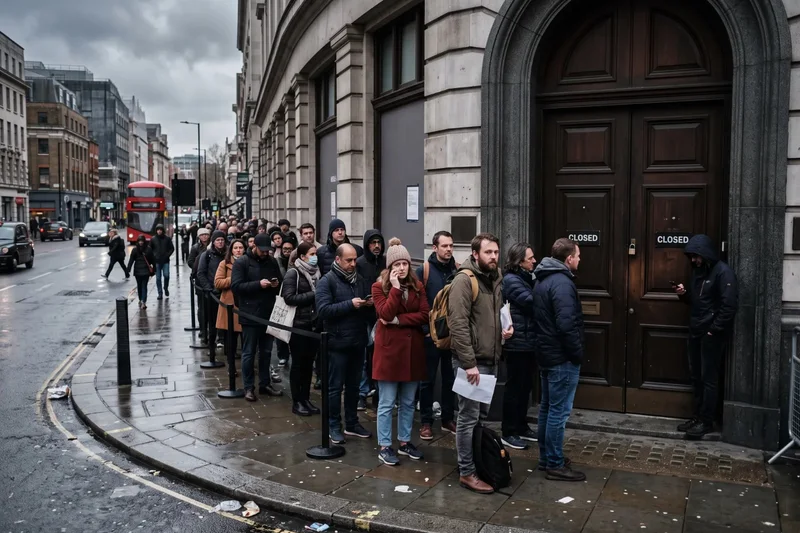
In March 2011, Banco Filipino failed to meet withdrawals at several branches, triggering panic among depositors. On 17 March 2011, the BSP’s Monetary Board ordered the bank closed again and placed it under the receivership of the Philippine Deposit Insurance Corporation. The BSP said the bank’s liabilities exceeded its assets by ₱8.4 billion and that it could not pay its depositors.
At the time of closure, Banco Filipino had about ₱15 billion of deposits from about 177,652 depositors. More than half of the depositors had balances below ₱5,000. Deposit insurance covered up to ₱500,000 per depositor. The PDIC began paying insured claims, starting with small depositors, and within five months had paid about ₱6.1 billion, covering about 80% of the estimated insured deposits.
Banco Filipino again challenged the closure in court. The Court of Appeals at one point ruled the closure illegal and ordered the BSP to reopen the bank and provide ₱25 billion of assistance, alarming bankers and economists. But in 2012 the appeals court reversed itself, upholding the closure. The Supreme Court later denied the bank’s petition for the ₱25 billion assistance. Liquidation proceeded.
The PDIC later filed charges against former officials for unsafe banking practices and estafa. Depositors with balances above the insurance limit faced long waits and uncertain recoveries from the liquidation of the bank’s assets.
The Banco Filipino case shows the difficulties of bank resolution. Closing a bank requires clear evidence and proper procedures, or courts may overturn the decision. But keeping a weak bank alive for years can increase losses for depositors, the deposit insurer and taxpayers. Regulators must balance the risk of acting too early against the cost of acting too late.
It also highlights the importance of deposit insurance in maintaining confidence. Most small depositors were protected, which helped prevent the closure from spreading panic to other banks.
For students, the case is a long-running example of regulatory forbearance, legal challenges to supervisory actions and the economics of bank failure.
The case also shows the moral hazard created by long legal battles. While the bank pursued claims against the regulator, it continued to operate with weak finances, and depositors continued to place money with it, sometimes attracted by its long history. The longer a weak bank remains open, the more likely it is that losses grow, and that the deposit insurer and uninsured depositors bear a larger share of the cost when it finally fails.
Banco Filipino’s story is often compared with other bank failures in which regulators were accused of acting too slowly. It reinforced the case for prompt corrective action, under which regulators must intervene when a bank’s capital falls below set thresholds, limiting the discretion that can lead to delay.
For depositors, the practical lesson is to understand deposit insurance limits and to spread large savings across banks, so that the failure of one bank does not put an entire nest egg at risk.
Key moments
Banco Filipino founded.
Central bank closes the bank.
Supreme Court rules the closure illegal.
Bank reopens under BSP supervision.
BSP orders second closure; PDIC receivership.
Court of Appeals upholds closure.
Sources: Inquirer; Philstar; Manila Bulletin.
The trade-offs at the heart of the case
Act early vs. act late
Regulators risked both error types.
Courts vs. regulators
Legal reviews reversed and upheld closures.
Depositors vs. owners
Who bears losses when banks fail?
For your seminar, paper or interview
- Q1
Why did the Supreme Court rule the 1985 closure illegal?
- Q2
Should the BSP have provided the ₱25 billion assistance?
- Q3
How did deposit insurance protect small depositors?
- Q4
Was the bank kept alive too long after reopening?
- Q5
What lessons does the case hold for bank resolution frameworks?
- Bank resolution
- Deposit insurance
- Regulatory forbearance
- Legal risk in supervision
How we would approach it
Simplifying Finance’s opinion, offered as a starting point for debate, not as fact or investment advice.
Banco Filipino suffered from both an improperly handled first closure and years of weak management after reopening. The second closure was justified, but delays increased losses. Clear legal powers and prompt corrective action are the best protection for depositors.
Prompt corrective action
Set automatic triggers for intervention.
Strengthen legal basis
Ensure closure decisions follow clear procedures.
Protect depositors
Keep deposit insurance funded and fast.
Hold insiders accountable
Pursue officers for unsafe practices.
What this plan gives up
Faster intervention may close banks that could have recovered.
The strongest counter-argument
Some argue that the BSP’s failure to provide promised assistance after 1994 caused the bank’s second failure.
Metrics to watch
- Bank closures
- Deposit insurance coverage
- Court challenges to BSP
- Non-performing loans in thrift banks
- PDIC recoveries
Propose your solution
Pick a discussion question and set out what you would do, why, and what it would cost. Strong, well-argued answers are reviewed and published below with your first name and programme.
Published solutions
Loading published solutions…
- Inquirer: PDIC files raps vs 8 Banco Filipino execs ↗
- Philstar: PDIC shells out P6.13B to pay BF depositors ↗
- Manila Bulletin: What’s happening to Banco Filipino ↗
- Philstar: CA reverses earlier decision favoring Banco Filipino ↗
Figures are as reported by the companies or cited outlets as of 22 November 2026. Check the source before quoting. Corrections: let us know through the solution form.