What happened
A buyer already inside a joint venture enjoys unusually good information about operating performance and maintenance. The same familiarity can encourage it to extrapolate recent margins. Full ownership can speed up expansion decisions and remove negotiation costs. It also removes a partner sharing the cost of an outage or an ill-timed investment. The board should value decision rights separately from merely doubling the share of existing earnings.
Electric arc furnace mills like North Star melt scrap steel using electricity rather than making iron from ore in a blast furnace. They are smaller, faster to start and stop, and usually cheaper to run per tonne, which helps them stay profitable when demand falls. Their profits depend mainly on the spread between the price of finished steel and the cost of scrap and power. When BlueScope bought Cargill’s half, it paid a multiple of past earnings, betting that the spread would stay healthy and that the mill could grow. Readers judging a similar deal should look at average earnings over a full steel cycle, not just one strong year.
North Star BlueScope Steel runs an electric arc furnace mini-mill in Delta, Ohio, that turns scrap into hot-rolled coil. It began operating in 1997 as a 50/50 joint venture between BlueScope, Australia’s largest steelmaker, and Cargill.
In October 2015 BlueScope agreed to buy Cargill’s 50% for US$720 million, taking full ownership. In August 2019 it announced a US$700 million expansion, adding a third electric arc furnace and a second caster to raise annual capacity by 850,000 tonnes. COVID-19 delayed the work, and BlueScope said costs were running about 10% above the original estimate.
The expansion was celebrated in May 2022, and the first prime coil was produced in June, followed by an 18-month ramp-up. BlueScope also bought scrap recycling businesses, including MetalX for about US$220 million, to supply the mill.
The case shows how investors judge a joint-venture buyout by the price paid relative to earnings, and how follow-on investment can raise returns at a well-placed plant.
Key moments
BlueScope announces purchase
Acquisition completes per accounts
Buyer records the business combination
BlueScope reported the expansion running about 10% above the US$700m estimate. It added 850,000 tonnes a year of hot-rolled coil capacity. Sources: BlueScope; Steel Market Update; AIST.
The trade-offs at the heart of the case
The second half is an investment at today’s price
Joint owners sometimes reason that an asset has always earned good returns for them, so buying the other half must be sensible. That confuses the historical cost of the first stake with the price now demanded for the second. Allocate the new purchase price only to the new cash rights and additional control it buys. If a planned expansion becomes feasible solely because the partner has gone, value that option after its construction cost and execution risk. Past returns on the original investment remain informative about operations, but cannot compensate for paying too much for the incremental interest. A US steel mill earning dollars can diversify the geographical sources of an Australian group’s earnings. It also changes exposure to US scrap markets, trade policy, local customers and currency translation. Debt raised in the same currency can provide a partial financing offset while increasing leverage. Show operating earnings in the local currency first and translate them separately. Otherwise a favourable exchange movement can look like better mill economics at exactly the moment the underlying metal spread is narrowing.
Testing the evidence
Test for a change using North Star output after sole ownership and comparable periods under the joint venture. The relevant evidence is the change in free cash per tonne at a normalised steel spread, measured on the same basis and at the same point in each cycle. Document exposure to scrap prices and planned maintenance outages. Report a range for the effect when the comparison is imperfect, and state which unobserved difference would be large enough to erase it. Use through-cycle cash estimates for the extra interest alone to reconstruct the decision as it looked at the time. Keep subsequent information in a separate column. Hindsight can establish what eventually occurred, but it cannot establish that a manager could have known it with reasonable confidence beforehand.
For your seminar, paper or interview
- Q1
What would you pay for management control if the steel spread reverted to its long-run level immediately?
- Q2
How would you use comparable periods under the joint venture to test changes in free cash per tonne at a normalised steel spread, while allowing for scrap prices and planned maintenance outages?
- Q3
Compare the recommended course with retaining the joint venture while negotiating specific expansion rights. Which commitment would you make first, and what result would cause you to change course?
- Buying out a joint venture
- Electric arc furnace economics
- Expansion returns
- Steel cycles
How we would approach it
Simplifying Finance’s opinion, offered as a starting point for debate, not as fact or investment advice.
Require a through-cycle spread model and an explicit maintenance plan before accepting the multiple. Value expansion separately after checking power, scrap availability and customer contracts. Compare the cash return on the acquired half with the alternative of leaving the joint venture in place and distributing surplus cash to BlueScope owners.
Take full control
Buy the partner’s half to capture all the cash flow and set strategy.
Expand at the low-cost site
Add a third furnace and second caster at an efficient mill.
Secure scrap supply
Buy scrap recyclers to lock in the mill’s main raw material.
What this plan gives up
Owning and expanding North Star gave BlueScope a highly profitable US mill, but it increased exposure to US steel prices, which swing sharply.
The strongest counter-argument
Negotiating expansion rights without buying Cargill’s stake could leave substantial capital available for other projects. It might also preserve a partner veto over crucial decisions. The control premium is strongest where the parties can identify a valuable expansion that continued joint ownership would delay and that sole ownership could finance without unacceptable exposure to metal prices. The quoted multiple used EBITDA, which excludes depreciation and says little about expenditure needed to keep a rolling mill running. A year with limited maintenance can show excellent cash conversion followed by a demanding outage the next year. Reconstruct the maintenance cycle over several years and include planned shutdowns when normalising earnings. Financing the second stake also adds a claim on the group’s cash. Value the return to the shareholder after funding and through-cycle maintenance, even when the initial acquisition presentation emphasises an earnings multiple. Ask how much the acquired half can distribute through the next major shutdown while still preserving the mill’s long-term productive capacity.
Metrics to watch
- Steel spread over scrap
- North Star earnings
Propose your solution
Pick a discussion question and set out what you would do, why, and what it would cost. Strong, well-argued answers are reviewed and published below with your first name and programme.
Published solutions
Loading published solutions…
- BlueScope · North Star acquisition terms ↗
- BlueScope · FY2016 half-year report and completion date ↗
- BlueScope: North Star facility expansion boosts US production ↗
- Steel Market Update: BlueScope cranking up North Star expansion ↗
- AIST: North Star BlueScope expansion to be completed in 2022 ↗
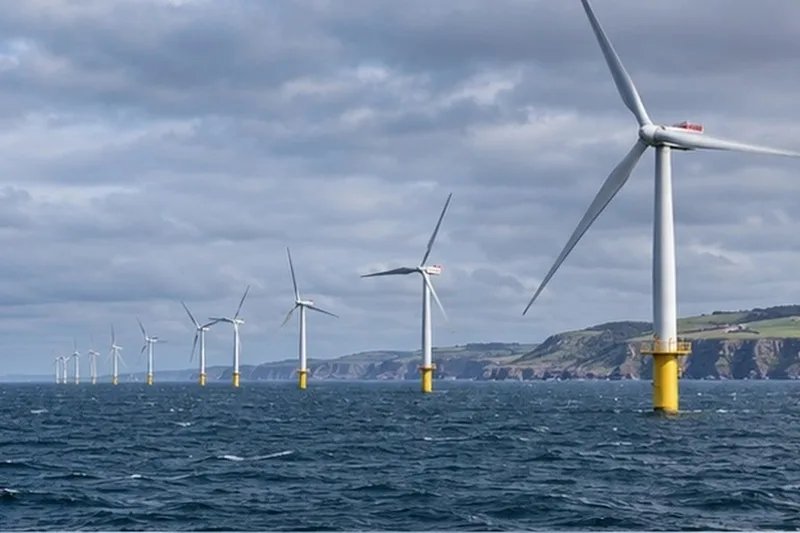
- Image: AI-generated editorial illustration for Simplifying Finance. Illustrative scene.
Figures are as reported by the companies or cited outlets as of 22 November 2026. Check the source before quoting. Corrections: let us know through the solution form.