What happened
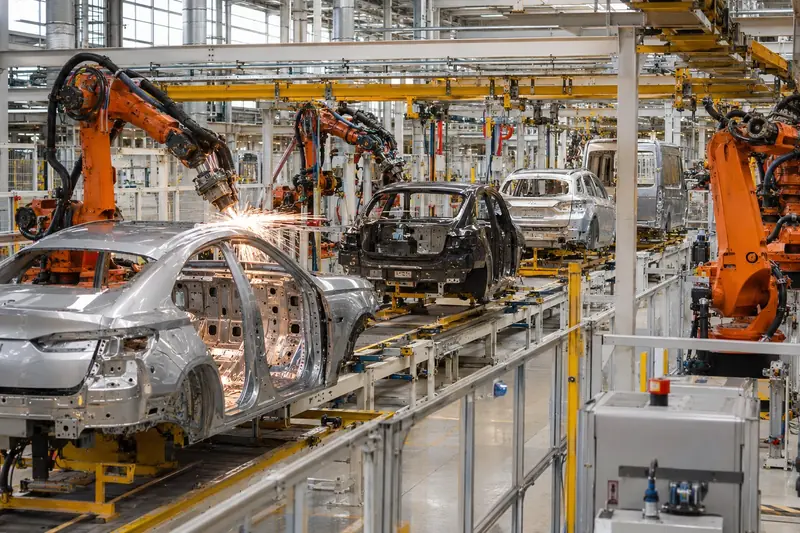
BYD makes its own batteries, chips and many components, which lowers costs and lets it price aggressively. It sells both pure electric and plug-in hybrid cars across every price segment.
China has around 150 car brands. As rivals like Geely and Leapmotor launched cheap models and BYD cut prices, margins shrank. The founder admitted its technology lead had narrowed.
BYD responded by expanding overseas — in Europe, Latin America and Southeast Asia — building factories in countries such as Hungary, Brazil and Thailand to avoid tariffs.
The case shows how vertical integration creates a cost advantage, and how overcapacity at home pushes Chinese manufacturers onto the world stage.
The lessonOwning the supply chain can create a lasting cost advantage — but in a crowded market, even the leader must find growth abroad.
Key moments
Wang Chuanfu founds BYD to make rechargeable batteries.
BYD enters car-making by buying a state-owned carmaker.
Warren Buffett’s Berkshire Hathaway invests.
BYD stops making petrol-only cars.
It overtakes Tesla in pure EV sales; domestic growth slows.
BYD targets 1.5–1.6 million overseas sales.
For your seminar, paper or interview
- Q1
How does vertical integration help BYD?
- Q2
Why did BYD’s domestic growth slow so sharply?
- Q3
How should Europe respond to cheaper Chinese EVs?
- Q4
Is BYD’s overseas expansion a sustainable strategy?
- Vertical integration
- Cost leadership
- International expansion
- Industry overcapacity
Propose your solution
Pick a discussion question and set out what you would do, why, and what it would cost. Strong, well-argued answers are reviewed and published below with your first name and programme.
Published solutions
Loading published solutions…
- Invezz: BYD sales growth slows in 2025 ↗
- MarketScreener/Reuters: weakest growth in five years ↗
- Asia Financial: record foreign sales ↗
- WRAL/CNN: The world has a new EV king ↗
Figures are as reported in the cited sources. Check the source before quoting. Corrections: let us know through the solution form.