What happened
Cencosud announced US$676 million in cash for a 67% stake in The Fresh Market and reported closing on 5 July 2022. It said it financed the acquisition with its own cash flows and a US$300 million twelve-month bank loan. The loan was one funding source for the acquisition. It was neither the price of the entire chain nor evidence that the target had agreed to upstream enough cash to repay it.
A premium fresh-food retailer must invest in chilled displays, store presentation and staff who can sell prepared food. Inventory spoils, and gross margin can improve or deteriorate sharply with markdown discipline. To forecast distributable cash, start with store operating earnings, then deduct maintenance, taxes, working capital needs and obligations to lenders. Minority owners also have economic claims, even though the parent controls the consolidated business.
Cencosud, controlled by the Paulmann family, is one of Latin America’s largest retailers, with supermarkets, home improvement stores, department stores and shopping centres in Chile, Argentina, Brazil, Peru and Colombia.
In May 2022 Cencosud agreed to acquire 67 percent of The Fresh Market, a premium supermarket chain based in Greensboro, North Carolina, from funds managed by Apollo Global Management.
The Fresh Market had 160 leased stores in 22 states. It reported revenue of about US$1.933 billion in 2021 and adjusted EBITDA of about US$196 million, a margin of about 10 percent.
Cencosud said the company’s total valuation was US$1.568 billion, equivalent to about 8.0 times 2021 adjusted EBITDA, and that it would invest US$676 million in cash for its stake.
The deal closed on 5 July 2022. Cencosud financed it with its own cash flows and a twelve-month bank loan of US$300 million, while The Fresh Market refinanced about US$597 million of its own debt for five years with Cencosud’s guarantee.
Cencosud later issued bonds and, according to La Tercera, acquired the remaining 33 percent, becoming the sole owner.
In its first year under Cencosud, The Fresh Market contributed adjusted EBITDA of about US$210 million, with a margin of about 10.4 percent.
Latin American retailers expanding into the United States are relatively rare, making this one of the region’s notable cross-border deals.
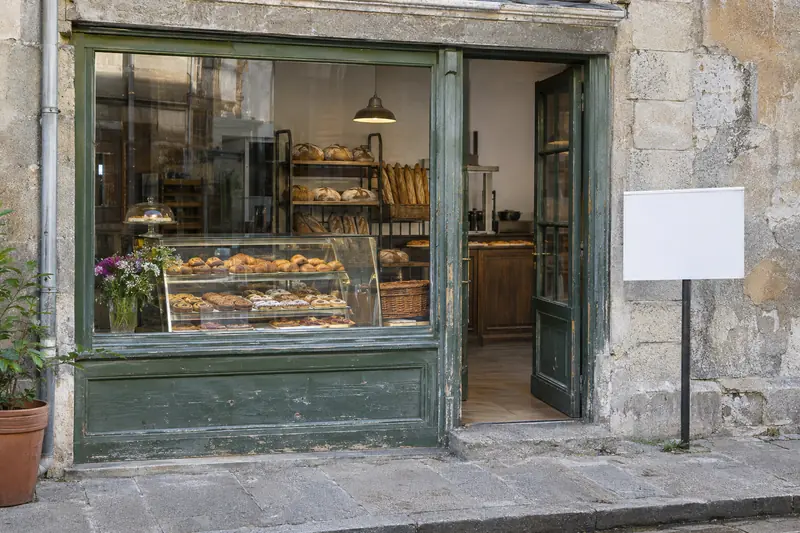
The Fresh Market focuses on fresh food, prepared meals and a premium shopping experience, which allows it to earn higher margins than many conventional supermarkets.
About 70 percent of its sales are perishable products, which require careful management of inventory and supply chains to limit waste.
Cencosud’s experience in supermarkets in several countries gave it knowledge to share, while The Fresh Market provided a new market with a stable currency and large consumer base.
Buying in US dollars also diversified Cencosud’s earnings away from more volatile Latin American currencies, especially the Argentine peso.
Financing with a short-term bank loan required later refinancing. Cencosud raised money through local and international bond issues, which extended the maturity of its debt.
Valuation multiples help compare deals. A price of eight times EBITDA is a standard way to judge whether a company was bought cheaply or expensively compared with similar deals.
For students, the case shows how a company can use acquisitions to enter new markets and how financing choices affect risk.
The Fresh Market has since opened new stores, with plans for further expansion across the United States.
Its contribution to Cencosud’s revenue and EBITDA is reported in the group’s quarterly results, allowing investors to track the acquisition’s performance.
Integration has focused on purchasing, technology and sharing best practices rather than changing the brand.
The deal remains Cencosud’s first and largest US investment.
Its results will shape whether the group makes further acquisitions outside Latin America.
So far, management has described the purchase as successful.
Analysts will judge the investment by long-term sales growth and returns on capital.
Those measures will be clearer after several years of ownership.
The case shows how Latin American companies can become international buyers rather than targets.
It also shows the importance of choosing a financially healthy target with a strong brand.
Cencosud’s willingness to pay a fair price for quality may prove to be the key to success.
The Fresh Market’s profitability gave Cencosud a stable source of dollar earnings.
That stability has value for a group with large exposure to Argentina.
Management has highlighted the US business in investor presentations as a growth engine.
Its expansion plan includes dozens of new stores over several years.
Executing that plan will be the main test of the acquisition.
Store openings, sales per square metre and margins will show whether it succeeds.
Key moments
Cencosud announces agreed cash terms for 67% of the business.
The acquisition closes and Cencosud identifies the funding sources.
Source: Cencosud (2022).
The trade-offs at the heart of the case
Our assessment
I would match the currency and term of committed refinancing to a conservative distribution case. A favourable accounting contribution from a dollar subsidiary may be accompanied by a short-term cash strain at the Chilean parent. Assess the strategic value of a US platform separately from the ability to repay the bridge. An attractive acquisition with weak maturity planning can force an otherwise avoidable sale of assets or an expensive refinancing.
For your seminar, paper or interview
- Q1
Which cash flows are available to repay the parent’s twelve-month loan?
- Q2
How could less spoilage improve both earnings and working capital?
- Q3
What minimum refinancing commitment would make the transaction robust?
- Q4
How far before the projected low point must a funding commitment become unconditional?
- Q5
Which payment could be rescheduled without weakening the receipts expected later in the forecast?
- International expansion
- Bridge financing
- Valuation multiples
- Specialty retail
How we would approach it
Simplifying Finance’s opinion, offered as a starting point for debate, not as fact or investment advice.
We think Cencosud’s purchase of The Fresh Market gave it a foothold in the large US grocery market through a profitable premium chain. The price, about eight times EBITDA, was reasonable for the sector, but success depends on expanding stores without diluting the brand.
Refinance short-term debt
Replace the bridge loan with bonds.
Expand carefully
Open stores in proven regions.
Share expertise
Transfer best practices across markets.
What this plan gives up
International expansion diversifies risk but adds management complexity.
The strongest counter-argument
Some argue Cencosud should focus on its Latin American markets.
Metrics to watch
- Same-store sales
- EBITDA margin
Propose your solution
Pick a discussion question and set out what you would do, why, and what it would cost. Strong, well-argued answers are reviewed and published below with your first name and programme.
Published solutions
Loading published solutions…
- Cencosud · Announced price and company valuation ↗
- Cencosud · Closing date and acquisition financing ↗
- Cencosud • Acquires 67% of The Fresh Market Holdings ↗
- Cencosud • Completes acquisition of The Fresh Market ↗
- Supermarket News • Cencosud primes The Fresh Market for expansion ↗
- Photo: The interior of a Fresh Market store by Harrison Keely, CC BY 4.0 (cropped and resized) ↗
Figures are as reported by the companies or cited outlets as of 22 November 2026. Check the source before quoting. Corrections: let us know through the solution form.