What happened
The Goodman transaction cost $3.7 billion. Daikin later consolidated four US factories and other functions at its Texas Technology Park. Factory consolidation creates opportunities for common design and purchasing, but it also concentrates production. A lower unit manufacturing cost can be offset by longer delivery times or shortages at distributors during a sudden period of hot weather.
The installer is financing a reputation as well as buying equipment. A technician who returns twice to the same house may lose future referrals even if the manufacturer eventually pays the warranty claim. This puts a premium on reliable installation instructions, parts availability and rapid technical support. It also explains why a technically superior product may fail in a region with few trained technicians. A successful distribution acquisition can shorten that adoption process more effectively than another national advertising campaign.
A factory manager sees a different trade-off. Longer production runs lower changeover costs but can leave wholesalers with the wrong product sizes when temperatures shift quickly. A useful review links factory schedules to the waiting time on actual replacement jobs. Measure a missing unit during the hottest week separately from surplus inventory at the end of the season. Equal book values on a warehouse report can represent very different gains or losses to an installer.
The most revealing call may be with a technician who tried Goodman or Daikin equipment once and then returned to a competing brand. Identify what went wrong on that job, what the distributor did and what it cost the installer in lost time. The answer can direct investment toward a spare part, training or warranty process that national sales data would hide.
Students should ask how much of the price paid for that network.
The deal also tested Daikin’s ability to manage a large American business with its own culture. Goodman’s executives emphasised lean, low-cost manufacturing, while Daikin brought inverter and refrigerant technology. Executives said Daikin valued Goodman’s management team, and keeping that team in place was part of the integration plan.
For students, the case raises a basic strategic question: when is it cheaper to buy an existing distribution network than to build one? Daikin had tried to grow organically in the United States for years. Goodman’s network of independent dealers and installers, who recommend and fit equipment in homes, was an asset that would have taken decades to replicate. The price paid reflected that time saved.
Daikin signed the agreement on 29 August 2012 to buy Goodman Global from affiliates of the private equity firm Hellman & Friedman for $3.7 billion. Daikin had first planned the deal in early 2011 at a valuation of about $4 billion, but the March 2011 earthquake and tsunami in Japan delayed it. The company said it would fund the purchase with internal funds, bonds and bank loans, without issuing new shares.
The motive was market structure. North America is the world’s largest air-conditioning market, and most homes there use ducted central systems, a segment where Daikin had little presence despite years of trying to sell its ductless technology. Before the deal, the Americas provided less than a tenth of Daikin’s air-conditioning sales. Goodman brought a leading position in US residential ducted systems and, crucially, its distribution and installer network.
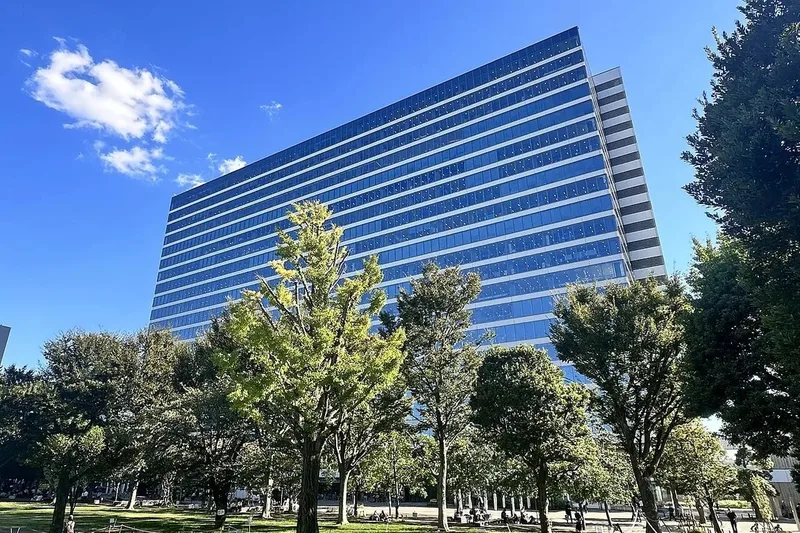
Analysts noted the deal would make Daikin the world’s largest maker of heating, ventilation and air-conditioning equipment. Daikin later consolidated Goodman’s operations at a large campus near Houston, and in 2022 Goodman was renamed Daikin Comfort Technologies North America.
Key moments
Daikin acquires Goodman and gains a larger position in US ducted residential systems.
A Texas campus brings together manufacturing, distribution and headquarters functions.
The US subsidiary adopts the Daikin Comfort Technologies North America name.
Daikin’s first plan was delayed by the March 2011 earthquake and tsunami. Sources: Wikipedia citing contemporary reports; Daikin release via Kyodo.
The trade-offs at the heart of the case
Factory geography
Longer production runs can lower factory cost and simultaneously increase the distance between a replacement unit and the home that urgently needs it.
Installer confidence
An unfamiliar product asks the installer to put a local reputation at risk. Manufacturer reimbursement may not compensate for an unhappy customer.
Brand continuity
A common corporate identity can reassure national partners while product-level recognition remains valuable to the technician recommending a model in a home.
For your seminar, paper or interview
- Q1
Which customer is Daikin really trying to persuade when a homeowner urgently needs a replacement system?
- Q2
What would make a large consolidated factory a disadvantage during a strong season?
- Q3
How much of the change in the exhibit comes from a shift in the mix, and what would you measure inside each category?
- Q4
From the perspective of a local HVAC installer, what evidence would most seriously challenge the recommendation in this case?
- Q5
Which of the three proposed metrics would you prioritise for Daikin Industries, and what could go wrong if management rewarded it in isolation?
- Build vs buy
- Distribution as a moat
- Lean manufacturing
- Market entry
How we would approach it
Simplifying Finance’s opinion, offered as a starting point for debate, not as fact or investment advice.
Start with the installer’s cost of a successful job, including training, return visits and parts availability. Pilot new equipment with distributors that can carry replacement components. Compare installation outcomes in similar service areas before spreading a new product format across the network.
Establish the baseline
Track serialised installations, seasonal temperatures, first-visit completion and warranty claims. Interview installers who stopped recommending the brand.
Test the proposed change
Give one distributor a focused parts range and technician training before expanding the product assortment it is expected to carry.
Set a condition for reconsidering
Shift investment from promotion to parts availability if installers keep returning to older systems because a routine repair takes too long.
What this plan gives up
Maintaining several product lines makes inventory and brand management more expensive.
The strongest counter-argument
A faster conversion to common components could improve availability and lower technicians’ training costs across all the brands.
Metrics to watch
- First-visit installation completion
- Critical spare parts in stock
- Contribution after warranty call-outs
- Share of US ducted residential market
- Installer and dealer network growth
Propose your solution
Pick a discussion question and set out what you would do, why, and what it would cost. Strong, well-argued answers are reviewed and published below with your first name and programme.
Published solutions
Loading published solutions…
- Daikin history of its entry into US residential unitary systems ↗
- Daikin subsidiary renaming and factory consolidation ↗
- Daikin background on the Goodman acquisition and Texas campus ↗
- ACHR News: Daikin acquires Goodman ↗
- Globe and Mail (Reuters): Daikin buys Goodman for $3.7bn ↗
- Photo: Daikin 2014 (cropped).jpg by Tokyo Metro 6000 series, CC BY-SA 4.0 (cropped and resized) ↗
Figures are as reported by the companies or cited outlets as of 22 November 2026. Check the source before quoting. Corrections: let us know through the solution form.