What happened
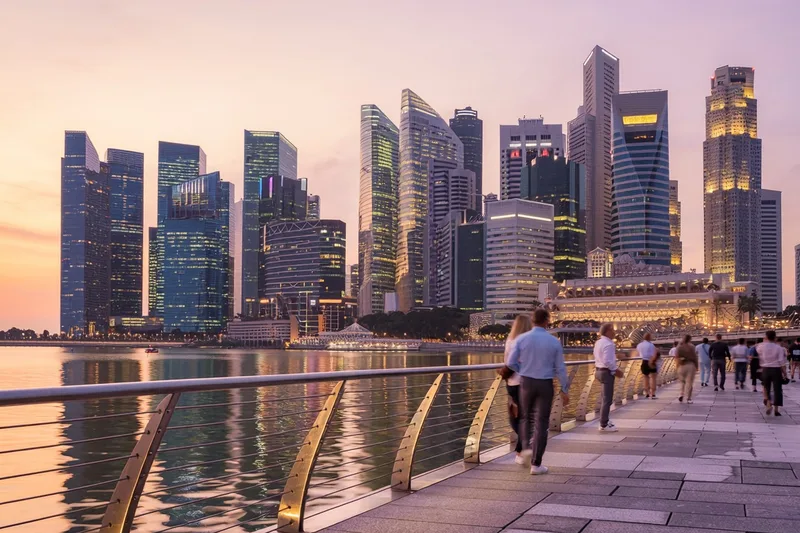
Grab was founded in 2012 in Malaysia by Anthony Tan and Tan Hooi Ling, Harvard Business School classmates, as a taxi-booking app called MyTeksi. It moved its headquarters to Singapore and expanded rapidly across Southeast Asia, a region of about 680 million people where many lacked bank accounts, cars or reliable public transport.
Grab fought a costly battle with Uber for drivers and passengers, subsidising rides heavily. In 2018 Uber gave up and sold its Southeast Asian business to Grab in exchange for a stake. Grab then added food delivery, parcel delivery, grocery delivery, digital payments, lending and insurance, becoming what investors call a super-app: one app for many everyday services.
The idea is that each service brings users to the others. A customer who takes a ride may also order dinner, pay a bill or take a small loan. Drivers and merchants can earn more and borrow from Grab. The more people use the app, the cheaper it becomes to win and keep each customer.
Building this cost huge amounts of money. Grab spent heavily on incentives for drivers, discounts for customers and marketing. In December 2021 it listed on the Nasdaq in New York through a merger with a special-purpose acquisition company, valued at close to US$40 billion, the largest such deal at the time. Its shares soon fell sharply as investors turned against loss-making tech companies.
Under pressure, Grab shifted from growth at any cost to profitability. It reduced incentives, cut staff, raised fees and focused on more profitable products. Adjusted EBITDA, a measure of operating profit before certain costs, turned positive in 2023. Net losses narrowed steadily.
In 2025 Grab reached its milestone. Revenue rose 20% to a record US$3.37 billion. Deliveries, its biggest segment, earned US$1.8 billion in revenue, up 21%, helped by advertising. Mobility revenue rose 16% to US$1.22 billion. Adjusted EBITDA jumped 60% to US$500 million, and the company reported a net profit of US$200 million, compared with a loss of US$158 million in 2024.
Cash generation improved too. Adjusted free cash flow nearly doubled to US$290 million, and Grab ended the year with net cash of about US$5.4 billion. The board authorised a new US$500 million share buyback, a sign of confidence that the business no longer needed to hoard cash.
Financial services are a growing part of the story. Grab’s loan portfolio more than doubled to US$1.18 billion during 2025 as it lent to customers, drivers and small merchants, and it operates digital banks in Singapore and Malaysia and a stake in one in Indonesia. Lending is profitable but carries credit risk if borrowers fail to repay.
For 2026 Grab guided revenue of US$4.04 to 4.10 billion and adjusted EBITDA of US$700 to 720 million. It set targets of about 20% annual revenue growth through 2028 and adjusted EBITDA of US$1.5 billion by 2028, three times the 2025 level. It also launched its first public autonomous shuttle service in Singapore.
The case explores how platform companies move from subsidised growth to sustainable profit, what drives unit economics in ride-hailing and delivery, and how investors should judge adjusted profit measures against reported net profit.
Competition remains a factor. In Indonesia, Grab’s largest market, it competes with GoTo, owner of Gojek and Tokopedia, and the two have repeatedly been reported to be in merger talks. A combination could reduce costly competition but would face scrutiny from regulators concerned about prices for consumers and pay for drivers.
Regulation is another risk. Governments across the region are considering rules on minimum pay, social protection and employment status for gig workers. Higher costs for drivers and riders could squeeze margins, though Grab argues it already provides insurance and other benefits.
Grab’s results show that a super-app can make money once it reaches scale and stops paying for growth with subsidies. The question now is whether it can keep growing at around 20% a year while expanding profit margins and managing the risks of a growing loan book.
Advertising has become an important profit driver. Restaurants and shops pay Grab to appear higher in search results and promotions inside the app, much as sellers do on Amazon. Because this revenue requires little extra cost, it lifts margins quickly. Grab also sells a subscription that gives customers cheaper delivery and rides, which encourages them to use the app more often and builds loyalty.
Key moments
Founded in Malaysia as MyTeksi.
Acquires Uber’s Southeast Asian business.
Lists on Nasdaq via SPAC merger.
Adjusted EBITDA turns positive.
First full-year net profit of US$200m.
Announces US$500m buyback and 2028 targets.
Revenue rose 20% to US$3.37bn and adjusted EBITDA 60% to US$500m in 2025. Source: Grab.
The trade-offs at the heart of the case
Growth vs. profit
Subsidies win users but burn cash.
Lending vs. risk
Loans earn high returns but can go bad.
Scale vs. regulation
Market power invites scrutiny of fees and pay.
For your seminar, paper or interview
- Q1
How does the super-app model create value?
- Q2
Why did Grab take so long to become profitable?
- Q3
How should investors treat adjusted EBITDA?
- Q4
Should Grab merge with GoTo?
- Q5
What are the risks in Grab’s lending business?
- Platform economics
- Unit economics
- Adjusted vs. reported profit
- Regulatory risk
How we would approach it
Simplifying Finance’s opinion, offered as a starting point for debate, not as fact or investment advice.
Grab has proved the super-app can be profitable at scale. It should keep growing deliveries and financial services, manage credit risk conservatively, use buybacks only from genuine surplus cash and pursue consolidation only if regulators and drivers can be brought on board.
Grow high-margin services
Expand advertising, subscriptions and payments.
Lend carefully
Grow the loan book with strict credit standards.
Return surplus cash
Continue buybacks while keeping a strong cash buffer.
Engage regulators
Shape fair rules for gig workers.
What this plan gives up
Higher margins may require higher fees that frustrate drivers, merchants and customers.
The strongest counter-argument
Some argue Grab should use its cash for acquisitions such as GoTo rather than buybacks.
Metrics to watch
- Revenue growth
- Adjusted EBITDA margin
- Loan book quality
- Net profit
- Regulatory changes
Propose your solution
Pick a discussion question and set out what you would do, why, and what it would cost. Strong, well-argued answers are reviewed and published below with your first name and programme.
Published solutions
Loading published solutions…
- Grab: Fourth quarter and 2025 results ↗
- SEC: Grab Form 6-K Q4 2025 ↗
- DealStreetAsia: Grab posts first full-year net profit ↗
- Yahoo Finance: Grab Q4 earnings call highlights ↗
Figures are as reported by the companies or cited outlets as of 22 November 2026. Check the source before quoting. Corrections: let us know through the solution form.