What happened
ARENA describes a 50 megawatt, 64.5 megawatt-hour expansion of the Hornsdale Power Reserve. Its project materials explain the role of grid-support services, and the final report covers new operating modes and frequency-control capabilities. Energy storage capacity measures how much energy can be delivered. Power measures the rate of delivery. Neither figure on its own establishes how much of the battery is available for trading after reserving capacity to support the grid.
An operator can charge at low prices and sell electricity at higher prices. It can also keep capacity available to help stabilise the system. The same stored energy generally cannot be promised twice for simultaneous obligations. Inverter controls and market rules influence which services can be recognised and paid. The financial challenge is pricing that opportunity cost while retaining sufficient energy to meet the promised response.
A battery has two key measures: power, in megawatts, is how fast it can charge or discharge; energy, in megawatt-hours, is how long it can keep going. A 150 MW battery with about 194 MWh can deliver full power for roughly an hour and a quarter. That makes it well suited to fast services, such as stopping frequency from falling after a power station trips, rather than supplying power all evening. Batteries earn money by charging when prices are low, discharging when they are high, and being paid to stand ready for grid emergencies. As more batteries are built, prices for some of these services tend to fall, which is why investors look closely at how each revenue stream could change over the life of the asset, and whether the battery can switch to new services as the market develops.
The Hornsdale Power Reserve in South Australia was built by Tesla in 2017 for its owner Neoen, the French renewable energy company. At 100 megawatts and 129 megawatt-hours, it was then the world’s largest lithium-ion battery. It sits next to Neoen’s Hornsdale wind farm.
In November 2019 Neoen announced a 50 MW, 64.5 MWh expansion costing an expected A$71 million, including development and finance. ARENA provided an A$8 million grant, the South Australian government A$15 million over five years, and the Clean Energy Finance Corporation up to A$50 million of finance. The expansion was completed in September 2020, taking the battery to 150 MW and 193.5 MWh, and testing of inertia services began.
Aurecon research cited by Neoen found the battery had saved South Australian consumers about A$150 million, including about A$116 million from lower frequency-control costs in 2019 alone.
A battery earns money from price differences and from being ready to respond. The case shows why storage operators stack several revenue streams.
Key moments
Hornsdale establishes a grid-scale battery
Additional storage and grid-support capability introduced
ARENA publishes lessons from the upgrade
The expansion took the battery from 100 MW/129 MWh to 150 MW/193.5 MWh; it was completed in September 2020. Sources: ARENA; CEFC; pv magazine.
The trade-offs at the heart of the case
Testing the evidence
A doctoral seminar could frame the episode as a testable claim. Track net revenue and verified frequency response among periods with capacity reserved for grid support, with comparable intervals available for energy arbitrage as a benchmark. Check that the units and timing are comparable. Pay particular attention to price volatility and battery state of charge. Report the distribution as well as the average. One unusually large observation can dominate a group result while leaving the typical participant with a different experience. Request dispatch instructions matched to available charge and delivered response. Trace several observations from the original event to the figure presented to the board, then reverse the direction and look for events that never entered the summary. The two checks answer different questions about accuracy and completeness.
For your seminar, paper or interview
- Q1
What minimum availability payment covers the opportunities a battery gives up while holding power in reserve?
- Q2
How would you use comparable intervals available for energy arbitrage to test changes in net revenue and verified frequency response, while allowing for price volatility and battery state of charge?
- Q3
Compare the recommended course with reserving a smaller block of capacity and bidding the rest into energy markets. Which commitment would you make first, and what result would cause you to change course?
- Revenue stacking
- Grid services
- Public co-funding
- Energy storage
How we would approach it
Simplifying Finance’s opinion, offered as a starting point for debate, not as fact or investment advice.
Evaluate incremental earnings service by service, accounting for reserved capacity, losses and degradation. Test dispatch decisions against measured delivery during actual grid events, then distinguish revenue received by the owner from system costs avoided by consumers. A public funding case can be positive even where the existing market pays only a fraction of the benefit.
Earn from several services
Combine energy trading with frequency control and other grid services.
Use concessional funding
Share the cost of new capabilities with government agencies.
Demonstrate new services
Test synthetic inertia to open new revenue sources.
What this plan gives up
The expansion added capacity and showed what batteries can do for grid stability, but much of its value came from grid services whose prices can fall as more batteries are built.
The strongest counter-argument
Keeping more capacity free for energy trading preserves exposure to attractive price spikes while sacrificing some availability payments. The preferable mix can change as markets mature and competing batteries enter. Give the operator a rule for revising reservations while honouring contracted obligations. The optimal dispatch choice on one spectacular day is weak evidence for a multiyear investment. The duration calculated from the added equipment is a nominal ratio. It does not describe the duration of the entire installation, the charge available at a particular moment or the net energy delivered after losses. Use the ratio to ask a question about the service being purchased, then compare it with operating records. A buyer promising sustained delivery at a certain power needs evidence about both charge management and the capacity reserved for other obligations. A reserve commitment should state the required response time and the period over which delivery must continue.
Metrics to watch
- Frequency-control prices
- New battery competition
Propose your solution
Pick a discussion question and set out what you would do, why, and what it would cost. Strong, well-argued answers are reviewed and published below with your first name and programme.
Published solutions
Loading published solutions…
- ARENA · Hornsdale Power Reserve upgrade ↗
- ARENA and Neoen · Final expansion project report ↗
- ARENA: South Australian battery grows bigger and better ↗
- ARENA: World’s biggest battery grows and gains new powers ↗
- CEFC: Hornsdale Power Reserve investment insights ↗
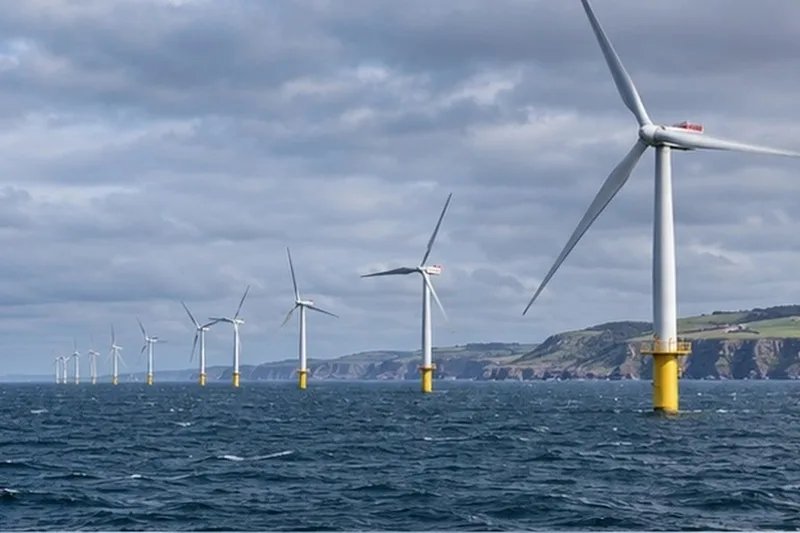
- Image: AI-generated editorial illustration for Simplifying Finance. Illustrative scene.
Figures are as reported by the companies or cited outlets as of 22 November 2026. Check the source before quoting. Corrections: let us know through the solution form.