What happened
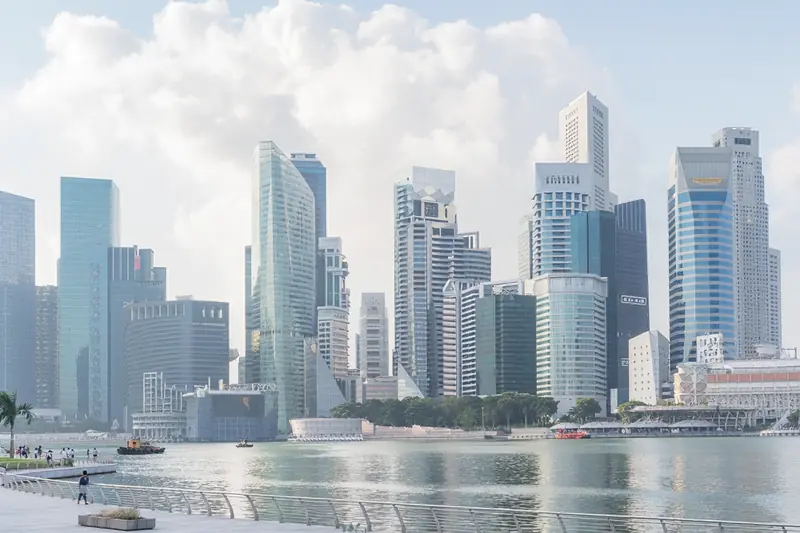
Hyflux was founded in 1989 by Olivia Lum, who started a small water treatment trading company and grew it into a regional leader in membrane technology for purifying and desalinating water. Water is a strategic issue for Singapore, which historically imported much of its water from Malaysia. Hyflux helped build Singapore’s first desalination plant and NEWater facilities, which recycle wastewater into drinkable water. Lum became one of Singapore’s best-known entrepreneurs and Hyflux a stock market favourite, valued at about S$2.1 billion at its peak in 2011.
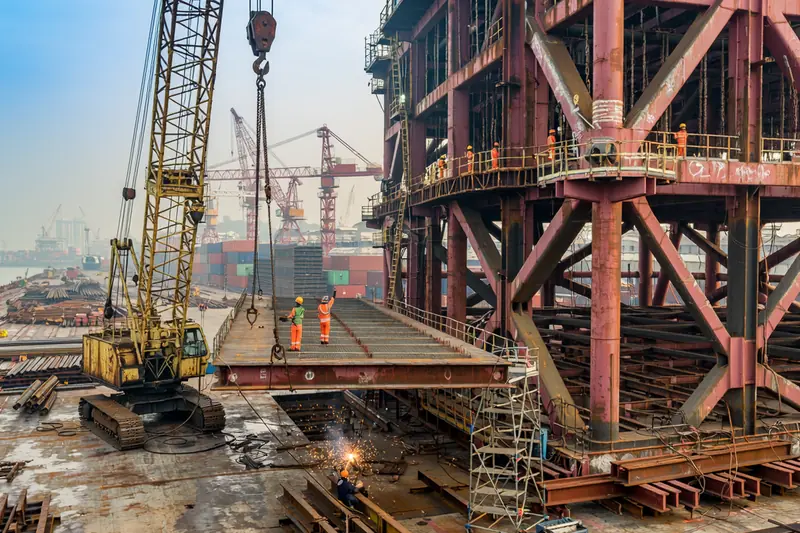
In 2011 Hyflux won a tender to build Tuaspring, Singapore’s largest desalination plant, under a 25-year contract with the national water agency, PUB. Its bid was very low; critics later described it as an ‘impossibly low’ water price. To make the project profitable, Hyflux combined the desalination plant with a gas-fired power station, planning to sell electricity to the national grid. Desalination uses a lot of energy, so generating its own power and selling the surplus seemed sensible.
The plan relied on electricity prices staying high. Instead, a wave of new power plants in Singapore created overcapacity and wholesale electricity prices fell sharply after 2014. Tuaspring’s power business lost money, and the low water price could not cover costs. Hyflux’s overseas projects in places such as the Middle East and China also struggled.
To finance its projects, Hyflux turned to retail investors. Between 2011 and 2016 it raised about S$900 million through perpetual capital securities and preference shares, offering coupons of up to 6%. Perpetual securities have no maturity date and rank below ordinary debt; issuers can defer payments in some cases. Many retail investors, including retirees, saw them as safe, bond-like income from a respected company.
In May 2018 Hyflux applied for court protection to restructure its debts, stunning investors. A rescue deal with Indonesian investors SM Investments, which would have given perpetual holders about 10% of their money, collapsed in 2019. PUB took over Tuaspring’s desalination plant for zero dollars. Other rescue attempts failed. In July 2021 the High Court ordered Hyflux to be wound up. Holders of perpetuals and preference shares stood to receive little or nothing.
Investors held a rare public protest in Singapore. The government said it could not use taxpayers’ money to compensate investors. Regulators later brought charges relating to disclosure against the company’s former leaders, and a trial opened in 2025; those cases concern allegations that the defendants have contested.
The case explores project risk, hybrid securities, retail investor protection and corporate governance.
Project risk was central. Tuaspring combined two businesses, water and power, with very different economics. The water contract provided steady but low revenue, while the power business was exposed to volatile market prices. A low bid to win the contract left little margin for error. When power prices fell, the project lost money every year.
Hybrid securities like perpetuals sit between bonds and shares. They pay fixed coupons like bonds but are subordinated, meaning holders are paid only after senior creditors in a liquidation. Their high yield reflects that risk. Many retail buyers did not fully understand that perpetuals could lose most of their value if the issuer failed.
Disclosure is another issue. Prosecutors argued in court that risks related to Tuaspring were not adequately disclosed; the defence disputes this. Regardless of the legal outcome, the case shows why clear communication of risks to retail investors matters.
Singapore tightened rules after Hyflux, including more scrutiny of products sold to retail investors and stronger requirements for disclosure. The case also sparked debate about whether retail investors should be allowed to buy complex instruments without advice.
For students elsewhere, Hyflux shows how a strong brand and a founder’s reputation can create a false sense of safety.
Singapore’s water strategy did not depend on Hyflux. PUB continued to operate Tuaspring and expanded desalination and recycled water capacity, showing that the country’s water security was protected even as the private company failed. The losses fell mainly on investors, lenders and suppliers rather than on water consumers.
Olivia Lum’s story had been celebrated in Singapore as a rags-to-riches tale, and that reputation made the collapse feel personal for many investors who had trusted her.
Similar hybrid securities are sold to retail savers in many countries, so the lessons apply widely.
Its collapse remains one of Singapore’s most painful lessons for retail investors.
Key moments
Hyflux founded by Olivia Lum.
Wins Tuaspring contract; peak valuation about S$2.1bn.
Raises about S$900m from retail perpetuals and preference shares.
Seeks court protection.
Rescue deal collapses; PUB takes Tuaspring for S$0.
Court orders liquidation.
Trial over disclosure charges opens.
Source: Hyflux liquidation announcement (SGX); The Peak.
The trade-offs at the heart of the case
Winning bids vs. profitable bids
Low prices win contracts but may be unprofitable.
Yield vs. safety
High coupons reflect hidden risk.
Investor freedom vs. protection
Retail access to complex products brings risk.
Frequently asked questions about Hyflux
What were Hyflux's perpetual securities?
Hybrid investments with no fixed maturity that paid regular distributions but ranked below ordinary debt if the company failed.
Why did retail investors lose money in Hyflux?
Because their perpetual securities and preference shares ranked near the bottom of the repayment order when the company collapsed.
What lesson does Hyflux teach?
That high yields on hybrid instruments often reflect high risk, and that investors should understand where an investment ranks if the issuer fails.
For your seminar, paper or interview
- Q1
Why did Tuaspring become unprofitable?
- Q2
What are perpetual securities, and why are they risky?
- Q3
Why did retail investors trust Hyflux?
- Q4
Should regulators restrict sales of complex securities to retail investors?
- Q5
What warning signs could investors have noticed?
- Project finance
- Capital structure and subordination
- Investor protection regulation
- Corporate governance
How we would approach it
Simplifying Finance’s opinion, offered as a starting point for debate, not as fact or investment advice.
Hyflux combined an aggressive bid, a risky power strategy and retail funding of subordinated securities. Companies should stress-test projects against adverse prices, and regulators should require clear, simple risk explanations for hybrid products sold to retail investors.
Stress-test bids
Model downside scenarios before committing to fixed-price contracts.
Match funding to risk
Use equity or long-term project finance for risky assets.
Simplify disclosures
Explain subordination and loss risk plainly.
Educate investors
Promote understanding of yield and risk.
What this plan gives up
Stricter rules on retail products reduce investors’ access to higher yields.
The strongest counter-argument
Some argue investors chose higher returns and must accept the risks, and that over-regulation would limit legitimate financing options.
Metrics to watch
- Retail hybrid issuance
- Disclosure rules
- Desalination contract structures
- Court outcomes
- Investor education
Propose your solution
Pick a discussion question and set out what you would do, why, and what it would cost. Strong, well-argued answers are reviewed and published below with your first name and programme.
Published solutions
Loading published solutions…
- Bloomberg via Yahoo: Investors set to lose up to 90% on Hyflux ↗
- The Peak: From high tide to low ebb — Hyflux ↗
- Malay Mail: Hyflux trial opens ↗
- SGX: Hyflux update on liquidation ↗
Figures are as reported by the companies or cited outlets as of 22 November 2026. Check the source before quoting. Corrections: let us know through the solution form.