What happened
ORIX and VINCI brought financial and operating experience to Kansai Airports. The parties cited annual traffic of 34.6 million passengers when announcing the agreement. Passenger numbers underlie several revenue sources, including airline charges and commercial spending. Yet airport users have different spending patterns, and a passenger who transfers quickly may generate different receipts from a visitor with time to shop.
The concession is a right to operate under agreed terms. It should not be valued as unrestricted perpetual ownership of the land and terminals. A capacity investment made early may produce returns for decades. The same investment late in the contract could have a useful physical life far beyond the operator’s remaining rights. Any compensation on handback must come from the contract, not a spreadsheet convention.
The two airports also have different locations and customer mixes. A new flight at one may partly shift traffic from the other. The consortium has reason to optimise the combined system, while airlines, municipalities and passengers may care intensely about which facility grows. An appraisal should distinguish new regional demand from flights changing airports.
An airport concession often has a large fixed payment or investment burden alongside revenue that varies with traffic. A short interruption can therefore have a larger impact on cash available to equity than its effect on annual passenger totals suggests. The location of that interruption also matters. A disruption during a busy holiday period can erase commercial sales that cannot be recovered when the terminal reopens in a quiet month. Variation by passenger segment and by season deserves an explicit place in the forecast.
The two-airport structure changes bargaining power with airlines and commercial tenants. A retailer seeking space may want access to both facilities, while an airline may prefer one airport for its route pattern. An operator can build genuine value by fitting each facility to its users. It can also shift reported earnings between them through rents and internal cost allocations. Regional passenger creation and combined cash flow provide better checks than a competition to improve each terminal’s reported standalone margin.
For an upgrade near handback, show the first year in which the discounted operating receipts would recover construction cost. Compare that date with the end of the concession. If the recovery date falls later, the public owner may still want the work, but an extension, compensation or public contribution must make the operator’s share of the decision economically coherent.
In December 2015 a consortium led by ORIX of Japan and VINCI Airports of France signed a 44-year concession to run Kansai International and Osaka Itami airports from 1 April 2016. The operating company, Kansai Airports, is owned 40% by ORIX, 40% by VINCI and 20% by about 30 Kansai-region companies. It agreed to pay the state-owned New Kansai International Airport Company about ¥49 billion a year, roughly ¥2.2 trillion over the term, and planned capital spending of about ¥944.8 billion.
The payments were designed to repay more than ¥1 trillion of debt the government-backed company had built up from constructing Kansai International on an artificial island. The ORIX–VINCI group was the only bidder, as other potential bidders were reportedly deterred by the high minimum price. The concession company’s financing plan was ¥260 billion, of which ¥80 billion came from shareholders.
Valuing a concession differs from valuing a company that will exist forever. The operator’s cash flows stop on a known date, and the assets return to the owner, so there is no terminal value to rely on. That makes the timing of traffic growth and investment crucial: money spent late in the term has fewer years to earn a return. Annual fixed payments also create operating leverage, because they must be paid whether passengers come or not. The case shows why investors in airports, toll roads and ports anywhere focus on traffic risk, contract terms for disasters and pandemics, and how much debt the operating company carries.
Key moments
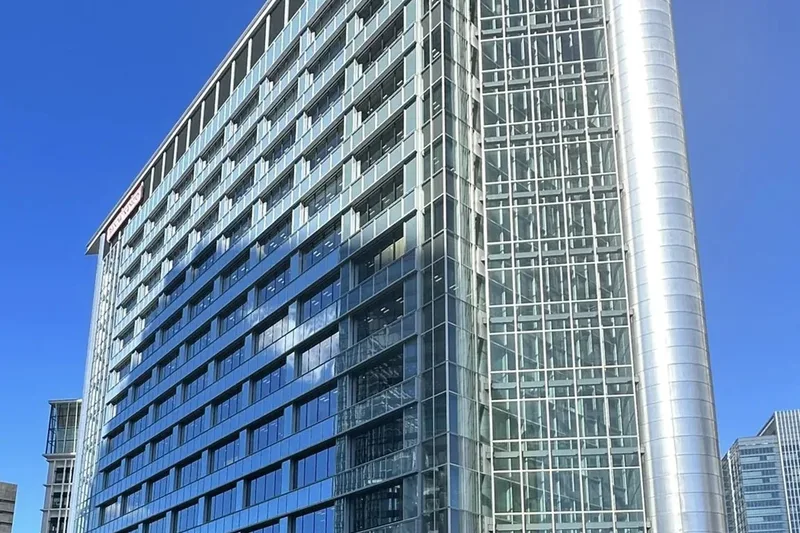
The ORIX and VINCI consortium announces the concession agreement.
Kansai Airports takes over operating rights at Kansai and Osaka Itami airports.
The operator earns and invests under a finite concession.
Contract signed 15 December 2015; operations began 1 April 2016 and run to 31 March 2060. Sources: Japan Times; DECN.
The trade-offs at the heart of the case
Asset life
A terminal improvement can continue serving passengers long after the concessionaire loses the right to collect the cash that it generates.
Two airports
Moving an existing flight between facilities may improve a single airport’s accounts without increasing traffic or cash earned for the region as a whole.
Fixed promises
Concession commitments come due on a calendar even when a disruption sharply reduces passenger numbers and spending in the terminal.
For your seminar, paper or interview
- Q1
What is the proper terminal value for an asset the investor must return at the end of the concession?
- Q2
How would a transfer of flights between Itami and Kansai affect your estimate of genuine regional growth?
- Q3
Recalculate the project hurdle if the first year of receipts is delayed. Which input would you verify before committing funds?
- Q4
From the perspective of an airport operator near the end of its concession, what evidence would most seriously challenge the recommendation in this case?
- Q5
Which of the three proposed metrics would you prioritise for Kansai Airports, and what could go wrong if management rewarded it in isolation?
- Infrastructure concessions
- Discounted cash flow with a finite life
- Public-private partnerships
- Regulated monopolies
How we would approach it
Simplifying Finance’s opinion, offered as a starting point for debate, not as fact or investment advice.
Use a finite-term cash-flow model with explicit maintenance and handback assumptions. Stress passenger volume and spending separately, then identify which capital projects remain attractive after a delay. Demand a contractual basis for any residual value attributed to the operator.
Establish the baseline
Model aeronautical receipts and commercial spending by passenger type, then add maintenance and handback conditions from the concession agreement.
Test the proposed change
Evaluate one late-term terminal investment both from the operator’s cash horizon and from the public owner’s longer horizon.
Set a condition for reconsidering
Seek revised cost sharing where the project has positive public value but the operator cannot recover its cost before handback.
What this plan gives up
Conservative residual values may discourage improvements which have substantial public value after the concession expires.
The strongest counter-argument
A negotiated extension or compensation mechanism could make a late investment attractive to both the public owner and the operator.
Metrics to watch
- Net commercial revenue per passenger
- Maintenance and handback obligations
- Cash coverage of fixed concession payments
- Passenger numbers versus the bid case
- Debt service cover ratios
Propose your solution
Pick a discussion question and set out what you would do, why, and what it would cost. Strong, well-argued answers are reviewed and published below with your first name and programme.
Published solutions
Loading published solutions…
- ORIX and VINCI concession agreement announcement ↗
- VINCI consortium announcement ↗
- Kansai Airports operating company profile ↗
- Japan Times: ORIX-led consortium inks deal to operate Kansai airports ↗
- VINCI: Takeover of Kansai airports (April 2016) ↗
- Photo: KIX airport.jpg by mackwo7, CC0 (cropped and resized) ↗
Figures are as reported by the companies or cited outlets as of 22 November 2026. Check the source before quoting. Corrections: let us know through the solution form.