What happened
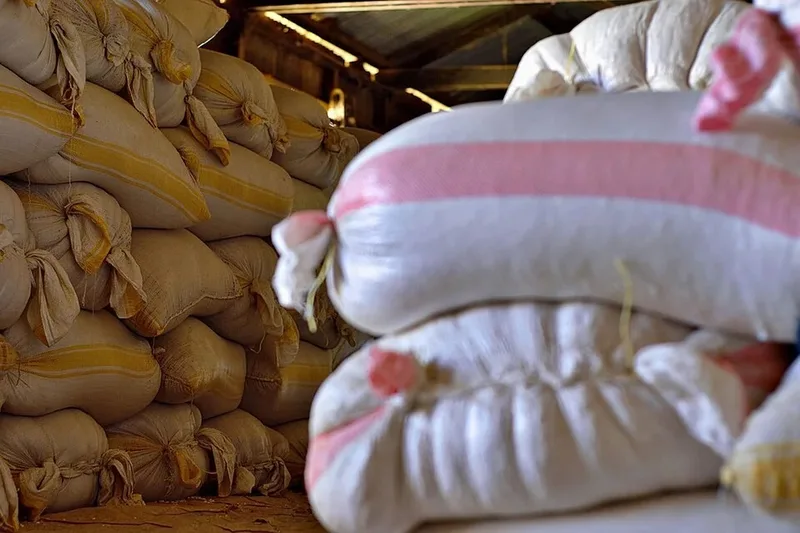
If a family uses a transfer to buy food, the money does not disappear into the meal. It becomes income for a seller, who may pay a worker or buy supplies. The same demand can also push up prices if local supply cannot respond. These effects matter to neighbors who never receive a transfer.
Researchers studied one-time transfers of about US$1,000 to more than 10,500 households across a setting of 653 randomized villages. Variation in how much money reached different local areas helped distinguish direct household effects from spillovers into the surrounding economy.
The researchers found consumption and asset gains for recipients, positive spillovers for nonrecipients and little observed price inflation in the study setting. Their estimated local transfer multiplier was around 2.5. That measure describes local economic activity relative to the transfer shock. It is not a household investment return, a profit margin or projected government revenue.
The study, in rural Siaya County in western Kenya, worked with the charity GiveDirectly, which provided one-time transfers of about US$1,000 to more than 10,500 poor households across 653 randomised villages. The transfers amounted to over 15 percent of local GDP, a large shock to the local economy.
Recipients increased consumption and assets. Businesses in areas receiving more cash saw higher revenues, and non-recipient households also gained. Prices rose by only about 0.1 percent on average, suggesting local suppliers could meet the extra demand.
The researchers estimated a local transfer multiplier of about 2.5, meaning each dollar transferred generated about two and a half dollars of local economic activity. That figure measures spending flowing through the local economy, not the return to any single household.
The study is widely used in debates about the effects of cash aid and government stimulus, because it measures effects across a whole local economy rather than only on recipients.
The experiment varied the share of eligible households receiving transfers across sublocations, so that some local economies received much more cash than others. That design allowed researchers to measure how money flowed from recipients to local shops, farms and workers.
Enterprises in high-transfer areas increased revenues, mostly by selling more rather than raising prices. Their wage bills also rose, which spread benefits to workers who did not receive transfers directly.
For governments considering cash-based programmes, the study suggests that concerns about inflation in rural areas may be overstated where local supply can expand. It also shows that the full benefit of a programme can be much larger than its direct effect on recipients.
The multiplier concept is familiar from macroeconomics, where government spending can raise output by more than the amount spent. This study is one of the rare cases where it has been measured with experimental evidence in a low-income setting.
Cash transfers now form a large part of social protection spending worldwide, which makes such evidence valuable for budget decisions.
Policymakers should still consider context: areas with poor roads or thin markets may see more price pressure than the Siaya villages did.
The research also tracked effects on non-recipient households, finding that their consumption increased as well, mainly through higher earnings from local business activity.
GiveDirectly, founded in 2009, has since delivered cash transfers in several countries, and the evidence from Kenya has influenced how governments and agencies think about cash-based assistance, including during emergencies.
A careful reading of the multiplier also matters. It refers to the expansion of local economic activity relative to the size of the transfer, measured over a specific period, and it should not be confused with a profit or a return on investment for individual households.
Governments considering similar programmes at national scale would also need to account for how transfers are financed, since taxes or borrowing have their own economic effects.
The findings are also relevant to debates about remittances, which in many countries are a much larger source of household income than aid. If cash spreads through local economies in similar ways, remittances may support entire communities, not just the families who receive them.
That insight helps explain why many governments now track remittance flows closely when planning local development.
It also underlines the value of measuring spillovers whenever a programme is large relative to the local economy.
Understanding these local ripple effects helps governments design programmes that deliver more value for each shilling spent.
Such evidence is rare and valuable for planners.
Key moments
GiveDirectly transfers reach over 10,500 households.
NBER working paper released.
Results published in Econometrica.
Source: Egger, Haushofer, Miguel, Niehaus and Walker, Econometrica 90(6), 2022.
The trade-offs at the heart of the case
The financing decision
Compare asking how recipients used their transfers with asking how the local economy responded. The second question requires evidence from households and businesses that received no direct payment, including what happened to their sales, purchasing power and prices.
For your seminar, paper or interview
- Q1
Which people would be missed by measuring only additional local activity and changes in purchasing power?
- Q2
Who carries the cost of transfer delivery and the supply response of local markets?
- Q3
What could the evidence on effects on buyers who do not receive cash change?
- Fiscal multiplier
- General equilibrium
- Cash transfers
- Local economies
How we would approach it
Simplifying Finance’s opinion, offered as a starting point for debate, not as fact or investment advice.
We think the study shows that cash transfers in poor rural areas can boost local economies, benefiting neighbours as well as recipients, with little inflation. For policymakers, it supports cash as an efficient form of aid, provided local markets can supply the extra goods demanded.
Count spillovers
Include benefits to non-recipients in evaluations.
Watch prices
Monitor local prices, especially in remote markets.
Support supply
Pair transfers with investments in roads and markets where supply is limited.
What this plan gives up
Large transfers stimulate local activity but could raise prices where markets are poorly connected.
The strongest counter-argument
Some economists question whether a local multiplier applies at national scale, where financing costs matter.
Metrics to watch
- Local business revenues
- Prices of local goods and services
Propose your solution
Pick a discussion question and set out what you would do, why, and what it would cost. Strong, well-argued answers are reviewed and published below with your first name and programme.
Published solutions
Loading published solutions…
- General equilibrium effects of cash transfers: experimental evidence from Kenya | Department of Economics ↗
- Egger and colleagues • published evaluation ↗
- Photo: Where a household transfer goes after the first purchase by Simplifying Finance, Original editorial graphic (cropped and resized)
Figures are as reported by the companies or cited outlets as of 22 November 2026. Check the source before quoting. Corrections: let us know through the solution form.