What happened
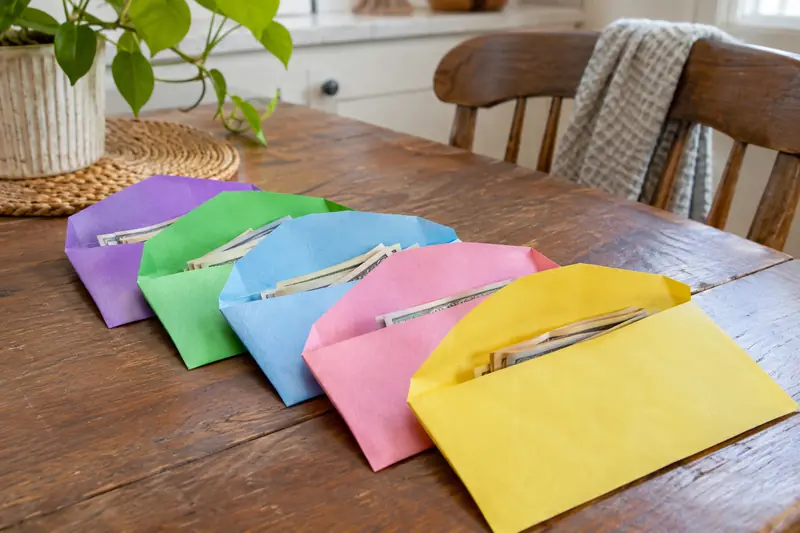
A person can intend to save for a future health expense and still find that every small amount is needed for something else. A safe place to keep cash, a label giving it a purpose and a rule preventing withdrawal change different parts of that decision.
Kenyan field experiments offered informal ways to save, including safe storage, earmarking and group-based arrangements. The design allowed the researchers to compare convenience and commitment. A lock that protects cash from other claims can be helpful, while a lock that makes an emergency expense harder to meet carries its own cost.
Simply providing a safe place for money raised health savings by an estimated 66 percent. Additional earmarking was helpful in more specific circumstances. These results describe changes relative to comparison savers. They do not imply that 66 percent of participants had all of their medical needs financed.
The investigators also tested arrangements that restricted the intended use of money. The added restriction was helpful in certain circumstances, including saving for emergencies, but its effects depended on purpose and household pressures. A basic place to store cash and a commitment to leave it untouched are distinct financial services.
The researchers worked with members of rotating savings groups, known as ROSCAs, in Western Kenya and tested four tools: a safe box with a key, a locked box whose key was held by the programme officer, a health savings pot within the ROSCA, and a health savings account.
Simply having a safe place to keep money raised health savings by an estimated 66 percent, suggesting that many households struggle to keep cash at home safe from everyday demands. Earmarking money for health helped in some situations, while the fully locked box was less popular because money could not be reached in an emergency.
These findings connect to the idea of mental accounting: people treat money differently depending on where it is kept and what it is labelled for. Personal finance advice to keep separate accounts for different goals uses the same principle.
For health systems, the study suggests that savings tools can complement insurance, particularly for frequent, smaller costs that insurance often does not cover.
The study also found that the effects differed by the type of savings problem. People who struggled mainly with demands from others benefited from a box that kept money hidden and separate. People who struggled with their own impulse to spend benefited more from labelling money for a purpose.
Health costs in rural Kenya are often unexpected and come at difficult times, so households that had saved could pay for treatment without selling assets or borrowing at high cost. That makes the value of a small savings tool larger than the amount saved might suggest.
Kenya has since expanded the national health insurance scheme and mobile health savings products, such as accounts linked to mobile money, which build on the same principle of setting money aside in advance.
For individuals anywhere, the lesson is practical: a dedicated, slightly inconvenient place for emergency savings often works better than relying on willpower alone.
Rotating savings groups remain widespread across Kenya and many other countries. Members contribute a fixed amount at each meeting and take turns receiving the pot, which provides both discipline and a lump sum. Adding a health-specific pot allowed members to build a shared fund for medical needs.
The experiments show how small design changes to familiar tools can strengthen financial resilience without requiring new institutions or large subsidies.
Programme designers in other countries have adapted these ideas for school fees, farm inputs and festival spending.
The study shows that even very simple, low-cost tools can produce meaningful improvements in household financial security when they are designed around the real pressures people face every day.
It is also a reminder that the best savings tool is one people will actually keep using.
Key moments
Field experiments run in rural Western Kenya.
NBER working paper published.
Results published in the American Economic Review.
Source: Dupas and Robinson, American Economic Review (2013). Estimated 66% increase.
The trade-offs at the heart of the case
Reading the result
Read the 66 percent as a relative increase in the relevant health-savings outcome compared with its comparison level. Without the level in shillings, it cannot tell a reader how much a household could spend when a bill fell due. Consider money in the box, money kept elsewhere and urgent expenses postponed while saving. An increase in the first item might partly reflect money moved from another place. To understand the practical benefit, follow both the balance and the ability to pay for the purpose the household intended.
The financing decision
Compare safe storage that leaves money accessible with a rule that makes it hard to withdraw for another purpose. Flexibility can protect a family during an emergency. A stronger restriction can protect a planned purchase. Families with irregular receipts may value these features differently.
For your seminar, paper or interview
- Q1
Which people would be missed by measuring only resources available when a health expense occurs?
- Q2
Who carries the cost of keeping savings safe while retaining useful access?
- Q3
What could the evidence on unmet urgent expenses as well as money accumulated change?
- Commitment devices
- Mental accounting
- Health financing
- Behavioural economics
How we would approach it
Simplifying Finance’s opinion, offered as a starting point for debate, not as fact or investment advice.
We think the experiments show that simple tools, such as a metal box with a key, can help households save for health emergencies. The best design depends on the person: some need only a safe place, while others benefit from labelling money for a purpose.
Offer safe storage
Provide simple, low-cost ways to set money aside.
Allow earmarking
Let savers label funds for health.
Keep emergency access
Avoid locks that block money when urgently needed.
What this plan gives up
Strict locks protect savings but can delay access during real emergencies.
The strongest counter-argument
Some argue health insurance is more efficient than individual savings for medical costs.
Metrics to watch
- Health spending covered by savings
- Use of the savings tool after one year
Propose your solution
Pick a discussion question and set out what you would do, why, and what it would cost. Strong, well-argued answers are reviewed and published below with your first name and programme.
Published solutions
Loading published solutions…
- Why Don’t the Poor Save More? Evidence from Health Savings Experiments ↗
- Dupas and Robinson • published study ↗
- Photo: 1 Kenyan Shilling 03 by Nicholas Gemini, Public domain (cropped and resized) ↗
Figures are as reported by the companies or cited outlets as of 22 November 2026. Check the source before quoting. Corrections: let us know through the solution form.