What happened
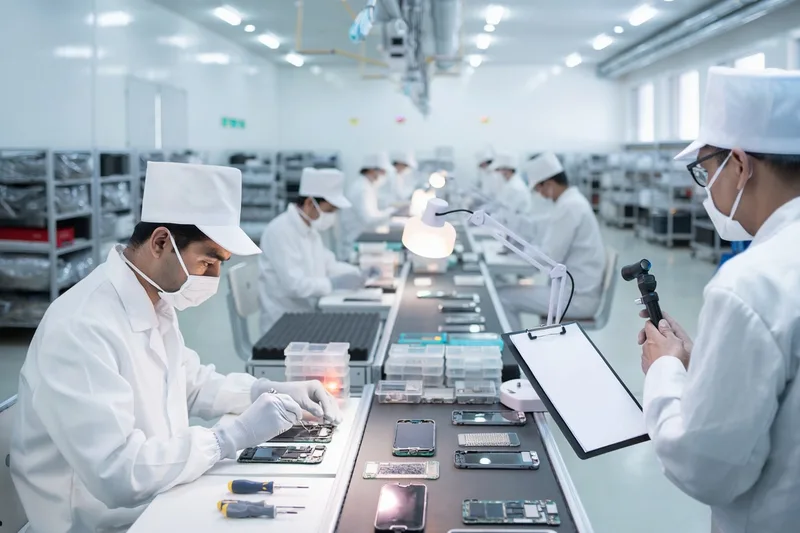
LG Electronics, part of South Korea’s LG Group, entered India in 1997. It built factories in Greater Noida near Delhi and in Pune, and became the market leader in many home appliances, including washing machines, refrigerators, air conditioners and televisions. Its products are sold through thousands of shops and service centres across the country, and the brand is widely trusted by Indian families.
India is an attractive market for appliances. Many households still do not own a refrigerator, washing machine or air conditioner, and rising incomes, hotter summers and better electricity supply are increasing demand. Appliance makers expect strong growth for years as millions of families buy their first machines and others upgrade.
In 2025 LG decided to list its Indian subsidiary, following Hyundai Motor’s Indian listing in October 2024. Like Hyundai’s, the IPO was entirely an offer for sale: the Korean parent sold about 15% of its shares and received all the money, while the Indian company raised no new capital. The price band was ₹1,080 to ₹1,140 per share, valuing the business at about ₹77,400 crore at the top end.
Many analysts thought the price was reasonable compared with listed Indian rivals such as Voltas, Havells and Whirlpool of India, which traded at higher multiples of earnings. Some described it as leaving money on the table for investors, in contrast to Hyundai’s pricing, which had been seen as full.
Demand was extraordinary. When bidding closed on 9 October 2025, the IPO was subscribed 54 times overall. Qualified institutional buyers bid for 166 times the shares reserved for them, wealthy individual investors 22 times and retail investors 3.55 times. Total bids reached about ₹4.4 trillion, the highest ever for an Indian listing, from about 6.5 million applications. Anchor investors had already taken ₹3,475 crore of shares before the public offer opened.
On 14 October 2025 the shares opened at ₹1,715 on the BSE, 50.4% above the issue price. It was described as the best listing performance by a large Indian IPO. At that price, the Indian unit was briefly worth more on the stock market than its Korean parent company, a striking sign of how highly investors value Indian consumer growth.
Why the contrast with Hyundai? Analysts pointed to several factors. LG Electronics India had higher returns on capital and a stronger market share trend. Its price was set more conservatively. The appliance market was expected to grow faster than the car market. And Indian market sentiment in October 2025 was warmer than a year earlier.
Indian investors often pay high valuations for consumer companies controlled by multinationals, such as Hindustan Unilever, Nestlé India and Maruti Suzuki, because they combine global technology and brands with local growth. LG fitted this pattern, and many fund managers wanted it in their portfolios.
As with Hyundai, minority shareholders must watch related-party transactions. LG Electronics India pays its parent royalties for the brand and technology and buys components from group companies. Indian rules require minority shareholder approval above certain limits, but the arrangements still affect how much profit Indian shareholders receive.
The case explores why some IPOs succeed while others disappoint, how pricing affects listing-day returns, and why investors value Indian subsidiaries of global companies so highly. It also illustrates the role of institutional demand in large IPOs.
A big listing-day jump is good for investors who received shares but means the selling shareholder could have raised more money. Bankers aim for a modest first-day rise to reward buyers and build goodwill, but a 50% jump suggests the price was well below what the market would pay.
For LG’s parent, the listing created a valuable, liquid stake in its Indian business and a benchmark valuation that may help it raise capital or reward local managers in future. It also strengthens LG’s commitment to India as a manufacturing and export base.
Competition will test the valuation. Samsung, Haier, Whirlpool and fast-growing Indian brands are fighting for share, and Chinese companies are expanding too. LG must keep investing in local manufacturing, new products and service to justify investors’ high expectations.
Grey market premiums, unofficial prices at which IPO shares trade before listing, signalled strong demand in the days before LG’s debut. They are not regulated and can be unreliable, but they often reflect the mood of investors and helped build excitement around the issue.
Key moments
LG Electronics enters India.
Hyundai Motor India lists to a weak debut.
LG raises ₹3,475 crore from anchor investors.
IPO subscribed 54 times; bids of ₹4.4 trillion.
Shares list 50% above issue price.
Final day subscription, 9 October 2025. Source: Trendlyne, Groww.
The trade-offs at the heart of the case
Seller proceeds vs. buyer gains
Pricing low rewards investors but costs the seller.
Parent vs. minorities
Royalties and group purchases.
Hype vs. value
High demand can push valuations too far.
For your seminar, paper or interview
- Q1
Why did LG’s IPO attract so much more demand than Hyundai’s?
- Q2
Was the IPO underpriced?
- Q3
Why do investors value Indian subsidiaries of multinationals highly?
- Q4
What risks do minority shareholders face?
- Q5
Can LG justify its valuation after listing?
- IPO pricing
- Investor demand and book building
- Related-party transactions
- Consumer market growth
How we would approach it
Simplifying Finance’s opinion, offered as a starting point for debate, not as fact or investment advice.
LG’s IPO was priced to succeed, rewarding buyers and building goodwill for the brand in Indian markets. The company must now deliver growth that justifies its higher valuation, while keeping royalty payments fair and transparent for minority shareholders.
Expand local manufacturing
Build capacity for India and exports.
Grow premium products
Lift margins with higher-end appliances.
Disclose royalties clearly
Build trust with minority investors.
Strengthen service
Use service networks as a competitive edge.
What this plan gives up
Investing heavily in capacity may weigh on margins in the short term.
The strongest counter-argument
Some argue the listing gain shows LG’s parent underpriced the IPO and left billions of rupees on the table.
Metrics to watch
- Market share in key appliances
- Royalty payments
- Operating margin
- Share price versus listing price
- Competition from Chinese brands
Propose your solution
Pick a discussion question and set out what you would do, why, and what it would cost. Strong, well-argued answers are reviewed and published below with your first name and programme.
Published solutions
Loading published solutions…
- Business Standard: LG Electronics India IPO draws record ₹4.4 trillion bids ↗
- Business Standard: LG Electronics India leaps 48% on debut ↗
- Business Today: LG Electronics India shares list at 50% premium ↗
- Chittorgarh: LG Electronics India IPO details ↗
Figures are as reported by the companies or cited outlets as of 22 November 2026. Check the source before quoting. Corrections: let us know through the solution form.