What happened
Megaworld was founded by Andrew Tan in 1989 and is the main business of his Alliance Global Group (AGI), which also owns Emperador brandy, Travelers International (Resorts World Manila) and a stake in the McDonald’s Philippines franchise.
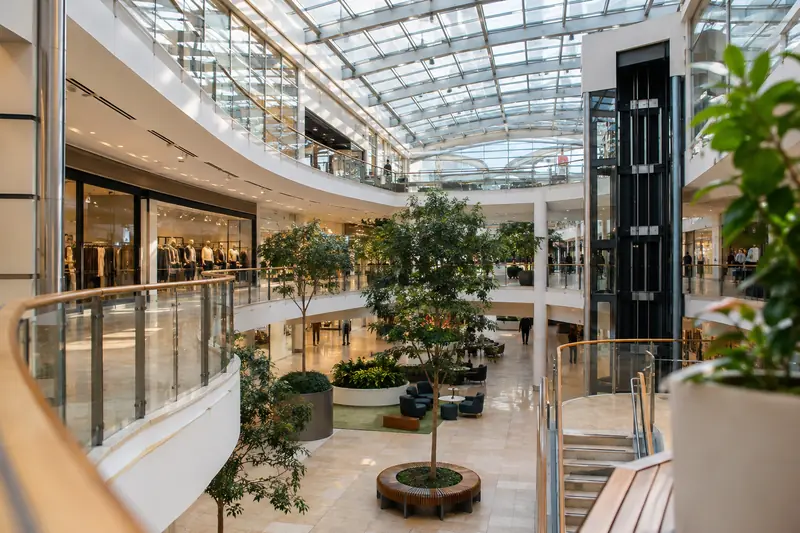
Megaworld pioneered integrated townships in the Philippines, starting with Eastwood City in Quezon City in the late 1990s. Each township combines office towers, condominiums, shopping malls, hotels, schools and parks, allowing people to live, work and play in one place. It now has 37 townships, including McKinley Hill in Taguig, Iloilo Business Park and Davao Park District.
The model grew alongside the Philippines’ business process outsourcing (BPO) industry, which employs over a million people in call centres and back-office operations for foreign companies. BPO firms need large, modern offices operating 24 hours a day, and Megaworld’s townships provided them, along with nearby housing and amenities for workers.
In 2025 Megaworld posted record net income of ₱24 billion, up 11%, on revenue of ₱86 billion. Office leasing income rose 11% to ₱14.9 billion, with over 330,000 square metres of office transactions. Mall and hotel income also grew. AGI posted a record ₱30.6 billion profit, although Emperador faced softer global spirits demand.
Megaworld has also created a real estate investment trust (REIT), MREIT, which owns office buildings and pays out most of its income as dividends. Selling buildings to the REIT lets Megaworld recycle capital into new projects.
The case examines the township model, the value of recurring income and the risks of dependence on one industry.
Recurring income from leasing is more stable than income from selling condominiums, which depends on property cycles. By growing leasing income, Megaworld makes its earnings more predictable and attractive to investors.
But dependence on BPO tenants is a risk. Artificial intelligence could automate some call-centre and back-office work, reducing office demand. The POGO ban also emptied some offices in Metro Manila, raising vacancy rates in parts of the market.
Townships also require huge upfront investment in land, roads and utilities, and take decades to mature. Megaworld’s large land bank of about 7,000 hectares gives it a long pipeline but ties up capital.
Provincial expansion is a growing part of the strategy. Townships in cities such as Iloilo, Bacolod, Davao and Pampanga aim to capture growth outside Metro Manila, where land is cheaper and local governments welcome investment. BPO firms have also expanded to these cities to tap new talent pools and lower costs.
MREIT’s growth shows how the REIT model works. It reported an 18% rise in attributable net income to ₱3.7 billion in 2025 and planned to acquire nine more office buildings in McKinley Hill, aiming for one million square metres of leasable area by 2027. Each sale gives Megaworld cash to reinvest.
Hotels and malls also benefit from township traffic: workers and residents dine, shop and stay nearby, raising occupancy and sales.
Within AGI, Megaworld’s stability also offsets more volatile businesses such as spirits and casinos.
Over the long term, the main test is whether townships keep attracting tenants as work patterns change.
Investors also watch residential sales, which remain cyclical and sensitive to interest rates.
Emperador, the group’s spirits arm, shows the contrast: it is the world’s largest brandy company but faced softer global demand in 2025, posting attributable income of ₱3.9 billion on ₱57 billion of revenue, while Megaworld’s leasing kept growing steadily.
Key moments
Megaworld founded.
Eastwood City township launched.
BPO boom drives township growth.
MREIT lists.
POGO ban affects office market.
Record ₱24bn profit.
Source: Megaworld via Philstar and Inquirer.
The trade-offs at the heart of the case
Recurring income vs. development profits
Leasing is stable; property sales are cyclical.
BPO dependence vs. diversification
Outsourcing drives demand but faces AI disruption.
Land bank vs. capital efficiency
Large land holdings secure growth but tie up money.
For your seminar, paper or interview
- Q1
Why has the township model been successful in the Philippines?
- Q2
How does recurring income change a property company’s risk?
- Q3
How might AI affect Megaworld’s office business?
- Q4
What role does MREIT play in Megaworld’s strategy?
- Q5
How should Megaworld diversify its tenant base?
- Real estate business models
- Recurring revenue
- REIT capital recycling
- Industry concentration risk
How we would approach it
Simplifying Finance’s opinion, offered as a starting point for debate, not as fact or investment advice.
Megaworld’s townships are a durable advantage, but it should reduce dependence on BPO tenants by attracting more diverse occupiers and growing residential, retail and hospitality income.
Diversify tenants
Attract tech, healthcare, education and government offices.
Grow residential communities
Build more homes for township workers.
Recycle capital via MREIT
Sell mature buildings to fund new projects.
Adapt offices
Offer flexible and hybrid workspace options.
What this plan gives up
Diversifying tenants may lower rents and require costly redesigns.
The strongest counter-argument
Some argue the BPO industry will continue to grow by moving into higher-value services, so Megaworld should keep focusing on it.
Metrics to watch
- Office occupancy
- BPO employment
- Leasing income growth
- Residential sales
- MREIT acquisitions
Propose your solution
Pick a discussion question and set out what you would do, why, and what it would cost. Strong, well-argued answers are reviewed and published below with your first name and programme.
Published solutions
Loading published solutions…
- Megaworld: Record ₱24B net income in 2025 ↗
- Inquirer: Megaworld profit hits record ₱24B ↗
- Alliance Global: AGI posts record profit ↗
- Manila Bulletin: MREIT 2025 net income jumps 18% ↗
Figures are as reported by the companies or cited outlets as of 22 November 2026. Check the source before quoting. Corrections: let us know through the solution form.