What happened
Manila Electric Company, or Meralco, was founded in 1903 and is the Philippines’ largest power distributor, supplying electricity to Metro Manila and surrounding provinces. Its distribution business is regulated: the Energy Regulatory Commission approves its rates, which are designed to let it recover costs and earn a reasonable return. That makes earnings stable but limits growth.
Under chairman Manuel V. Pangilinan, Meralco has expanded into power generation through Meralco PowerGen (MGen), building and buying coal, gas and renewable plants in the Philippines and owning PacificLight Power in Singapore. Generation is unregulated and riskier, but offers higher growth and returns.
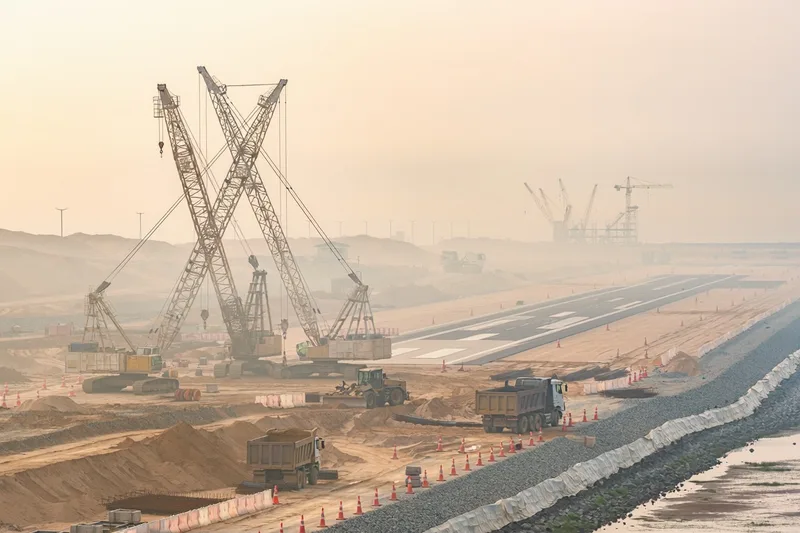
The boldest move is MTerra Solar, spanning Nueva Ecija and Bulacan, designed with 3,500 MWp of solar panels and 4,500 MWh of battery storage, which Meralco says will be the world’s largest integrated solar and storage facility. The project, costing about ₱200 billion, broke ground in November 2024, brought in UK investor Actis for 40%, and was connected to the Luzon grid in early 2026. Phase 1 was 75% complete by January 2026.
In 2025 Meralco’s core net income rose 12% to a record ₱50.6 billion, with MGen’s contribution jumping 52% to ₱16.8 billion and energy deliveries up 78%. The unregulated share of core income rose to 42%. Capital spending more than doubled to ₱108.9 billion, 73% of it for MTerra Solar and other renewables. Pangilinan declined to give 2026 profit guidance because of uncertainty about the project’s ramp-up.
The Philippines faces rising electricity demand, high power prices and dependence on imported coal and gas. Large-scale solar with batteries could reduce costs and emissions, but integrating so much intermittent power into the grid, securing land and managing construction risk are major challenges.
Students can use the case to explore vertical integration between distribution and generation, project finance for renewable megaprojects and the regulatory risks of serving captive customers.
Battery storage is what makes MTerra different from earlier solar farms. Solar panels produce power only during daylight, peaking at midday, while demand in Manila peaks in the evening when air conditioners and lights are running. Batteries store midday solar power and release it later, making the supply more reliable and valuable. Battery costs have fallen sharply over the past decade, making projects like this economically possible.
There is also a governance angle. Meralco both distributes power and owns generation, so it may buy electricity from its own plants. Regulators must ensure that power supply contracts are awarded competitively and that customers are not overcharged. Critics have long raised concerns about such related-party arrangements, while Meralco argues that its bids are competitive and transparent.
Financing such a large project required new approaches. MGen closed what was described as the biggest syndicated loan in Philippine history, and Actis’s 40% stake brought foreign equity. Spreading funding across lenders and partners limits the strain on Meralco’s balance sheet, but it also means sharing future profits with others.
Key moments
Meralco founded.
MGen expands into power generation.
MTerra Solar breaks ground.
Actis buys 40%; capex doubles to ₱108.9bn.
MTerra connects to Luzon grid; record 2025 profit.
Full completion targeted.
About 73% of 2025 capex went to MGen’s MTerra Solar and other renewable projects. Sources: Manila Times via Newswav; GMA News.
The trade-offs at the heart of the case
Regulated stability vs. unregulated growth
Generation lifts profits but adds risk to a traditionally safe utility.
Scale vs. execution risk
The world’s largest solar-battery project is complex to build and integrate.
Self-supply vs. fair competition
Buying power from its own plants raises related-party concerns.
For your seminar, paper or interview
- Q1
Why would a regulated distributor invest heavily in generation?
- Q2
What are the main risks in building a project as large as MTerra Solar?
- Q3
How do batteries change the economics of solar power?
- Q4
How should regulators manage related-party power supply contracts?
- Q5
Should Meralco list MGen separately?
- Vertical integration
- Project finance and risk sharing
- Regulated utility economics
- Energy transition strategy
How we would approach it
Simplifying Finance’s opinion, offered as a starting point for debate, not as fact or investment advice.
MTerra Solar could transform Meralco and the Philippine grid, but its size demands discipline. Meralco should phase the project carefully, keep strong partners, protect its regulated business from generation risk and be transparent about related-party supply.
Phase and verify
Bring capacity online in stages and confirm performance before further spending.
Keep partners in the project
Share capital and risk with experienced investors like Actis.
Ring-fence generation
Keep MGen’s debt separate from the regulated distribution business.
Run transparent procurement
Award supply contracts through open, competitive processes.
What this plan gives up
Phasing slows the project’s impact on emissions and profits, and separate financing may cost more.
The strongest counter-argument
Some argue the Philippines needs massive clean energy fast, so Meralco should build as quickly as possible and expand further.
Metrics to watch
- MTerra construction milestones
- MGen profit contribution
- Capex and debt levels
- Grid integration performance
- Regulatory decisions
Propose your solution
Pick a discussion question and set out what you would do, why, and what it would cost. Strong, well-argued answers are reviewed and published below with your first name and programme.
Published solutions
Loading published solutions…
- BusinessWorld: Meralco 2025 profit grows 12% ↗
- Newswav/Manila Times: Meralco core profit rises 12% ↗
- InsiderPH: Power generation boom drives Meralco profit ↗
- Power Philippines: MGen targets MTerra Solar rollout ↗
Figures are as reported by the companies or cited outlets as of 22 November 2026. Check the source before quoting. Corrections: let us know through the solution form.