What happened
The ACCC sought to prevent Metcash from acquiring Franklins. It was concerned about wholesale packaged groceries supplied to independent stores in New South Wales and the Australian Capital Territory. The initial Federal Court decision went against the regulator, and the Full Federal Court dismissed its appeal on 30 November 2011. The public record preserves a useful disagreement about the alternative to the transaction. Continuing Franklins exactly as it stood was only one possible future.
An independent grocer buys a bundle of services. Warehouse assortment, delivery frequency, credit terms and the ability to return unsold goods all affect the real wholesale price. A new wholesaler might offer a lower price and still attract too little volume to fill trucks regularly. Equally, a single dominant supplier might weaken those services while holding its headline prices flat. The competitive constraint depends on what retailers could actually do.
On 1 July 2010 Metcash, the wholesaler supplying independent supermarkets such as IGA, agreed to buy Franklins from South Africa’s Pick n Pay for about A$215 million. Franklins operated 80 corporate-owned and 8 franchised supermarkets in New South Wales.
The ACCC sued on 8 December 2010, arguing the acquisition would substantially lessen competition in the wholesale supply of packaged groceries to independent retailers in NSW and the ACT. On 25 August 2011 Justice Emmett dismissed the case. The ACCC appealed and sought an interim injunction, but Metcash completed the purchase on 30 September 2011. On 30 November 2011 the Full Federal Court dismissed the appeal and ordered the ACCC to pay costs.
A key dispute was the counterfactual: what would happen without the deal. The ACCC argued that another buyer might have used Franklins to build a rival wholesale business. The court was not persuaded that this was likely. Metcash then sought buyers for many of the 80 stores among independent retailers.
Merger law asks courts to compare the future with and without a deal. The case shows how hard it is for a regulator to prove that a new competitor would have emerged.
Key moments
Court dismisses ACCC application
ACCC appeals
Full Federal Court dismisses appeal
Price about A$215m for 80 corporate Franklins stores (plus 8 franchised) in New South Wales, owned by South Africa’s Pick n Pay. Sources: ACCC; Federal Court; Just Food; Bizcommunity.
The trade-offs at the heart of the case
A grocer chooses a delivered basket
A store with limited storage may prefer three small deliveries over one discounted weekly load. A wholesaler that requires large minimum orders can offer a lower unit price and still increase the store’s waste, borrowing and stockouts. This matters when evaluating whether another wholesaler would attract sufficient demand. Ask grocers to choose between actual bundles of terms and to specify how much they would commit. Testimonials in favour of more competition reveal a preference for another option. A contract accepting minimum volumes, a delivery timetable and credit terms provides stronger evidence that an alternative distributor could cover its fixed costs. A regulator evaluating a merger cannot simply select the alternative that would be best for competition. The alternative also has to be plausible at the time of the decision. Who finances inventory during the first stocking cycle? Who delivers to low-volume stores while the distribution centre builds scale? Those concrete questions can distinguish a credible rival from a desirable but unfunded scenario. They also reveal whether a more limited rival could constrain pricing in some locations despite lacking national reach.
Testing the evidence
The relevant comparison begins with independent grocers able to switch distributors and similar grocers with only one viable delivery service. Ask what would cause them to differ even if the underlying decision had no effect. Here an immediate candidate is store size and distance from distribution centres. Record those differences, then follow delivered basket cost including credit and returns. Present the observed change for each group separately before taking the difference. This lets a reader see whether the result comes mainly from improvement in one group or deterioration in the other. Independent corroboration would come from binding supply commitments specifying volume and frequency. Match the dates as carefully as the amounts. A forecast that ultimately comes true can still leave the decision maker short of funding in the intervening period, particularly when another party controls an important milestone.
For your seminar, paper or interview
- Q1
What signed evidence would make the proposed alternative wholesaler commercially credible?
- Q2
How would you use similar grocers with only one viable delivery service to test changes in delivered basket cost including credit and returns, while allowing for store size and distance from distribution centres?
- Q3
Compare the recommended course with a buyer backed by enforceable minimum purchase commitments from grocers. Which commitment would you make first, and what result would cause you to change course?
- Merger counterfactuals
- Wholesale competition
- Failing firm arguments
- Burden of proof
How we would approach it
Simplifying Finance’s opinion, offered as a starting point for debate, not as fact or investment advice.
Evaluate the alternative buyer’s finance, warehouse rights and binding customer commitments together. Test what happens if the largest independent chain stays with its incumbent supplier. A credible counterfactual also needs a timetable, because shelves still need filling while a new operator recruits drivers and establishes procurement terms.
Define the alternative
Show the court what would realistically happen to the target without the deal.
Sell on to independents
Transfer acquired stores to independent retailers supplied by the wholesaler.
Complete despite appeal
Close the deal once the first judgment is won, accepting the risk of an appeal.
What this plan gives up
Buying Franklins strengthened Metcash’s independent grocery network against Coles and Woolworths, but the ACCC argued it removed a potential rival wholesaler that could have competed for independent supermarkets.
The strongest counter-argument
A contractual supply relationship could let an alternative operator enter progressively, but existing suppliers would need confidence in the entrant’s access to stores. The more the plan depends on simultaneous decisions by independent grocers, lenders and logistics providers, the more important it becomes to specify the sequence in which genuine commitments can be obtained. Geography also limits what an apparent alternative can offer. A grocer near a rival distributor’s route may receive several deliveries a week, while a more remote shop faces a high minimum order. Map availability by store rather than treating every warehouse as a substitute for every retailer. A genuine competitive constraint in one district cannot automatically resolve the terms confronting a retailer in another district. The minimum order for a realistic delivery is a particularly revealing customer constraint.
Metrics to watch
- Independent supermarket market share
- Wholesale prices to independents
Propose your solution
Pick a discussion question and set out what you would do, why, and what it would cost. Strong, well-argued answers are reviewed and published below with your first name and programme.
Published solutions
Loading published solutions…
- ACCC · Response to the Metcash decision ↗
- ACCC · Background to the Full Court appeal ↗
- ACCC: Responds to Metcash decision ↗
- Federal Court: ACCC v Metcash [2011] FCAFC 151 ↗
- Just Food: Metcash wins Franklins appeal ↗
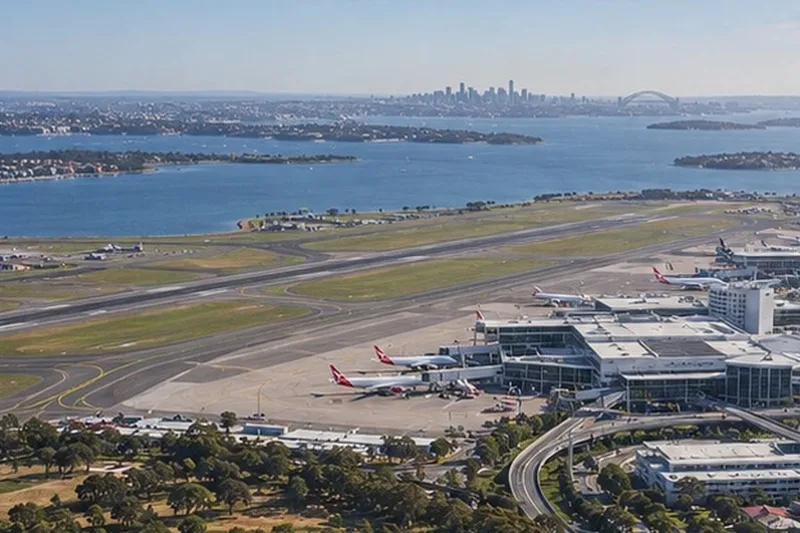
- Image: AI-generated editorial illustration for Simplifying Finance. Illustrative scene.
Figures are as reported by the companies or cited outlets as of 22 November 2026. Check the source before quoting. Corrections: let us know through the solution form.