What happened
AWS announced its Malaysia Region on 21 August 2024, with three availability zones and an estimated US$6.2 billion investment in Malaysia planned through 2038. Its launch account distinguishes the new region from earlier local connectivity services. The investment figure is a forward plan by the supplier. It is not revenue already earned, a customer’s saving or a published construction cost for one availability zone.
AWS’s launch material distinguishes the 2024 region from earlier Direct Connect access in Malaysia. An organisation with an existing connection therefore need not be comparing local service with an absence of cloud services. It may instead be deciding whether the incremental benefits justify moving an established workload.
Amazon Web Services (AWS) opened its Asia Pacific (Malaysia) Region in August 2024, its first full infrastructure region in the country and its 13th in Asia Pacific. A region is a cluster of data centres; this one has three availability zones, physically separate groups of facilities that let customers run applications with high resilience. Before this, Malaysian customers used AWS edge locations and dedicated connections to regions elsewhere, such as Singapore.
AWS said it planned to invest about US$6.2 billion (RM29.2 billion) in Malaysia through 2038, which the government described as the largest investment by an international technology company in the country. AWS estimated that building and running the region would add about US$12.1 billion to Malaysia’s GDP and support more than 3,500 full-time equivalent jobs a year in its supply chain, in construction, maintenance, engineering and telecommunications.
The investment is part of a wider wave of data centre investment in Malaysia, particularly in Johor and the Klang Valley, driven by cloud and artificial intelligence demand, land and power availability and proximity to Singapore. Some economists noted that data centres are highly automated and create relatively few long-term jobs, so their main benefits come through local suppliers, power and connectivity spending and the services they enable.
Key moments
First AWS edge location in Malaysia
AWS announces plans for a Malaysia Region
AWS Asia Pacific (Malaysia) Region opens
Other global tech firms announce large Malaysian data centre investments
Planned investment period
AWS also estimates an average of more than 3,500 full-time equivalent jobs a year. Sources: Amazon; MIDA.
The trade-offs at the heart of the case
Protect the customer’s exit option
A local region can change where an organisation hosts data and the time users wait for a response. The provider’s investment gives no guarantee that every application becomes cheaper. Migration requires testing, staff training and a period of duplicate costs. Greater use of proprietary services can lower operating effort while raising the future cost of switching. Identify which dependencies the buyer is willing to take on and which it expects to keep portable.
Price the option to stay put
Have the business owner sign off on a credible version of keeping the service where it is, with required upgrades included. Then compare local hosting against that alternative on cost per completed transaction and time customers actually save. A decision based on a neglected old system against a fully funded new one will exaggerate the benefits of moving. A local cloud region has strategic value precisely because buyers gain another feasible choice. Each workload should earn its own migration.
Local hosting versus lock-in
A local region gives Malaysian organisations lower latency and the option to keep data in the country. But moving workloads deep into one provider’s services can make it costly to switch later. Customers have to weigh convenience against keeping their options open, for example by using standard tools that work across providers.
For your seminar, paper or interview
- Q1
Which benefits require local hosting specifically?
- Q2
What costs continue while two systems run together?
- Q3
Which workload would give the cleanest evidence for expansion?
- Q4
What evidence would justify abandoning a broader migration?
- Q5
Which contractual obligation matters most when a local service is interrupted?
- Foreign direct investment
- Cloud economics
- Data residency
- Digital infrastructure policy
How we would approach it
Simplifying Finance’s opinion, offered as a starting point for debate, not as fact or investment advice.
The AWS region gives Malaysian businesses and government agencies local, resilient cloud infrastructure and supports the country’s ambition to be a regional digital and AI hub. The long investment horizon signals confidence in Malaysia’s infrastructure and policy environment.
Build local capability
Train Malaysian engineers and partners on cloud services.
Plan power and water
Ensure grid and water capacity keep pace with data centres.
Keep exit options
Encourage customers to use portable architectures.
What this plan gives up
Hosting global cloud providers attracts investment but increases demand on power, water and land.
The strongest counter-argument
Data centres use large amounts of electricity and water and employ relatively few people once built. Much of the economic value accrues to the foreign provider unless local firms build services on top.
Metrics to watch
- Data centre power demand in Malaysia
- Local adoption of cloud and AI services
Propose your solution
Pick a discussion question and set out what you would do, why, and what it would cost. Strong, well-argued answers are reviewed and published below with your first name and programme.
Published solutions
Loading published solutions…
- Amazon Web Services: Malaysia Region launch and investment announcement ↗
- AWS: Malaysia Region launch guide and earlier local infrastructure ↗
- Amazon: AWS launches infrastructure region in Malaysia ↗
- AWS News Blog: now open, AWS Asia Pacific (Malaysia) Region ↗
- MIDA: Amazon launches AWS Malaysia Region, to invest over RM29 billion ↗
- MIDA: AWS investment underscores Malaysia’s offerings ↗
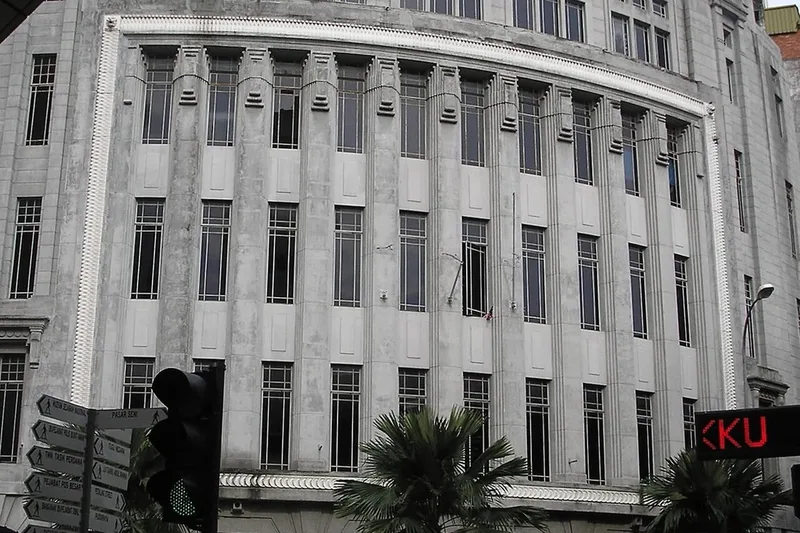
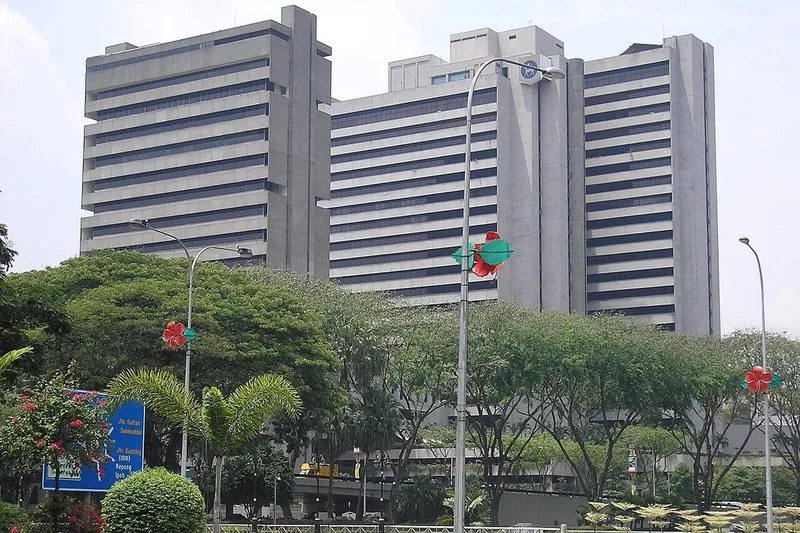
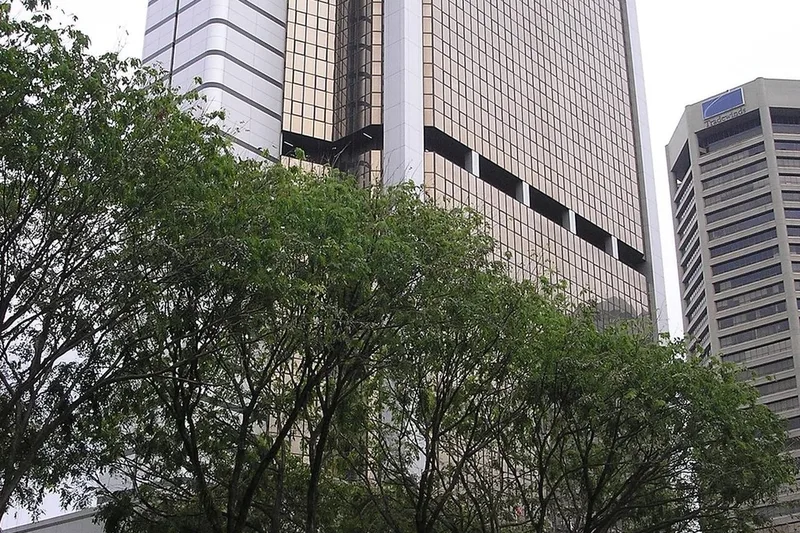
- Image: Cyberjaya in Selangor illustrates Malaysia’s technology sector, without identifying any AWS facility. Photograph: Vimobe, CC BY-SA 4.0 (cropped and resized) ↗
Figures are as reported by the companies or cited outlets as of 25 November 2026. Check the source before quoting. Corrections: let us know through the solution form.