What happened
Infineon announced a major expansion of its 200 mm silicon-carbide manufacturing plans at Kulim in August 2023, building on an earlier investment decision. In August 2024 it opened the first phase of a new facility there. Expansion plans and a completed first phase belong to different stages of capital commitment. Opening a facility also does not prove that every product is qualified at the yields and volumes in the investment case.
Infineon identifies the 2023 announcement as a significant expansion of an investment first announced in February 2022. An analyst should therefore check the perimeter of each announcement before summing planned capital amounts. The first-phase opening in 2024 provides an observable milestone against the continuing plans. Infineon cited approximately €5 billion of new design wins and about €1 billion of prepayments in its expansion announcement. Design wins and cash advances measure different commitments and should not be added as realised sales.
Infineon, the German chipmaker, has operated in Kulim, Kedah, for years. In February 2022 it announced a €2 billion investment in a new fab there to make power semiconductors from silicon carbide (SiC) and gallium nitride (GaN), materials that handle high voltages more efficiently than silicon and are used in electric vehicles, fast chargers, solar inverters and data centres. In August 2023 it said it would invest up to €5 billion more in a second phase, creating the world’s largest 200-millimetre SiC power fab.
The expansion was backed by customer commitments: Infineon reported about €5 billion of new design wins in automotive and industrial markets and about €1 billion of prepayments from customers. Malaysia’s prime minister opened the first phase in August 2024. Infineon said the first phase would create 900 high-value jobs and the full project up to 4,000, and that the site would run on 100 percent green electricity.
Kulim is linked to Infineon’s power semiconductor centre in Villach, Austria, operating as ‘one virtual fab’ that shares processes so production can be moved and ramped quickly. For Malaysia, which has long been strong in chip assembly and testing, the fab moves part of the industry into front-end wafer manufacturing, a higher-value step.
Key moments
Infineon announces €2 billion Kulim fab
Expansion of up to €5 billion announced
First phase officially opened
Production expected to start
Second phase completion
Backed by about €5 billion of design wins and about €1 billion of customer prepayments. Sources: Infineon; MIDA.
The trade-offs at the heart of the case
Price saleable chips instead of wafer starts
Moving production onto larger wafers can improve the potential number of chips per wafer. Good output also depends on defects, product qualification and the mix of designs customers will purchase. A customer prepayment improves financing but can create delivery obligations or price concessions. Treat it as financing under the contract before classifying any part as earned revenue. A factory with booked capacity can still produce disappointing shareholder returns.
Translate a reservation into a firm order
Ask one customer to commit to a minimum number of qualified good chips at a specified price. Identify what happens to the reservation if qualification is late or if the customer’s own product sells poorly. Such terms determine whether a capacity commitment finances new tools, shifts risk to the chipmaker or merely provides visibility. A staged investment can preserve a valuable design relationship while forcing the finance team to distinguish contracted future cash from an impressive list of potential buyers.
Building ahead of demand
Silicon carbide demand depends heavily on electric-vehicle sales, which have grown unevenly. Building the world’s largest fab ahead of demand could leave capacity idle if EV growth slows. Customer prepayments and design wins reduce that risk, but they do not eliminate it.
For your seminar, paper or interview
- Q1
Which customer promises have a cash consequence?
- Q2
What qualification milestone should release equipment orders?
- Q3
How would prepayments change the financing and delivery risks?
- Q4
How could a deposit transfer risk without creating revenue?
- Q5
Which rights or equipment slots expire while the board waits?
- Capacity investment under uncertainty
- Customer prepayments
- Technology transitions
- Industrial policy
How we would approach it
Simplifying Finance’s opinion, offered as a starting point for debate, not as fact or investment advice.
Infineon’s Kulim investment lifts Malaysia into advanced front-end chipmaking and is backed by unusually strong customer commitments. Prepayments and design wins reduce the risk of building such a large fab ahead of demand.
Phase the expansion
Add capacity as customer orders firm up.
Develop local suppliers
Build Malaysian supply of materials and services.
Train talent
Partner with universities for engineers and technicians.
What this plan gives up
Building large capacity early secures customers but risks underuse if demand falls short.
The strongest counter-argument
Silicon carbide prices have fallen as competitors in China and elsewhere add capacity, and EV demand has slowed in some markets. The second phase may need to be paced more slowly than planned.
Metrics to watch
- Utilisation of the Kulim fab
- Global silicon carbide prices
Propose your solution
Pick a discussion question and set out what you would do, why, and what it would cost. Strong, well-argued answers are reviewed and published below with your first name and programme.
Published solutions
Loading published solutions…
- Infineon: announcement of expanded silicon-carbide investment at Kulim ↗
- Infineon: opening of the first Kulim expansion phase ↗
- Infineon: opens the world’s largest SiC power fab in Malaysia ↗
- Infineon: to build world’s largest 200mm SiC fab in Kulim ↗
- MIDA: Kulim will be home to world’s biggest 200mm SiC fab ↗
- eeNews Europe: Infineon opens €2bn Kulim power fab ↗
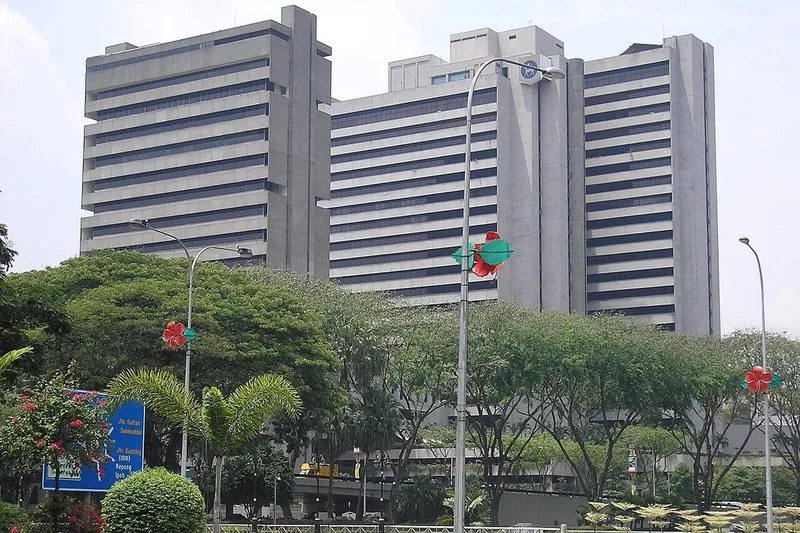
- Image: The Kulim Hi-Tech area in Kedah, the industrial setting for the investment. Photograph: angys, CC BY-SA 4.0 (cropped and resized) ↗
Figures are as reported by the companies or cited outlets as of 25 November 2026. Check the source before quoting. Corrections: let us know through the solution form.