What happened
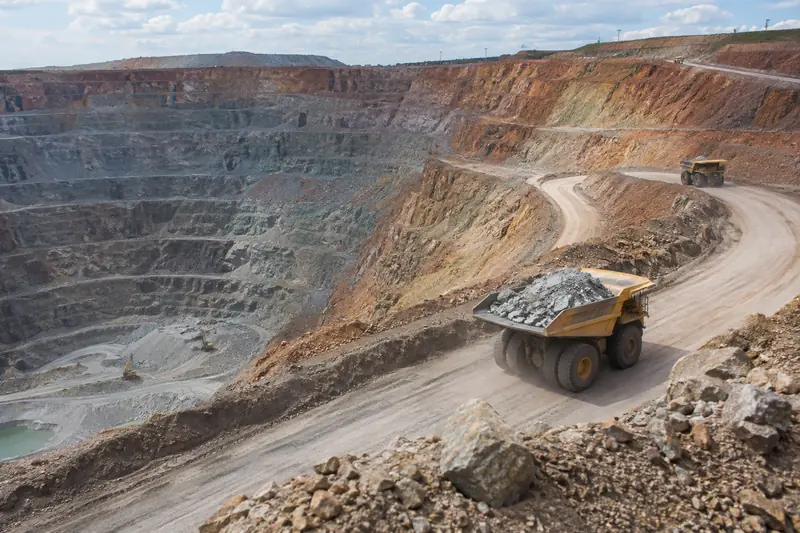
Potash, a key source of potassium for crops, is mined in only a few countries, with Canada’s Saskatchewan holding some of the world’s richest deposits. In 2018 Saskatchewan’s PotashCorp merged with Calgary-based Agrium to create Nutrien, combining low-cost potash mines with nitrogen and phosphate plants and Agrium’s large network of farm retail stores in North America, Australia and South America.
Fertiliser is a cyclical commodity. Prices swung wildly in recent years: they spiked in 2022 after Russia’s invasion of Ukraine and sanctions on Belarus, both major potash exporters, then fell back. Nutrien’s earnings followed. The company also faced questions about whether its retail business, which sells seeds, chemicals and advice to farmers, created enough value.
Under CEO Ken Seitz, Nutrien set a three-year plan to grow fertiliser volumes, raise retail earnings, cut costs and reduce capital spending. In 2025 it sold its stake in Argentina’s Profertil for about US$0.6 billion and other non-core assets, began a strategic review of its phosphate business and judged plants such as Trinidad’s nitrogen operations by their free cash flow contribution.
Results improved. Fertiliser sales volumes reached a record 27.5 million tonnes, potash EBITDA rose to US$2.25 billion on higher prices and record volumes, and nitrogen EBITDA rose to US$2.15 billion. Nutrien mined 49% of its potash ore using automation, improving safety and costs. It repurchased about 2% of its shares and raised its dividend slightly.
The case explores how a company competes in a commodity market where it cannot control prices, and how it decides which businesses to keep, fix or sell.
Commodity businesses compete mainly on cost. Because potash from one mine is essentially the same as potash from another, the lowest-cost producers earn profits even when prices fall, while high-cost producers lose money and may shut down. Economists describe this using a cost curve, which ranks producers from cheapest to most expensive. Saskatchewan’s deep, rich deposits and Nutrien’s automation place it near the low end, which is its main competitive advantage.
Market structure also matters. A few producers, including Nutrien, Belarus’s Belaruskali, Russia’s Uralkali and Germany’s K+S, supply most of the world’s potash, and new mines take a decade and billions of dollars to build. BHP’s giant Jansen project in Saskatchewan will add significant capacity later this decade, which could pressure prices. Nutrien must plan for a world with more supply.
The retail business offers a different profile. Farmers buy seeds, crop protection, fertiliser and agronomic advice from Nutrien’s stores, which earn steadier margins and deeper customer relationships. Supporters see retail as a stable complement to cyclical mining; critics see it as a lower-return business that distracts management and could be worth more as a separate company.
For students, Nutrien is a good example of how management can improve results in a commodity business without controlling prices: by lowering costs, selling weaker assets and returning cash when shares are cheap.
Key moments
PotashCorp and Agrium merge to form Nutrien.
Fertiliser prices spike after Russia invades Ukraine.
Prices fall; Nutrien cuts costs.
Investor Day sets three-year plan.
Agrees to sell stake in Profertil for about US$0.6bn.
Phosphate strategic review begins.
Record volumes; 2026 guidance issued.
Source: Nutrien full-year 2025 results via Business Wire and Barchart.
The trade-offs at the heart of the case
Upstream vs. downstream
Mines are low-cost but cyclical; retail is steadier but lower margin.
Volume vs. price
Selling more potash can push prices down in a concentrated market.
Simplification vs. diversification
Selling assets focuses capital but increases exposure to fewer products.
For your seminar, paper or interview
- Q1
Why did PotashCorp and Agrium merge? Has the combination created value?
- Q2
How should a commodity producer plan capital spending through price cycles?
- Q3
What role does automation play in a mining cost advantage?
- Q4
Should Nutrien keep its retail network or spin it off?
- Q5
How did the Russia–Ukraine war reshape global fertiliser markets?
- Commodity cost curves
- Portfolio strategy and divestitures
- Vertical integration
- Capital allocation through cycles
How we would approach it
Simplifying Finance’s opinion, offered as a starting point for debate, not as fact or investment advice.
Nutrien’s strongest asset is its low-cost potash. It should keep investing in mine automation, run the rest of the portfolio for cash and avoid large acquisitions at the top of the cycle.
Protect the cost advantage
Expand automation and efficiency at Saskatchewan mines.
Prune for cash
Exit businesses that do not earn their cost of capital through the cycle.
Make retail a data business
Use agronomy data and digital tools to raise retail margins.
Return cash counter-cyclically
Buy back more shares when prices and valuations are low.
What this plan gives up
Selling marginal assets reduces diversification and may sacrifice upside if those markets recover.
The strongest counter-argument
Some argue Nutrien should split into separate mining and retail companies, because investors value them differently and the combination creates a conglomerate discount.
Metrics to watch
- Potash prices and volumes
- Cost per tonne
- Retail EBITDA
- Phosphate review outcome
- Share count
Propose your solution
Pick a discussion question and set out what you would do, why, and what it would cost. Strong, well-argued answers are reviewed and published below with your first name and programme.
Published solutions
Loading published solutions…
- Business Wire: Nutrien full-year 2025 results ↗
- Barchart: Nutrien full-year 2025 results ↗
- AOL: Nutrien Q4 2025 earnings call transcript ↗
- Business Wire: Nutrien Q3 2025 results (Profertil sale) ↗
Figures are as reported by the companies or cited outlets as of 22 November 2026. Check the source before quoting. Corrections: let us know through the solution form.