What happened
Peru’s agriculture ministry reported that SENASA certified a first shipment of 16.4 tonnes of fresh table grapes from Piura to Japan in September 2023. Subsequent official reporting described the arrival. The event demonstrated a functioning route for an initial consignment. It did not establish a nationwide price premium, repeat orders or the cost of serving an importer at a commercially significant scale.
Start with the importer’s delivered price and deduct packing, freight, commissions, quality claims and finance charges to calculate a comparable net return per kilogram. Calculate it again for an established destination using the same variety, grade and harvest week. A higher headline price in Japan can be offset by more demanding pack selection or a longer cash cycle. Conversely, adding a destination can protect an exporter if two markets have different peaks in demand.
The first Piura shipment demonstrated that a certified consignment could enter the new route. A sensible follow-up would examine whether buyers pay the agreed price after inspecting quality at destination, whether the same grade can be supplied across more than one harvest week and whether payment arrives on time. Design the next few consignments to separate these uncertainties. Two lots sold to different customers on different dates may deliver conflicting results that reveal little about why they differ. Keep some variables fixed and record the rest. Customer feedback has economic value when it changes the exporter’s next commitment, perhaps the packaging specification, the quantity allocated to that market or the decision to continue using another destination during a particular selling window.
Peru is one of the world’s leading exporters of table grapes, grown mainly in Piura and Ica. Harvests in the southern hemisphere summer allow Peruvian grapes to reach northern markets when local supply is low.
Exporting fresh fruit requires meeting each importing country’s phytosanitary rules, designed to prevent the spread of pests and diseases. These rules are negotiated between national plant health authorities, such as Peru’s SENASA and Japan’s agriculture ministry.
Japan is known for some of the strictest requirements in the world. Approval typically involves pest risk assessments, inspections of farms and packing facilities, and treatments such as cold storage to kill fruit fly larvae.
In September 2023 SENASA certified a first shipment of 16.4 tonnes of fresh table grapes from Piura to Japan, according to the agriculture ministry. Later official reports described its arrival.
The volume was tiny compared with Peru’s total grape exports, but it demonstrated that the full process, from certification to inspection on arrival, worked in practice.
Access to new markets helps exporters reduce their dependence on a few buyers. If prices fall or demand weakens in one market, sales can shift to others.
For finance students, the case shows that market access is a form of investment. Exporters and governments spend money on compliance and negotiation before any revenue is earned, and the return depends on how much trade follows.
Other agricultural exporters, from Chile to New Zealand, have followed similar paths into Asian markets.
Market access is usually granted product by product. A country may accept one fruit from Peru but not another, and each requires its own risk assessment and agreed protocol. Negotiations can take many years.
Once access is granted, exporters must prove that the system works reliably. A single shipment with pests can lead to stricter inspections or even suspension of access, affecting every exporter in the country.
Japan’s consumers are known for paying high prices for premium fruit with consistent appearance and taste. That creates opportunities for exporters who can meet strict quality standards, but also risks for those who cannot.
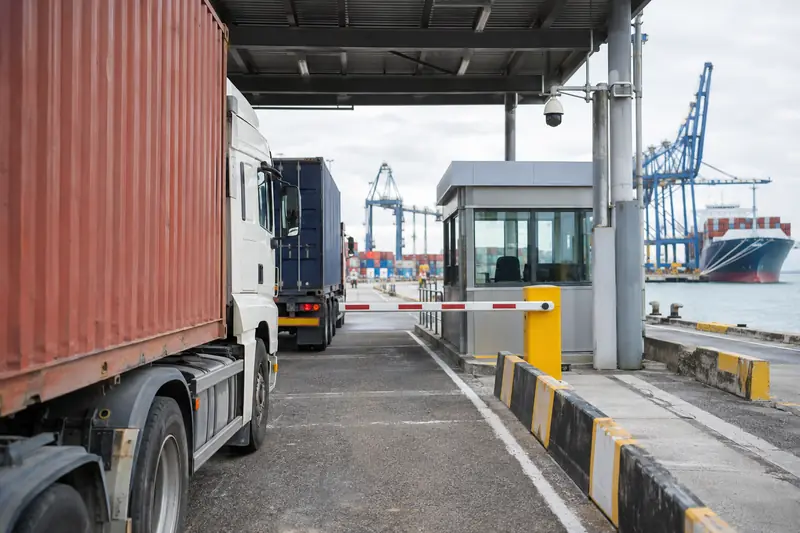
Shipping time is another challenge. Grapes must travel across the Pacific in refrigerated containers and arrive in good condition, which requires careful handling and cold chain management from farm to port.
Over time, the success of the Japanese market will depend on whether volumes grow and whether Peruvian grapes can compete with suppliers from Chile, the United States and other countries.
It is a reminder that trade growth often begins with very small, carefully managed first steps.
Patience matters as much as price.
Key moments
Peru obtained access for eligible table grapes to enter Japan.
SENASA certified the first shipment and the authorities subsequently reported its arrival.
Source: Peru’s agriculture ministry, as cited in the case.
The trade-offs at the heart of the case
Opening a market creates an option
A first grape shipment to Japan showed one consignment could complete the journey. A US rule for Peruvian Hass avocados established eligibility subject to conditions. Commercial value depends on repeatable net returns across grades and on the exporter’s ability to choose another market.
Our assessment
I would treat the next shipments as a commercial learning programme. Record the accepted grade mix, time to payment and whether the importer orders again without introductory concessions. Decide before shipping what level of repeat netback would justify dedicated packaging or sales staff. A single successful shipment opens an option. Its value depends on what the exporter can learn before making a larger, less reversible commitment.
For your seminar, paper or interview
- Q1
Which commercial question did the first shipment answer?
- Q2
What would make the first selling price an unreliable guide to later shipments?
- Q3
How much investment is justified before seeing a repeat order?
- Q4
What would you need to observe for the next commitment to become irreversible?
- Q5
How would a weaker signal, or a lost selling season during testing, change the value of waiting?
- Market access
- Phytosanitary rules
- Export diversification
- Trade agreements
How we would approach it
Simplifying Finance’s opinion, offered as a starting point for debate, not as fact or investment advice.
We think Peru’s first table-grape shipment to Japan was a small but important step. Opening a demanding market takes years of technical negotiation, and the value lies less in the first container than in the long-term access it creates.
Maintain standards
Keep pest controls consistent.
Build relationships
Work with Japanese importers on quality.
Scale gradually
Grow volumes as demand is proven.
What this plan gives up
New markets diversify risk but require costly compliance.
The strongest counter-argument
Some argue exporters should focus on existing large markets first.
Metrics to watch
- Volumes shipped to Japan
- Rejection rates at inspection
Propose your solution
Pick a discussion question and set out what you would do, why, and what it would cost. Strong, well-argued answers are reviewed and published below with your first name and programme.
Published solutions
Loading published solutions…
- Agriculture Ministry and SENASA — First table-grape shipment to Japan ↗
- Government of Peru — First arrival of Peruvian grapes in Japan ↗
- Photo: Thompson seedless grapes by Glane23, CC BY-SA 3.0 (cropped and resized) ↗
Figures are as reported by the companies or cited outlets as of 22 November 2026. Check the source before quoting. Corrections: let us know through the solution form.