What happened
On 26 July 2017 Stora Enso announced an agreement to sell its 35% holding in Bulleh Shah Packaging to the principal owner, Packages Limited. The cash consideration was €6 million and the expected disposal loss approximately €19 million. Stora Enso expected completion in the third quarter. The announcement provides a decision point with a quoted price and an estimated accounting consequence.
A simple bridge adding the expected loss to cash consideration gives €25 million. To identify the accounting carrying amount precisely, an analyst needs to check the treatment of costs, currency translation and other adjustments. Nor does the loss establish the total lifetime return, which also depends on money invested, interim distributions and currency effects over the holding period.
Bulleh Shah Packaging was formed in May 2013 as a joint venture between Packages Limited, which held 65 percent, and Finland’s Stora Enso, with 35 percent. The partners planned a US$130 million investment to upgrade the paper and board mill at Kasur and build a biomass plant.
Four years later Stora Enso decided to leave. On 26 July 2017 it agreed to sell its 35 percent stake to Packages for €6 million in cash, booking a loss on disposal of about €19 million. Its chief executive said the business, ‘with its product mix and related future outlook’, was no longer a strategic fit given a changing environment in Pakistan. The sale completed on 19 September 2017, and Packages reported paying about US$7.3 million.
Stora Enso kept a 6 percent stake in Packages and said it would continue a partnership with the International Labour Organization to combat child labour in Punjab until the end of 2018, and hired KPMG to advise on a responsible exit. Packages, with a market capitalisation of about US$590 million, gained full ownership of the mill.
Key moments
Bulleh Shah Packaging joint venture established
Stora Enso agrees to sell its 35 percent
Sale completed; Packages owns 100 percent
Stora Enso sold its 35 percent stake to Packages Ltd. The joint venture had a US$130 million investment plan when formed in 2013. Sources: Stora Enso; Daily Times.
The trade-offs at the heart of the case
Core tensions
The local majority owner might value the stake more highly than an outside bidder because it already understands the mill and can make decisions without a minority partner. It might also be the only buyer able to achieve an uncomplicated agreement. A constrained buyer pool weakens the seller’s negotiating position even if the underlying equipment remains productive.
Why the last buyer may value the stake differently
A minority investor and a controlling industrial owner can attach different values to the same shares. The minority investor may depend on a dividend decision it cannot dictate. The controlling shareholder may value simplified governance, the ability to integrate production and the freedom to approve future investment without negotiating with a partner. The price the controlling owner will actually pay also depends on whether credible competing buyers can acquire the minority rights on equivalent terms. Put the earlier book value aside for the first round of negotiations. Ask each side to specify the future cash flows it can control if no agreement is reached. Include any capital calls, the time needed to find an alternative buyer and restrictions on transferring the stake. Only after that comparison should the finance team reconcile the agreed price to the carrying amount and the reported disposal loss. This order of work keeps a large accounting loss from becoming either a reason to retain an unattractive holding or an excuse to accept the first available cash offer.
Why the minority sold cheaply
A minority partner wanting to exit has few buyers: the majority owner already controls the business and knows it best. That gives the majority strong bargaining power. Stora Enso accepted a large loss to leave, suggesting it valued freedom from future capital calls more than the stake’s theoretical value.
Accounting loss versus economic loss
The €19 million loss reflects the gap between book value and sale price. Some of that value may already have been lost through weaker performance before the sale. The disposal crystallised the loss rather than creating it.
For your seminar, paper or interview
- Q1
How would translation reserves change a simple cash-to-loss bridge?
- Q2
Which decisions become easier for Packages when the minority owner exits?
- Q3
What future distributions would make keeping the holding more valuable than taking the sale proceeds?
- Joint venture exits
- Minority valuation
- Impairment
- Strategic fit
How we would approach it
Simplifying Finance’s opinion, offered as a starting point for debate, not as fact or investment advice.
For a minority partner in a non-core joint venture, accepting a low price from the majority owner can be rational if it avoids further capital commitments. Joint ventures should agree exit terms, such as valuation methods, at the start.
Agree exit terms upfront
Set valuation formulas in the joint venture agreement.
Value the alternative
Compare the sale price with future capital calls.
Exit responsibly
Honour social commitments after leaving.
What this plan gives up
A quick exit avoids future losses but may sacrifice value.
The strongest counter-argument
Packages may have gained a bargain; an independent valuation or competitive sale process could have delivered more to Stora Enso’s shareholders.
Metrics to watch
- Bulleh Shah’s profitability under full Packages ownership
- Further divestments by foreign partners in Pakistan
Propose your solution
Pick a discussion question and set out what you would do, why, and what it would cost. Strong, well-argued answers are reviewed and published below with your first name and programme.
Published solutions
Loading published solutions…
- Stora Enso: Divestment agreement and expected loss ↗
- Packages Limited: Annual report 2017 ↗
- Stora Enso: divestment announcement ↗
- Cision: divestment completed ↗
- Daily Times: Finnish company decides to quit Pakistan ↗
- Profit: Packages completes acquisition ↗
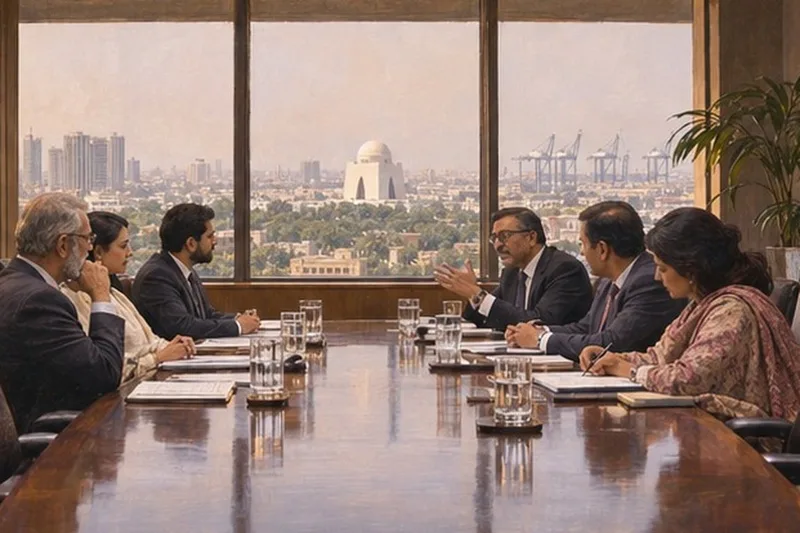
- Image: AI-generated editorial illustration · Simplifying Finance
Figures are as reported by the companies or cited outlets as of 22 November 2026. Check the source before quoting. Corrections: let us know through the solution form.