What happened
In July 2019 the Asian Development Bank approved a US$235 million loan for the Red Line project. Its announcement described a 26.6 km corridor and an estimated 1.5 million residents within one kilometre of a station. Pakistan and ADB signed the loan agreement in June 2020. These were financing and design milestones. The catchment estimate described people living near proposed facilities rather than daily paying passengers.
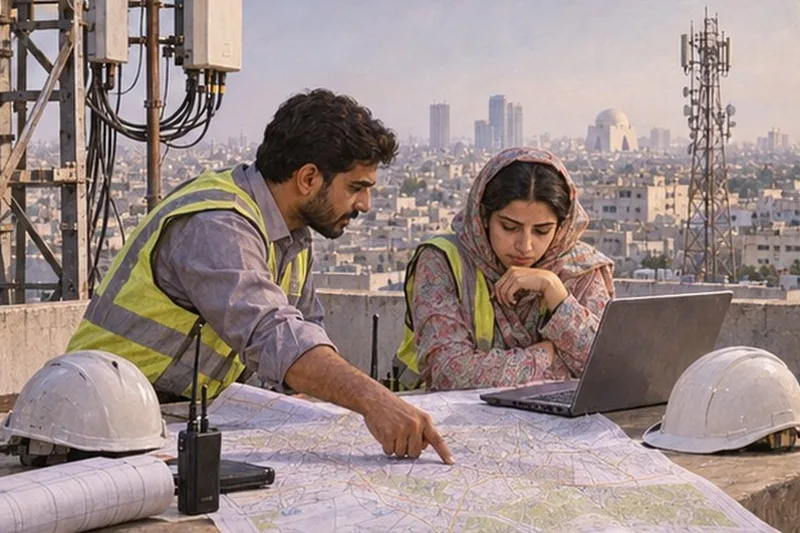
A resident may cross a fast road, wait for a feeder, travel with a child or work hours when service is infrequent. Two people at the same map distance can therefore face very different door-to-door costs. An access ramp or safer crossing can add more usable demand than a further increment in vehicle capacity. It can also help people who do not become frequent riders.
The Red Line is planned as a 26.6 km bus rapid transit corridor from Malir Halt to Numaish along University Road in Karachi, with 29 stations and dedicated lanes. The Asian Development Bank approved a US$235 million loan in July 2019, saying the line would benefit about 1.5 million people living within a kilometre of a station and carry over 300,000 passengers a day. Co-financiers include the French Development Agency, the Asian Infrastructure Investment Bank and the Green Climate Fund, for a total of about US$503 million.
The project includes buses running on biogas from cattle waste, a 96-inch and 72-inch water pipeline along the corridor linked to the K-IV bulk water scheme, and a full rebuild of the road. Construction started in 2022 with completion targeted for 2025, but land issues, design changes, utility relocation and contractor problems caused repeated delays. The AIIB flagged significant delays and safety issues in 2023–24, and the cost in rupees was expected to rise from Rs79 billion to over Rs100 billion.
Work stopped in September 2025 amid rising costs and utility relocation problems, then resumed in November after the Sindh chief minister intervened. The ADB said it was willing to consider extending the loan and providing more financing if progress continued. Meanwhile University Road users faced years of disruption.
Key moments
Project announced at about Rs79 billion
ADB approves US$235 million loan
Construction starts
Work halted over costs and utilities
Work resumes; no firm completion date
Total about US$503 million. Sources: AIIB project monitoring report (June 2024).
The trade-offs at the heart of the case
Core tensions
Construction brings another distributional issue. Shops may lose passing customers while access is disrupted, long before travellers gain a faster commute. A project budget that records engineering works but overlooks the timing of these losses can understate the cost to particular streets. Delaying works to protect every temporary use also postpones benefits to a large population.
A shopkeeper during the construction phase
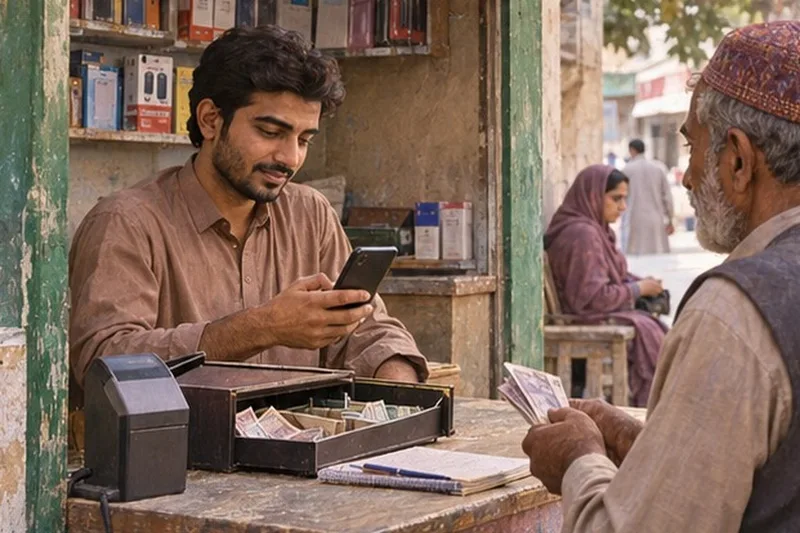
A shop beside a future bus stop may gain from greater pedestrian traffic once service opens. The same shop can lose its customers while barriers block access. Discounting future aggregate benefits against current aggregate costs can conceal that a small business runs out of cash before the benefits arrive. Document the timing and location of disruption, together with safe access for customers and deliveries. A temporary crossing or loading arrangement can preserve a business at modest cost. Travellers with mobility limitations face another appraisal issue. A station may appear close on a map but require a long detour to reach a safe crossing. Measuring straight-line distance overstates effective coverage for everyone in the same direction and can disproportionately overstate it for people who travel slowly or need assistance. Map actual routes at the times people use them. Some changes that add little to modelled vehicle speed, such as safer crossings and reliable lighting, may have a material effect on usable demand.
A family one kilometre from the station
Map distance can place two Karachi households equally close to a planned bus station. One has a direct footpath. The other faces a busy road crossing, an indirect approach and a difficult transfer after the bus ride. If the second household must allow much more time for an uncertain arrival, the same scheduled bus journey has less value to it. Counting both households as equally likely riders can distort forecasts of fare income as well as the distribution of public benefits. Ask a corridor planner to walk the route at the time a worker actually needs to travel, including the return after dark. Record waiting time for crossings and the availability of a practical onward connection. Then compare investment in a safer approach with spending the same sum on more bus capacity. The approach can benefit pedestrians who never travel by bus, while the extra vehicle may mainly benefit people already riding. Account for each beneficiary once and check whether the proposed improvement can be maintained after the construction budget closes.
Shops pay before riders benefit
Businesses along University Road have lost customers for years because of dug-up roads and dust. They may benefit once the line opens and footfall rises, but the losses come first and fall on people who have no say in the schedule. Compensation and faster construction reduce that burden.
Distance is not access
Two homes a kilometre from a station are not equally served if one has a safe walking route and the other must cross a highway. Station access, feeder buses and safe pedestrian routes determine how many of the 1.5 million people actually use the line.
For your seminar, paper or interview
- Q1
How would you convert a catchment population into a defensible peak ridership range?
- Q2
Which benefits accrue even when the operator receives no fare?
- Q3
Which station access improvement would change the most complete journeys?
- Urban transport finance
- Construction disruption
- Cost overruns
- Access and catchment
How we would approach it
Simplifying Finance’s opinion, offered as a starting point for debate, not as fact or investment advice.
The Red Line could transform travel for a large part of Karachi, but years of delay have imposed heavy costs on people along the route. Completion should be prioritised over further design changes, and feeder access planned now so riders can reach stations on opening day.
Freeze the design
Stop changes that delay construction.
Compensate affected businesses
Support shops along the corridor.
Plan feeder access
Build walking and bus links to stations.
What this plan gives up
Bundling infrastructure saves future disruption but increases complexity and delay.
The strongest counter-argument
Combining a transit line with a major water pipeline and full road rebuild made the project more complex than a simpler BRT would have been.
Metrics to watch
- Construction progress against revised schedule
- Daily ridership after opening
Propose your solution
Pick a discussion question and set out what you would do, why, and what it would cost. Strong, well-argued answers are reviewed and published below with your first name and programme.
Published solutions
Loading published solutions…
- Asian Development Bank: Karachi Red Line approval ↗
- Asian Development Bank: Loan signing ↗
- ADB loan approval (The Express Tribune) ↗
- AIIB: project monitoring report June 2024 ↗
- Dawn: work resumes with no clear timeframe ↗
- Dawn: only cost goes up ↗
- The Express Tribune: ADB reviews projects ↗
- Image: AI-generated editorial illustration · Simplifying Finance
Figures are as reported by the companies or cited outlets as of 22 November 2026. Check the source before quoting. Corrections: let us know through the solution form.