What happened
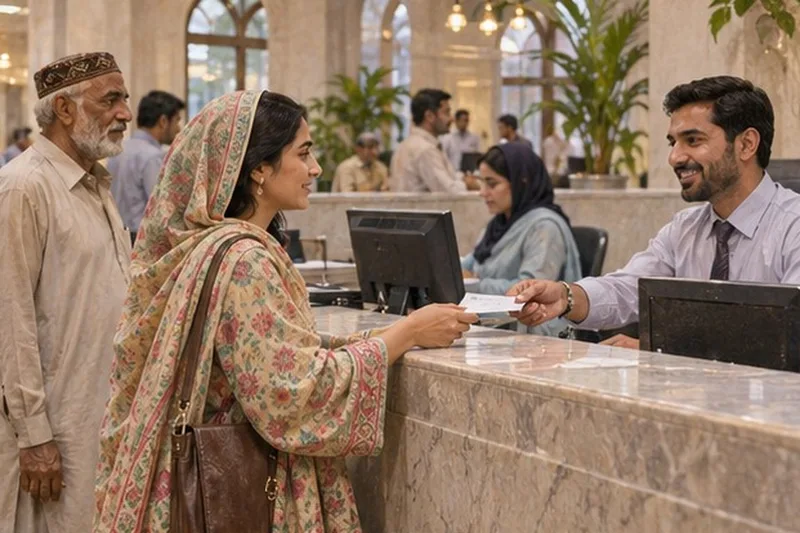
On 7 May 2015 the State Bank of Pakistan announced federal approval of KASB’s amalgamation into BankIslami and lifted the moratorium with immediate effect. Former KASB depositors became depositors of BankIslami and could operate the accounts at their branches. On 10 May the central bank issued a follow-up about customers beginning transactions. Its account of reopening answers a question about access. The long-run value of assets transferred requires different evidence.
A depositor needs a working account, a recognised signature and a payment that reaches its destination. A resolution authority also needs to prevent a rush of precautionary withdrawals from overwhelming the receiving institution. These objectives can look aligned on Friday and diverge on Monday if customers all try to test the promise at once. The receiving bank must plan for gross withdrawals before relying on deposits that may come back later.
KASB Bank had been losing money for years. Its deposits grew from Rs35 billion in 2008 to Rs63 billion in 2013, but shareholders’ equity fell from Rs8.8 billion to Rs1.1 billion over the same period. At the end of 2013 its capital adequacy ratio was negative, at −4.63 percent against a required 10 percent. In November 2014 the federal government placed it under a six-month moratorium at the State Bank’s request.
The State Bank estimated a negative equity gap of Rs12 to 14 billion, plus a Rs10 billion shortfall in minimum capital. After due diligence, BankIslami was the only bank to show interest. Under an amalgamation scheme approved on 7 May 2015, KASB was merged into BankIslami, and the moratorium was lifted. More than 150,000 depositors with Rs57 billion could use their accounts again; deposits had fallen only from about Rs62 billion during the moratorium, suggesting little panic.
Shareholders received a token Rs1,000 for all 1.95 billion KASB shares, based on a negative valuation. The case was controversial: the State Bank later gave BankIslami a Rs20 billion concessionary loan, the auditor general questioned the valuation, and the Sindh High Court ordered the State Bank to invite objections from former shareholders. The State Bank defended its actions as necessary to protect depositors.
Key moments
7 May 2015 · Central bank announces amalgamation and lifts restrictions
10 May 2015 · Central bank reports transactions by former KASB depositors
Over 150,000 depositors; shareholders received Rs1,000 in total. Sources: SBP; Dawn.
The trade-offs at the heart of the case
Core tensions
Keeping accounts restricted for longer could buy time for an asset appraisal. For a household or firm the extra wait has a cost that a loan valuation does not capture. A business can incur supplier penalties while remaining solvent on paper. Conversely, reopening early requires a credible liquidity arrangement and enough trained staff to handle exceptional cases consistently.
What an orderly reopening looks like to a payee
A supplier paid by a former KASB customer sits outside the bank’s branch-traffic statistics. It may see an instruction, release goods and later discover that funds have not settled. A sensible reopening measure therefore reaches beyond the originating counter. Select ordinary payments that customers expected to make around the reopening and follow them to receipt. A larger number of withdrawals may indicate improving access, loss of confidence, or both at once. There is an important sequencing issue for the authority. At first it needs evidence that customers can use their money without widespread exceptions. Later it can examine whether they were willing to leave balances after testing the system. Treating every first-day withdrawal as a permanent loss of funding could lead the receiving institution to overpay for replacement deposits. Treating every balance left untouched as a sign of confidence could be worse if the customer has simply been unable to reach the branch.
A payroll file tests the reopening
A business with money in a reopened account may instruct a salary payment to employees at several different banks. If the originating branch accepts the file but the receiving institutions credit only some workers, the employer still has an operational problem. It might borrow elsewhere to pay the rest, risking duplicate payment when the original file clears. A branch report showing an accepted instruction would miss both the cost and the loss of confidence. A practical reopening test would use the payment reference to establish which beneficiaries received final credit and which instructions can be safely resubmitted. The call centre needs that answer as much as the branch. Employees who cannot access their salary should have a way to establish the status without obtaining confidential details about coworkers. Once the immediate backlog clears, the authorities can ask a different question. Did these customers continue using the accounts for ordinary business after they had a genuine opportunity to move them? The answer matters for the surviving bank’s funding plan.
Speed versus fairness to shareholders
Freezing accounts for six months harmed depositors, who could not pay suppliers or staff. Ending the moratorium quickly required a buyer, and with only one bidder, the price for shareholders was set at almost nothing. Shareholders argued the assets were undervalued; the regulator argued they were risk-takers who must bear losses first.
Support for the buyer
BankIslami took on a bank with negative equity. A concessionary loan from the central bank made the deal possible but raised questions about transparency and whether taxpayers were subsidising the buyer. Clear rules on resolution funding help avoid such disputes.
For your seminar, paper or interview
- Q1
How much branch liquidity would you hold on reopening day?
- Q2
What would a delay cost a firm due to pay 40 employees on Friday?
- Q3
What evidence from a receiving bank would you require before declaring payroll service restored?
- Bank resolution
- Moratoriums
- Depositor protection
- Shareholder rights
How we would approach it
Simplifying Finance’s opinion, offered as a starting point for debate, not as fact or investment advice.
Give the receiving institution an operational forecast by branch and time of day. Publish a simple route for customers whose balances or instructions fail to transfer correctly. Have a separate team review asset recoveries over subsequent periods, allowing service restoration and the financial cost of resolution to receive independent scrutiny.
Shorten the freeze
Prepare resolution plans before a moratorium.
Publish valuations
Show how negative equity was calculated.
Fund resolution transparently
Disclose any support given to the buyer.
What this plan gives up
Protecting depositors quickly may require wiping out shareholders and supporting the buyer.
The strongest counter-argument
A six-month freeze imposed real costs on businesses and households; a faster resolution, even at higher public cost, might have been better.
Metrics to watch
- Time accounts stay frozen in future resolutions
- Size of public support to acquirers
Propose your solution
Pick a discussion question and set out what you would do, why, and what it would cost. Strong, well-argued answers are reviewed and published below with your first name and programme.
Published solutions
Loading published solutions…
- State Bank of Pakistan: Lifting the KASB moratorium ↗
- State Bank of Pakistan: First transactions following amalgamation ↗
- SBP: KASB amalgamation implemented ↗
- SBP: statement of 30 April 2015 ↗
- Dawn: BankIslami takes over KASB ↗
- Dawn: KASB history ↗
- Profit: a bank sold for Rs1,000 ↗
- SBP: response on NAB investigation ↗
- Image: AI-generated editorial illustration · Simplifying Finance
Figures are as reported by the companies or cited outlets as of 22 November 2026. Check the source before quoting. Corrections: let us know through the solution form.