What happened
The World Bank’s June 2019 appraisal proposed a US$40 million loan for the Karachi Water and Sewerage Services Improvement Project. AIIB’s project description also identifies rehabilitation and institutional capacity building. The appraisal is a financing proposal, and the financiers’ commitments should be identified by lender before making a statement about total programme cost or disbursement.
For a resident receiving intermittent water, the cost of another missed supply period can include purchased water, storage and hours spent arranging deliveries. For the utility, a leak repair may save pumping costs without immediately producing one more paid bill. Conversely, correcting a billing record can raise receipts without delivering additional water to the neighbourhood. Both improvements matter and can be distinguished empirically.
Karachi’s water utility, the Karachi Water and Sewerage Corporation (formerly Board), serves one of the world’s largest cities with a network that loses much of its water before it reaches paying customers. Losses come from leaks, illegal connections and unmetered use, together called non-revenue water. Many households receive water only intermittently and buy from tankers at much higher prices.
In June 2019 the World Bank approved a US$40 million loan for the first Karachi Water and Sewerage Services Improvement Project, co-financed by the AIIB. It focused on institutional reform, revenue management, customer service, a systematic programme to reduce non-revenue water using district metered areas and leak detection, chlorination stations and services for informal settlements. The utility was converted into a corporation to give it more operational autonomy.
A second phase followed. In December 2024 the World Bank approved US$240 million for KWSSIP-2, and the AIIB approved another US$240 million in 2025. The second phase aims to provide safely managed water to nearly 16 million people and sanitation to about 7.5 million by 2030, and to involve the private sector in service delivery.
Key moments
World Bank approves KWSSIP-1
AIIB co-finances the first phase
Karachi Water and Sewerage Board becomes a corporation
World Bank approves US$240 million for KWSSIP-2
AIIB approves US$240 million for KWSSIP-2
KWSSIP-2 aims to reach nearly 16 million people with water and 7.5 million with sanitation by 2030. Sources: World Bank; Dawn.
The trade-offs at the heart of the case
Core tensions
Putting all of a scarce budget into new supply can produce disappointing results when large physical losses persist. Concentrating solely on collections can ask households to pay for uncertain service. A district-level programme can sequence pressure management, leak detection, account verification and service commitments, allowing users to see what improved before being asked to pay more reliably.
The household outside the customer register
A household buying water informally may pay much more per unit than a connected household. It can receive large benefits from improved reliability while contributing little to an indicator calculated from existing customer invoices. Conversely, an improvement to collection from well-served customers can stabilise utility finances and make future expansion possible. Collect district data before changing pressure. Higher pressure can improve supply at the end of a network, but it can also reveal weak pipes and change measured losses. If the baseline consists only of billed volume, the evaluator will be unable to tell whether more water reached customers or accounting coverage improved. Pair physical measurements with resident diaries and service complaints.
The household already paying for water twice
A customer can pay a utility bill and still buy water from another source when piped supply is unreliable. Better district service may reduce that second expense, free time spent arranging deliveries and improve the predictability of household routines. The utility captures only the part that reaches it as additional collected revenue. This is one reason a network investment can have a strong economic return for residents while producing too little extra cash to service a commercial loan on its own. Track a small group of households through the works. Record supply hours, actual spending on alternative water and whether bills are paid on time. Compare households that previously purchased water with neighbours who coped by consuming less. The two groups may value the same physical improvement differently. At the utility, reconcile district flows and billed consumption with cash receipts. Higher pressure can improve service while making an unrepaired leak worse. A financing plan should say which benefits can pay the utility’s bills and which support the case for a public contribution. Include unbilled but authorised use when reconciling the water balance. A difference between water entering a district and water sold on bills does not establish that every missing unit escaped through a broken pipe.
New supply or fewer leaks
Adding bulk water, such as the K-IV scheme, is visible and popular. But if a large share leaks or is stolen, new supply delivers little extra to customers. Reducing losses is less visible but often cheaper per litre delivered.
Paying twice for water
Households with unreliable piped supply pay both a utility bill and tanker charges. Improving reliability can raise willingness to pay bills, strengthening the utility’s finances. Without reliability, raising tariffs is politically and socially difficult.
For your seminar, paper or interview
- Q1
When can reducing leakage produce little extra revenue?
- Q2
Which household cost belongs in the appraisal even if it never reaches the utility’s accounts?
- Q3
Which household benefit could justify public funding even if the utility’s own cash receipts barely rise?
- Utility turnaround
- Non-revenue water
- Informal settlements
- Programmatic financing
How we would approach it
Simplifying Finance’s opinion, offered as a starting point for debate, not as fact or investment advice.
Karachi’s water problem is as much about losses and management as about supply. Programmes that reduce non-revenue water and strengthen the utility’s finances should come before, or alongside, large new supply schemes.
Measure losses by zone
Install district meters to locate leaks.
Serve informal areas
Extend legal connections to reduce theft.
Improve reliability first
Earn the trust needed for tariff reform.
What this plan gives up
Fixing leaks is cheaper per litre but less visible than new supply.
The strongest counter-argument
With demand far above supply, some argue Karachi cannot wait for loss reduction and needs new bulk water urgently.
Metrics to watch
- Non-revenue water share
- Hours of supply per day
Propose your solution
Pick a discussion question and set out what you would do, why, and what it would cost. Strong, well-argued answers are reviewed and published below with your first name and programme.
Published solutions
Loading published solutions…
- World Bank: Karachi water project appraisal ↗
- AIIB: Project financing and scope ↗
- World Bank: Karachi water services implementation report, June 2023 ↗
- World Bank: KWSSIP approval ↗
- World Bank: KWSSIP project page ↗
- World Bank: $240 million for Karachi WASH ↗
- Dawn: World Bank approves KWSSIP-2 ↗
- Dawn: AIIB approves second phase ↗
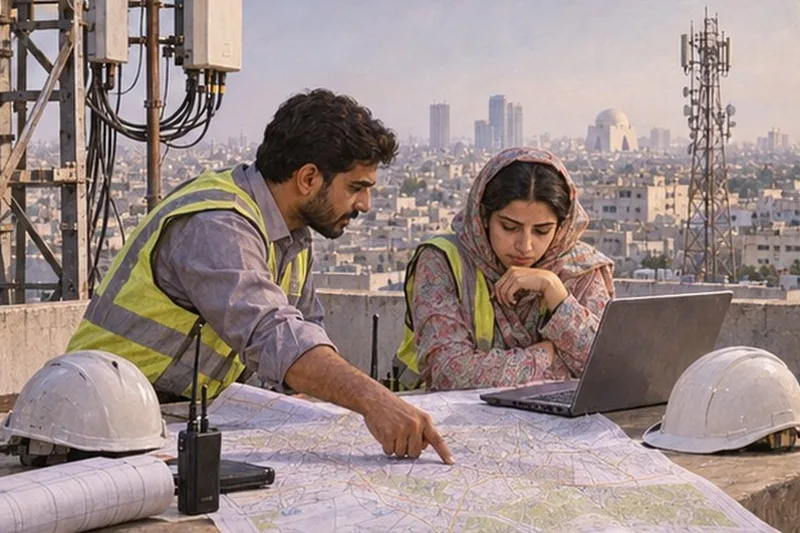
- Image: AI-generated editorial illustration · Simplifying Finance
Figures are as reported by the companies or cited outlets as of 22 November 2026. Check the source before quoting. Corrections: let us know through the solution form.