What happened
An owner could love a Porsche sports car and still give another manufacturer most of the household’s motoring budget. A two-seater serves a particular journey. The car that takes children, luggage and friends on a weekend away often earns its place for quite different reasons. When Porsche considered a third model line, this gap offered a more precise investment thesis than the observation that sport utility vehicles were becoming popular. Could Porsche earn the second purchase without losing what made the first one desirable?
Porsche launched the Cayenne in 2002 as its third model line, built in a new plant in Leipzig and developed alongside the Volkswagen Touareg. Porsche says more than 276,000 first-generation vehicles came off the line between 2002 and 2010, well above the roughly 25,000 a year assumed when the project began.
The Cayenne expanded quickly into a family of variants, including the Cayenne S, Cayenne Turbo and Turbo S. From 2009 customers could also order a diesel version, the first diesel engine in a Porsche. A total of 738,503 Cayennes were assembled in Leipzig between 2002 and 2017.
The model went on to become one of Porsche’s best-selling lines and helped finance the company’s sports-car development for years. Its success also encouraged later additions such as the Panamera and Macan.
Brand extensions work when customers trust the brand to deliver in the new category. Companies from luxury fashion to consumer electronics face the same test: the extension must add sales without weakening what made the brand valuable. For investors, the useful evidence is whether new buyers come from existing customers and whether margins hold up.
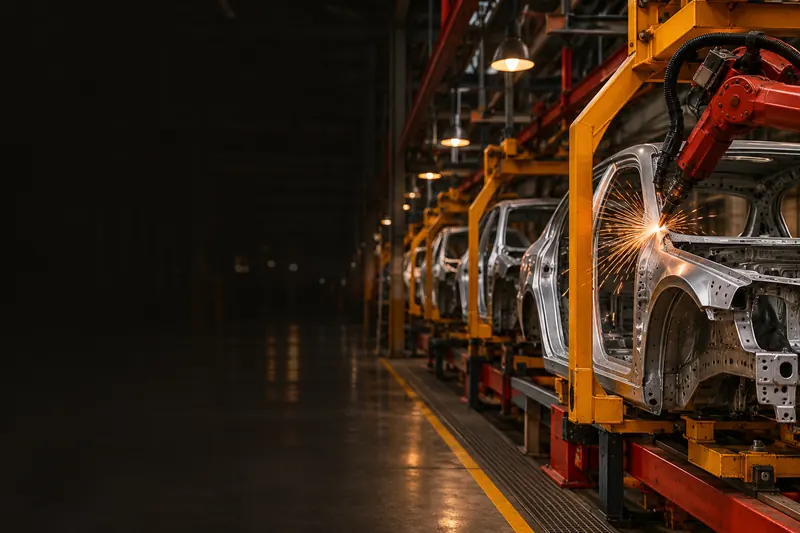
Porsche also made a careful choice about where to build. Producing the Cayenne in a new plant in Leipzig, in eastern Germany, kept the work in Germany while adding capacity without disrupting sports-car production in Stuttgart-Zuffenhausen. The plant later grew into a full factory that builds the Macan and Panamera.
For a finance student, the Cayenne is a reminder that a new product should be judged against realistic alternatives. The comparison is not only between building it and doing nothing, but between building it and the other ways the same money could have been used, such as more sports-car variants or a different new model. The Cayenne’s sales and profits over two decades suggest that, in this case, the extension was a good use of capital.
The lesson travels well beyond cars. Whenever a trusted brand moves into a new category, the early test is whether existing customers follow. If they do, the company gains a larger share of spending from people it already knows, which is usually cheaper than winning entirely new customers.
The Cayenne’s shared development with the Volkswagen Touareg also reduced Porsche’s investment and risk. By splitting the cost of the underlying platform with a larger partner, Porsche could enter a new segment without carrying the whole engineering bill itself, while still tuning engines, suspension and design to its own standards.
Later generations kept the formula and added hybrid and electric versions, showing how a successful extension can keep evolving with technology. The Cayenne remains a core model line for Porsche today.
Pricing also played a part. The Cayenne was positioned at the top of the SUV market, so each sale earned a margin closer to Porsche’s sports cars than to mass-market family vehicles. That mix of higher volume and premium pricing is what allowed the model to make such a large contribution to company profits.
For students, the case is a useful exercise in comparing a forecast with what actually happened. Reviewing why demand exceeded the original 25,000-a-year assumption, and which factors were hardest to predict, helps sharpen judgement for future product decisions.
Key moments
Cayenne launched, built in Leipzig.
Diesel Cayenne becomes available.
First generation ends after more than 276,000 units.
Source: Porsche AG. Average = 276,652 first-generation units over eight model years.
The trade-offs at the heart of the case
Define what the badge promises
A brand can stretch if customers understand what remains constant. In this case one interpretation tied Porsche to a particular shape and seating arrangement. Another tied it to the way a vehicle responded to a driver, even if it seated a family. The second interpretation created room for an SUV. To test it before committing fully, a product team could ask buyers to compare vehicles on attributes they can feel on a test drive, then measure whether those differences change actual willingness to place a deposit. A successful launch also changes the showroom. The SUV may fund a larger service operation or help carry a dealer’s fixed property costs. It may occupy display slots, demonstration budgets and technicians who previously served sports-car owners. Track workshop waiting times and repeat sports-car orders alongside total sales. A rising dealership revenue figure could coexist with a deterioration in the service experience for the small group most important to the marque’s reputation. That cost can emerge several years after the original launch.
For your seminar, paper or interview
- Q1
How would you measure displaced sports-car purchases?
- Q2
Which SUV features need to be distinct from a partner’s model?
- Q3
At what level of repeat orders would you add permanent capacity?
- Brand extension
- Capacity planning
- Customer wallet share
- New product economics
How we would approach it
Simplifying Finance’s opinion, offered as a starting point for debate, not as fact or investment advice.
We think the Cayenne succeeded because Porsche targeted a gap in its own customers’ garages rather than trying to beat SUV makers at their own game. Owners already loved the brand but bought their family car elsewhere; a Porsche that could carry children and luggage captured spending the company was already close to.
Start with existing customers
Survey what else owners buy and where the brand could credibly follow.
Share costs with partners
Develop platforms jointly to limit investment in a new segment.
Protect the core brand
Keep sporting performance at the heart of new models.
What this plan gives up
A larger, heavier vehicle risked diluting Porsche’s sports-car identity among loyal enthusiasts.
The strongest counter-argument
Some argued that Porsche should stay a pure sports-car maker, accepting smaller volumes rather than risking its reputation in a mass segment.
Metrics to watch
- Share of buyers who already owned a Porsche
- Profit per vehicle compared with sports cars
Propose your solution
Pick a discussion question and set out what you would do, why, and what it would cost. Strong, well-argued answers are reviewed and published below with your first name and programme.
Published solutions
Loading published solutions…
- Porsche’s retrospective on the Cayenne decision ↗
- Porsche’s Cayenne history collection ↗
- Porsche Newsroom: 20 years Porsche Cayenne ↗
- Porsche Newsroom: Leipzig factory ↗
- Photo: A first-generation Porsche Cayenne S, model year 2004 by Sfoskett, CC BY-SA 3.0 (cropped and resized) ↗
Figures are as reported by the companies or cited outlets as of 22 November 2026. Check the source before quoting. Corrections: let us know through the solution form.