What happened
Puregold opened its first store in Mandaluyong in 1998, founded by Lucio Co, who built a fortune in retail and distribution. The company targeted mass-market shoppers and, crucially, the owners of sari-sari stores, the tiny neighbourhood shops found everywhere in the Philippines. Puregold offered them wholesale-like prices, a loyalty programme and convenient locations, becoming their main supplier.
In 2012 Puregold bought S&R Membership Shopping, a Costco-style warehouse club with large stores, bulk packs, imported products and annual membership fees. S&R targets upper-middle and higher-income households, the opposite end of the market from Puregold’s core.
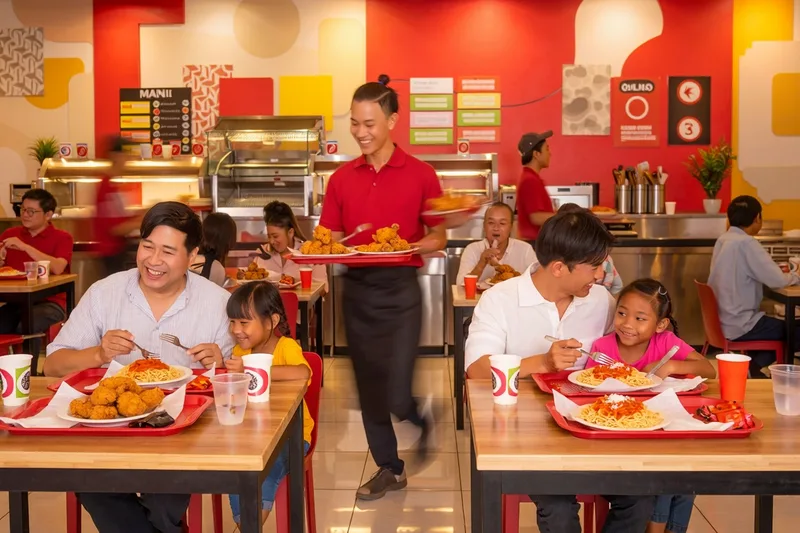
The two formats give Puregold exposure to different consumer groups. When lower-income households are squeezed by inflation, Puregold’s value pricing attracts them; when higher-income consumers spend more, S&R benefits. S&R also has New York-style quick-service restaurants.
In 2025 revenue rose 10.6% to ₱242.5 billion and net income rose 8.8% to a record ₱11.3 billion. Puregold stores grew same-store sales 4.1% on larger baskets, while S&R grew 6.1% on higher traffic. The company opened 28 Puregold stores and three S&R warehouses, and acquired 153 Puremart convenience stores. It ended the year with 784 stores and declared a ₱5.7 billion dividend.
For 2026 Puregold targeted 5–7% revenue growth, higher gross margins and around 60 new Puregold and Puremart stores, while focusing on younger shoppers aged 18–25.
The case lets students explore market segmentation, the economics of membership warehouses and how retailers expand in fragmented emerging markets.
Sari-sari stores are a vital part of Philippine retail. There are hundreds of thousands of them, often run from homes, selling small quantities of goods such as single cigarettes, sachets of shampoo and snacks to neighbours who cannot afford to buy in bulk. These stores need reliable, cheap supply. By becoming their preferred wholesaler, Puregold built a loyal, recurring customer base that larger supermarkets ignored.
Membership warehouse economics are different. Clubs like S&R and Costco charge an annual fee and then sell goods at low markups. Much of the profit comes from membership fees, which are highly predictable. Bulk packs, limited product choice and large stores keep costs low per unit sold. The model relies on members visiting frequently and renewing every year.
Competition includes SM Supermarkets and Savemore, Robinsons Supermarket, Walter Mart and growing e-commerce players. Puregold’s challenge is to keep expanding into provinces while maintaining efficiency and margins.
The company also benefits from its parent Cosco Capital’s liquor distribution and real estate businesses, which provide additional income and properties for stores. Family control under Lucio Co has allowed long-term decisions, such as patient provincial expansion, but also raises governance questions common to family-controlled listed companies, including board independence and succession planning as the next generation, led by president Vincent Co, takes over.
Its youth-focused strategy for 2026 reflects demographics: the Philippines has a young population, and winning them early builds lifelong habits.
Puregold’s own loyalty programme, Tindahan ni Aling Puring, rewards sari-sari store owners with discounts and events, and has been a key tool for keeping them loyal. Few competitors have matched this focus on small retailers, giving Puregold a distinctive position in a crowded grocery market and a steady base of repeat orders.
Key moments
First Puregold store opens in Mandaluyong.
Puregold lists on the Philippine Stock Exchange.
Acquires S&R Membership Shopping.
Net income up 21% to ₱10.4bn.
Record ₱11.3bn profit; acquires 153 Puremart stores.
Targets youth market and provincial expansion.
Source: Puregold 2025 results via GMA News.
The trade-offs at the heart of the case
Mass market vs. premium
Serving two very different customer groups requires distinct capabilities.
Expansion vs. margins
New provincial stores take time to reach profitability.
Wholesale vs. retail
Supplying sari-sari stores competes with selling directly to households.
For your seminar, paper or interview
- Q1
Why are sari-sari store owners such important customers for Puregold?
- Q2
How do membership warehouse economics differ from supermarket economics?
- Q3
Does owning both Puregold and S&R create synergies?
- Q4
How should Puregold compete with e-commerce?
- Q5
What risks come with rapid store expansion?
- Market segmentation
- Retail formats
- Membership business models
- Unit economics
How we would approach it
Simplifying Finance’s opinion, offered as a starting point for debate, not as fact or investment advice.
Puregold’s two-format strategy captures both ends of the Philippine consumer market. It should keep strengthening its sari-sari store relationships, expand S&R carefully and build digital ordering for small store owners.
Digitise sari-sari supply
Offer apps for small store owners to order and get credit.
Grow S&R steadily
Add a few warehouses a year in high-income areas.
Improve provincial efficiency
Invest in distribution centres outside Metro Manila.
Strengthen private labels
Expand own brands with higher margins.
What this plan gives up
Digital investments and distribution centres raise costs before benefits arrive.
The strongest counter-argument
Some argue Puregold should focus on S&R’s higher-margin model and reduce dependence on low-margin mass retail.
Metrics to watch
- Same-store sales by format
- Gross margin
- New store productivity
- S&R membership renewals
- Market share
Propose your solution
Pick a discussion question and set out what you would do, why, and what it would cost. Strong, well-argued answers are reviewed and published below with your first name and programme.
Published solutions
Loading published solutions…
- GMA News: Puregold posts ₱11.3B profit in 2025 ↗
- Manila Bulletin: Puregold hikes profit, boosts dividend ↗
- Manila Bulletin: Puregold taps 18-to-25 market ↗
- BusinessWorld: Cosco Capital profit rises ↗
Figures are as reported by the companies or cited outlets as of 22 November 2026. Check the source before quoting. Corrections: let us know through the solution form.