What happened
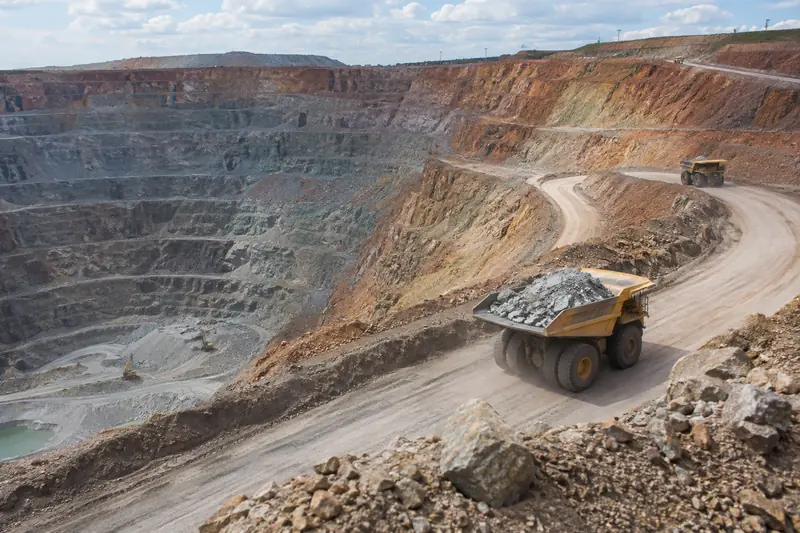
Semirara Mining and Power Corporation (SMPC), controlled by the Consunji family’s DMCI Holdings, mines coal on Semirara Island in Antique province. It is the country’s largest coal producer, supplying its own power plants and other generators, and exporting to China and elsewhere.
SMPC is vertically integrated: it owns coal-fired power plants in Calaca, Batangas, which sell electricity to the grid and spot market. This means it earns money twice, from mining coal and from selling the power it generates.
In 2022, after Russia’s invasion of Ukraine, global coal and electricity prices soared. SMPC posted record profits and paid large dividends. As prices normalised, profits fell: net income dropped about 30% in 2024 to ₱19.6 billion and another 33% in 2025 to ₱13.1 billion, despite record coal production and electricity sales. Higher production costs, including deeper mining and handling lower-grade coal, also squeezed margins.
SMPC is the largest contributor to DMCI Holdings’ profit, so its decline pulled the parent’s 2025 net income down 20% to ₱15.1 billion, even as DMCI’s property, water, nickel mining and construction units improved.
Coal faces long-term pressure as the Philippines adds renewable energy and has a moratorium on new coal plants, though coal still supplies a large share of the country’s electricity.
The case examines commodity price cycles, vertical integration and the strategic choices of a fossil-fuel company in an energy transition.
Commodity producers are price takers: they cannot set the price of coal, which is determined by global supply and demand. Profits rise and fall with prices, regardless of how efficiently the company operates. Record production cannot offset a large price decline. Understanding this helps investors avoid overpaying for a commodity company at the peak of a cycle.
Vertical integration can smooth some volatility. When coal prices fall, power plants buy cheaper fuel, partially offsetting lower mining income. But in 2025 electricity prices also fell, so both segments weakened together.
Dividend policy is a key part of the story. Commodity companies often pay large dividends when profits are high, rewarding investors but reducing cash available for diversification. SMPC must decide whether to keep returning cash or invest in new energy sources.
Operational risks add to price risk. Open-pit mining on an island faces water seepage, weather disruptions and declining coal quality as easier seams are exhausted. Power plants suffer unplanned outages, which cut electricity sales and can force the company to buy replacement power at high spot prices.
Semirara’s management has highlighted its strong cash position and low debt, which give it flexibility. That cushion matters in a cyclical business: companies that borrow heavily at the peak can be forced into difficult choices when prices fall.
The company itself expected coal prices to stabilise, forecasting the Newcastle index at about US$114 per tonne and the Indonesian ICI4 at about US$48, levels well below the 2022 peak.
For students, Semirara is a clear illustration of why analysts look through a single year of results to the full commodity cycle.
Climate policy is the biggest long-term uncertainty. Lenders and insurers increasingly avoid coal, which raises financing costs for new mines and plants, and the government’s moratorium on new coal-fired plants limits growth in the power business. Yet coal remains a large share of Philippine electricity supply, so demand will not vanish quickly.
Key moments
Semirara coal mining develops.
Acquires Calaca power plants.
Record profits from coal price spike.
Profit falls about 30%.
Record output; profit down 33% to ₱13.1bn.
Q1 profit down 12%.
Source: Semirara via Manila Bulletin and Power Philippines.
The trade-offs at the heart of the case
Cash cow vs. declining industry
Coal still earns cash but faces a long-term decline.
Dividends vs. diversification
Paying out cash reduces funds for new energy.
Efficiency vs. prices
Record output cannot overcome falling prices.
For your seminar, paper or interview
- Q1
Why did profit fall despite record output?
- Q2
How does vertical integration affect risk?
- Q3
How should SMPC plan for the energy transition?
- Q4
Should SMPC keep paying high dividends?
- Q5
How should investors value a coal company today?
- Commodity price cycles
- Vertical integration
- Capital allocation
- Energy transition strategy
How we would approach it
Simplifying Finance’s opinion, offered as a starting point for debate, not as fact or investment advice.
SMPC should run its coal business for cash while it lasts, keep costs low and use part of the cash to build a credible path into cleaner energy, rather than either abandoning coal abruptly or ignoring the transition.
Control costs
Improve mining efficiency to stay profitable at lower prices.
Contract power sales
Reduce exposure to volatile spot prices.
Invest in cleaner energy
Develop solar, storage or gas projects.
Set a clear dividend policy
Balance payouts with investment needs.
What this plan gives up
Investing in new energy reduces dividends and may earn lower returns initially.
The strongest counter-argument
Some argue coal demand in Asia will remain strong for decades, so SMPC should maximise coal returns rather than diversify.
Metrics to watch
- Coal prices (Newcastle, ICI4)
- Spot electricity prices
- Production costs
- Dividend payouts
- Coal policy
Propose your solution
Pick a discussion question and set out what you would do, why, and what it would cost. Strong, well-argued answers are reviewed and published below with your first name and programme.
Published solutions
Loading published solutions…
- Manila Bulletin: Semirara profit slumps 33% ↗
- Power Philippines: SMPC profit falls 33% in 2025 ↗
- InsiderPH: DMCI 2025 earnings drop 20% ↗
- Manila Times via Newswav: Weaker coal prices weigh on Semirara ↗
Figures are as reported by the companies or cited outlets as of 22 November 2026. Check the source before quoting. Corrections: let us know through the solution form.