What happened
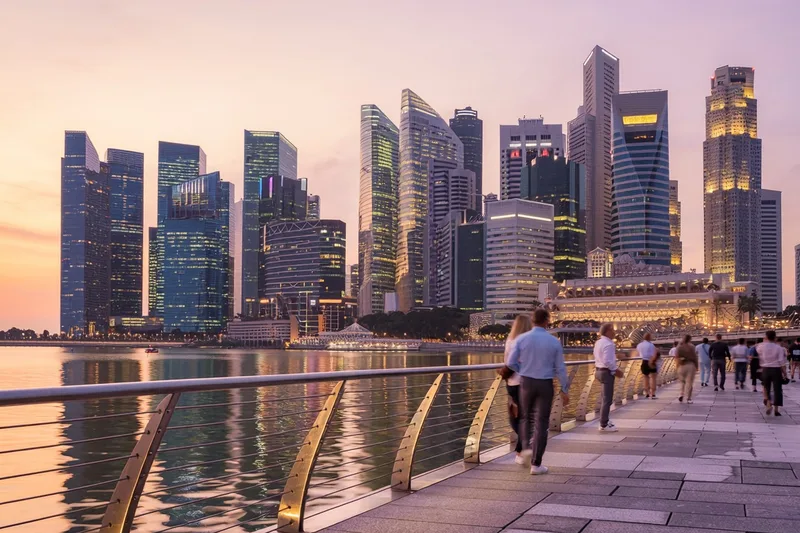
The Singapore Exchange, known as SGX, was formed in 1999 by merging the stock and derivatives exchanges. It runs Singapore’s stock market and a large derivatives business, including futures on Asian indices, currencies and commodities. Its main stock index, the Straits Times Index, tracks 30 of the largest listed companies, dominated by banks such as DBS, OCBC and UOB.
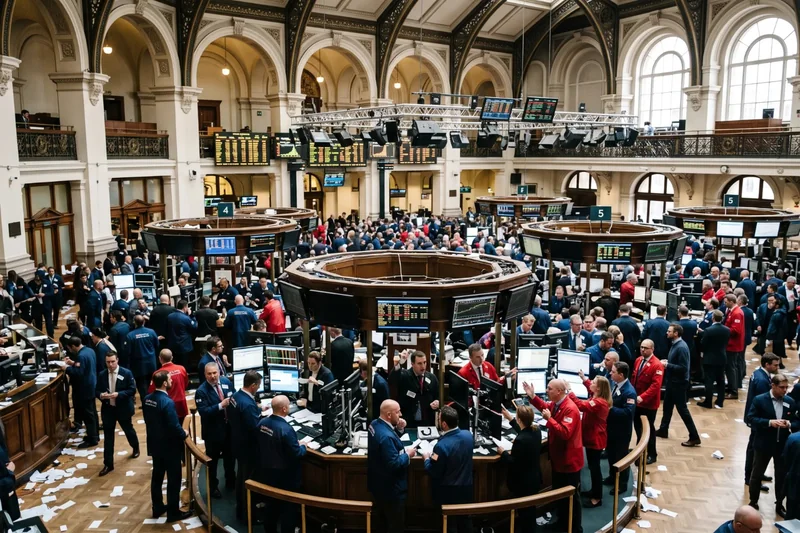
While SGX’s derivatives business thrived, its stock market struggled. Trading volumes were low, valuations lagged other markets and many companies left. More companies delisted than listed in several years. High-profile Southeast Asian technology companies such as Grab and Sea chose to list in New York instead, attracted by deeper pools of investors and higher valuations.
A thin market can become a vicious circle. Low trading volumes discourage fund managers and analysts, leading to less research and lower valuations, which discourages companies from listing, which further reduces trading. Breaking this cycle requires action on both the demand side, investors buying shares, and the supply side, companies wanting to list.
In August 2024 the Monetary Authority of Singapore set up an Equities Market Review Group to recommend changes. Its first measures, announced in February 2025, included a S$5 billion Equity Market Development Programme, known as EQDP, under which the government would place money with fund managers to invest in Singapore-listed shares, particularly smaller and mid-sized companies.
The same package offered tax incentives for companies and fund managers that list in Singapore, and the government accepted these in its 2025 budget. A second set of measures in July 2025 aimed to raise investor interest and make listing more attractive, and the first EQDP allocation of S$1.1 billion went to three managers.
In November 2025 the review group completed its work. Its final report proposed moving toward a more disclosure-based listing regime, in which regulators focus on whether companies disclose information clearly rather than judging their business merits, and consolidating listing reviews under SGX’s regulatory arm. A second batch of S$2.85 billion was placed with six managers, bringing allocations to S$3.95 billion.
Singapore stocks performed strongly in 2025. The value of Straits Times Index companies rose by more than S$200 billion, and total SGX market capitalisation passed S$1.1 trillion by year-end. New listings picked up, including large real estate investment trusts such as NTT DC REIT, which raised about US$824 million to own data centres.
Supporters of the programme point out that the rally was much larger than the money deployed. One brokerage chief noted that less than S$3 billion of EQDP money had been invested while index market value rose by more than S$200 billion, arguing that confidence and global flows into Asian markets did most of the work.
In 2026 SGX renamed its securities arm the SGX Stock Exchange to mark the 60th anniversary of the Straits Times Index, and MAS and SGX set up an implementation committee to carry out the reforms. In September 2026 MAS appointed a third batch of five fund managers and committed S$20 million to support market-making, which helps keep share prices liquid.
The case explores why stock markets matter for an economy, what causes a market to lose listings and liquidity, and whether government intervention can create a self-sustaining revival or only a temporary boost.
Critics raise concerns. Government money buying shares could distort prices or support weak companies, and the programme could become a crutch rather than a catalyst. Others worry that a disclosure-based regime could allow lower-quality companies to list, putting retail investors at risk if checks are relaxed too far.
Singapore is not alone. Japan, Korea, Malaysia and Hong Kong have all launched programmes to improve corporate governance, encourage buybacks and dividends, and attract listings. Competition among exchanges for companies and investors is intense, and Singapore must offer something distinctive.
Singapore’s strengths include political stability, a strong legal system and its role as a hub for wealth management. The challenge is turning the money that flows into Singapore’s private banks and family offices into active investment in its own listed companies.
Market-making matters because investors want to know they can buy or sell shares quickly at a fair price. In thinly traded stocks, the gap between the price buyers offer and the price sellers ask can be wide, which raises costs and deters institutions. Paying firms to post continuous quotes narrows this gap and can attract more trading.
Key moments
SGX formed from merger of exchanges.
MAS sets up Equities Market Review Group.
S$5bn EQDP and tax incentives announced.
First S$1.1bn allocated to three managers.
Final report; S$2.85bn more allocated.
Third batch of managers and market-making grant.
Out of S$5bn set aside; a third batch of five managers was named in September 2026. Source: MAS.
The trade-offs at the heart of the case
Intervention vs. market forces
State money can kickstart or distort.
Access vs. protection
Easier listings versus investor safeguards.
Hub vs. home
Global wealth flows versus local share demand.
For your seminar, paper or interview
- Q1
Why did Singapore’s stock market lose listings?
- Q2
How does the EQDP aim to break the vicious circle?
- Q3
What are the risks of a disclosure-based regime?
- Q4
Was the 2025 rally driven by policy or global flows?
- Q5
What would make the revival self-sustaining?
- Market liquidity
- Public policy in capital markets
- Listing regimes
- Network effects in exchanges
How we would approach it
Simplifying Finance’s opinion, offered as a starting point for debate, not as fact or investment advice.
The reforms are a sensible push, but lasting success depends on more good companies listing and more investors staying after government money stops. Singapore should focus on liquidity, research coverage and high-quality listings rather than simply easing rules.
Attract quality listings
Target regional growth companies and REITs.
Deepen liquidity
Support market-making and research.
Protect investors
Keep strong enforcement alongside lighter rules.
Mobilise local wealth
Encourage wealth managers to invest locally.
What this plan gives up
Lighter listing rules may attract more companies but raise the risk of failures.
The strongest counter-argument
Some argue Singapore cannot compete with New York or Hong Kong for big tech listings and should specialise in REITs and dividend stocks.
Metrics to watch
- Number of new listings
- Daily trading value
- EQDP fund performance
- Valuation gap with peers
- Delistings
Propose your solution
Pick a discussion question and set out what you would do, why, and what it would cost. Strong, well-argued answers are reviewed and published below with your first name and programme.
Published solutions
Loading published solutions…
- MAS: Comprehensive set of measures to strengthen Singapore’s equities market ↗
- MAS: Annual report 2025/2026 – equity market ↗
- The Asset: Singapore equity market overhaul ↗
- Rajah & Tann: Completion of market review ↗
Figures are as reported by the companies or cited outlets as of 22 November 2026. Check the source before quoting. Corrections: let us know through the solution form.