What happened
Before 2018, the Philippine personal income tax system had not been substantially revised since 1997. Because tax brackets were not adjusted for inflation, many ordinary workers had moved into higher brackets over time, paying rates that were originally meant for richer people. The top rate of 32% applied at relatively low income levels.
At the same time, the government wanted more revenue to fund a large infrastructure programme and social services. It also wanted to rely more on consumption taxes, which are harder to evade than income taxes, and to address public health and environmental goals.
In December 2017, President Rodrigo Duterte signed the Tax Reform for Acceleration and Inclusion law, known as TRAIN, the first of several planned tax reform packages. It took effect on 1 January 2018.
On the income side, TRAIN exempted the first ₱250,000 of annual taxable income from personal income tax, freeing most minimum wage and low-income workers from income tax. It cut rates for most taxpayers earning less than ₱8 million a year, and raised the top rate for the highest earners. It also raised the tax-free limit on 13th-month pay and bonuses to ₱90,000.
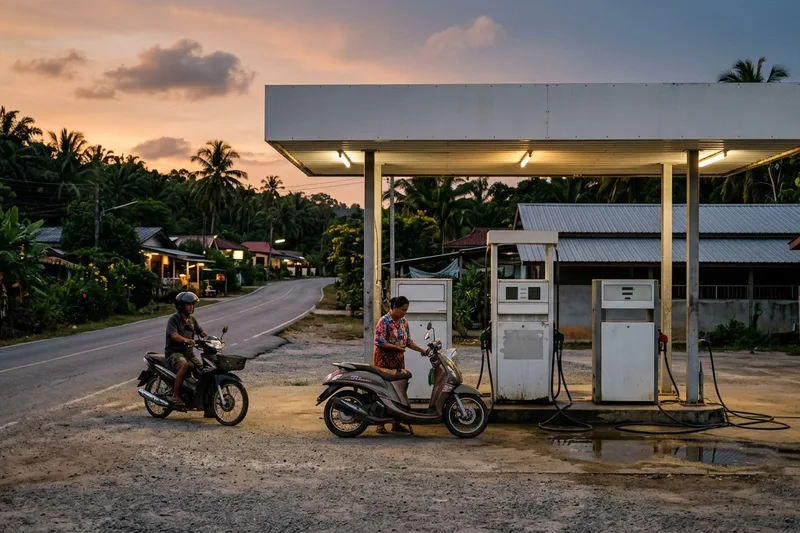
To compensate for lost revenue, TRAIN raised or introduced consumption taxes. Excise taxes on fuel, which had not changed since 1997, were raised in stages from 2018 to 2020. Taxes on cars, tobacco, coal and mining were increased. A new tax of ₱6 per litre was imposed on drinks with sugar or artificial sweeteners, and ₱12 per litre on drinks with high-fructose corn syrup, with exemptions for milk, three-in-one coffee and natural juices. A tax on cosmetic surgery was introduced.
The finance department said TRAIN gave workers about ₱111.7 billion in income tax relief in 2018. It reported that additional revenue from TRAIN exceeded its target by 8.1% in 2018, with the largest gains from tobacco, car and documentary stamp taxes. Better compliance and more registered taxpayers also helped.
However, inflation rose sharply in 2018, reaching its highest level in nearly a decade. Rice shortages, global oil price increases and a weaker peso were major causes, but critics blamed TRAIN’s fuel and sugar taxes for adding to price pressures. Some lawmakers called for suspending fuel tax increases. The law included a provision to suspend the scheduled fuel tax increase if global oil prices exceeded a certain level, and the government debated using it.
Supporters argued that TRAIN made the tax system fairer by shifting the burden away from wage earners towards consumption of products that harm health and the environment, while giving cash transfers to the poorest households to offset higher prices. Critics argued that consumption taxes fall more heavily on the poor, who spend a larger share of income on goods, and that informal workers who do not pay income tax got no income tax relief but still faced higher prices.
The sugary drink tax became an example of public health taxation. Similar taxes exist in Mexico, the United Kingdom and other countries. Beverage makers reformulated products and adjusted prices.
TRAIN was followed by other reforms, including the corporate tax cuts under CREATE, and tobacco and alcohol tax increases.
The case shows the trade-offs in tax design between efficiency, fairness, revenue and administrative simplicity, and how timing and external shocks can affect public perception of reforms.
For students, TRAIN is a case in tax incidence, progressive versus regressive taxes, Pigouvian taxes on harmful products and the politics of tax reform.
Tax incidence helps explain the debate. Economists ask who ultimately bears a tax, which may differ from who legally pays it. A fuel excise is paid by oil companies but largely passed on to drivers, transport operators and, through higher fares and delivery costs, to consumers generally. Whether a tax is progressive depends on how its burden is distributed across income groups.
The government tried to offset TRAIN’s effect on the poorest households through unconditional cash transfers. Their reach and timing became important: transfers that arrive late or miss eligible families reduce the protection they offer.
Revenue from TRAIN was meant to support infrastructure and social spending, including the Build, Build, Build programme, linking tax reform directly to the government’s investment plans.
The law also simplified estate and donor taxes to a flat 6%, aiming to encourage families to settle estates and transfer property formally rather than leaving titles unresolved for years.
Key moments
Income tax brackets last broadly revised.
TRAIN signed into law.
Income tax cuts and new excise taxes take effect.
Inflation rises to multi-year high.
Revenue beat target by 8.1% for 2018.
Final scheduled fuel tax increase.
Projected totals; income tax cuts shown as a positive bar for revenue foregone. Source: Department of Education summary of DOF estimates.
The trade-offs at the heart of the case
Income vs. consumption taxes
Who bears the burden?
Revenue vs. inflation
Excise hikes coincided with price spikes.
Health vs. affordability
Sugar tax cuts consumption but raises prices.
For your seminar, paper or interview
- Q1
Why did the Philippines need to revise income tax brackets?
- Q2
Who benefited most from TRAIN’s income tax cuts?
- Q3
Are consumption taxes fair to poor households?
- Q4
How much did TRAIN contribute to 2018 inflation?
- Q5
Was the sugary drink tax good policy?
- Tax incidence
- Progressive and regressive taxation
- Pigouvian taxes
- Fiscal policy
How we would approach it
Simplifying Finance’s opinion, offered as a starting point for debate, not as fact or investment advice.
TRAIN modernised an outdated income tax system and raised revenue for public investment. Its weakness was timing and the burden of consumption taxes on informal workers. Targeted transfers and clear communication are essential to sustain such reforms.
Index brackets
Adjust tax brackets for inflation regularly.
Target transfers
Protect poor households from higher prices.
Use health taxes
Earmark sin tax revenue for health.
Explain reforms
Show taxpayers where revenue goes.
What this plan gives up
Higher consumption taxes raise revenue efficiently but can hurt poor households.
The strongest counter-argument
Critics argue TRAIN shifted the tax burden onto the poor and fuelled inflation in 2018.
Metrics to watch
- Tax revenue
- Inflation
- Sugary drink consumption
- Income tax compliance
- Cash transfer coverage
Propose your solution
Pick a discussion question and set out what you would do, why, and what it would cost. Strong, well-argued answers are reviewed and published below with your first name and programme.
Published solutions
Loading published solutions…
- ABS-CBN: Duterte signs tax reform, 2018 budget into law ↗
- GMA News: TRAIN law revenues exceed target by 8.1% in 2018 ↗
- Philstar: Duterte signs 2018 national budget, tax reform bill ↗
- Presidential Communications Office: A Guide to TRAIN ↗
Figures are as reported by the companies or cited outlets as of 22 November 2026. Check the source before quoting. Corrections: let us know through the solution form.