What happened
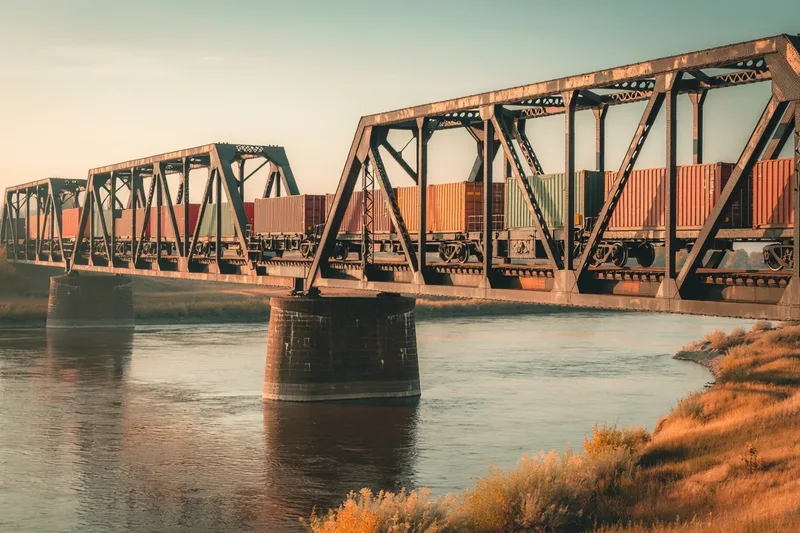
The original Trans Mountain pipeline has carried oil from Alberta to the British Columbia coast since 1953. In 2012 Kinder Morgan proposed twinning it to nearly triple capacity, giving Canadian oil producers access to Pacific markets instead of selling almost entirely to the United States at discounted prices.
The expansion faced intense opposition from some First Nations, environmental groups, the City of Burnaby and the B.C. government, along with court challenges. In 2018, with Kinder Morgan threatening to walk away, the federal government bought the existing pipeline and the expansion project for C$4.5 billion, arguing it was in the national interest.
Construction proved far more difficult and expensive than expected. Routes through mountains and dense urban areas, court-ordered consultation, environmental requirements, floods in 2021 and pandemic disruption pushed costs from an early government projection of about C$7.4 billion to about C$34 billion, roughly C$873 per Canadian. The Parliamentary Budget Officer estimated the total project cost at C$34.2 billion.
The expansion began operating on 1 May 2024, adding about 590,000 barrels per day of capacity. Canadian oil exports to Asia, previously almost zero, grew quickly, and price discounts on Canadian heavy oil narrowed. Some economists argued the narrower discounts alone made the project worthwhile for the economy.
The government says it does not want to be a long-term owner. The PBO valued the system at about C$29.6–33.4 billion depending on future toll contracts, suggesting a likely loss compared with total cost. The case raises questions about when governments should intervene in private infrastructure and how to evaluate public returns.
The economic case for the expansion rested on price differentials. Before Trans Mountain, Canada sold almost all of its oil exports to the United States, often at a large discount to world prices because pipelines were full and producers had few alternatives. Each dollar of discount on millions of barrels a day meant billions in lost revenue for producers and lower royalties and taxes for governments. Opening a route to the Pacific gave sellers access to Asian buyers and reduced that discount.
The financial case for taxpayers is weaker. Tolls paid by oil shippers were set in contracts signed when the project was expected to cost far less, and shippers challenged attempts to pass on the full overrun. That means the pipeline’s income may not justify its construction cost, even if it is busy. Accounting treatment also matters: the government has recorded impairments that recognise some of the loss.
Indigenous ownership has become a central part of the sale discussion. Several First Nations groups along the route have expressed interest in buying stakes, and federal loan guarantees could help them do so. Supporters say this would share economic benefits with communities affected by the pipeline; critics question whether communities should take on the risk of an asset with uncertain long-term demand.
Key moments
Original Trans Mountain pipeline opens.
Kinder Morgan proposes expansion.
Ottawa buys pipeline and project for C$4.5bn.
Federal government re-approves expansion after court ruling.
Cost estimates rise repeatedly.
Expansion begins commercial operations.
Debate over sale and Indigenous ownership.
Early projection included purchase and construction. Sources: CTV News; CBC; Parliamentary Budget Officer.
The trade-offs at the heart of the case
National interest vs. taxpayer risk
Market access helps the economy, but taxpayers carry the overrun.
Speed vs. consultation
Courts required meaningful consultation, adding time and cost.
Climate goals vs. oil exports
Expanding oil capacity conflicts with emissions targets.
For your seminar, paper or interview
- Q1
Why did Kinder Morgan walk away, and why did the government step in?
- Q2
How should we measure whether the pipeline was a good investment for Canada?
- Q3
What caused the cost to rise from C$7.4bn to C$34bn?
- Q4
Should the pipeline be sold, and to whom? What about Indigenous ownership?
- Q5
What lessons does Trans Mountain hold for other public infrastructure projects?
- Public vs. private returns
- Megaproject cost overruns
- Regulatory and legal risk
- Valuation under different scenarios
How we would approach it
Simplifying Finance’s opinion, offered as a starting point for debate, not as fact or investment advice.
Trans Mountain delivered its economic purpose but at a heavy public cost. The government should sell it in a transparent process that includes meaningful Indigenous ownership, and be honest about the loss rather than hiding it in accounting.
Run a transparent sale
Publish valuation methods and accept that the price will be below total cost.
Enable Indigenous equity
Use loan guarantees to help Indigenous groups take ownership stakes.
Secure long-term tolls
Lock in shipper contracts before sale to maximise value.
Learn for future projects
Create an independent review of the cost overruns.
What this plan gives up
Selling now crystallises the loss and gives up future toll income that might eventually reduce it.
The strongest counter-argument
Some argue the government should keep the pipeline as a public asset, using toll income to recover costs over decades rather than selling at a loss.
Metrics to watch
- Pipeline utilisation
- Canadian heavy oil price discount
- Toll disputes
- Sale process
- Asian export volumes
Propose your solution
Pick a discussion question and set out what you would do, why, and what it would cost. Strong, well-argued answers are reviewed and published below with your first name and programme.
Published solutions
Loading published solutions…
- CBC: Six months on, what has Trans Mountain achieved? ↗
- Parliamentary Budget Officer: Trans Mountain valuation 2024 ↗
- CTV News: First Nations activist reflects on Trans Mountain fight ↗
- Global News: $34B Trans Mountain expansion opens ↗
Figures are as reported by the companies or cited outlets as of 22 November 2026. Check the source before quoting. Corrections: let us know through the solution form.