What happened
A family could pay towards the Thames Tideway Tunnel years before the tunnel intercepted its first overflow. That feature deserves as much attention as the engineering. London needed to reduce sewage entering the Thames when rain overwhelmed its combined sewers. A new regulated infrastructure provider could borrow against a stream of payments collected through water bills. For the household, the relevant question was what protection it received in exchange for making those payments early. For lenders, an established source of revenue changed the price at which they would finance excavation beneath a working city.
The National Audit Office’s 2017 review separated the project company’s estimated works from Thames Water’s enabling work. Adding the two amounts gives the capital estimate. Adding the bill impact to that sum would count a way of financing the asset as another piece of construction. A further distinction concerns the price of risk. Lenders can quote a lower rate because a risk has become easier to manage, or because another party will pay if it materialises. Those explanations have different implications for customers.
At the review date the forecast peak addition to an average annual household bill was £20 to £25 in 2016/17 prices. The £13 already recorded referred to one year. It would be a mistake to multiply the peak figure by every year of the asset’s life. A credible household forecast needs the profile of expenditure, the timing of revenue recovery and the number of paying accounts. Averages also conceal the burden on households whose essential bills already consume most of their income.
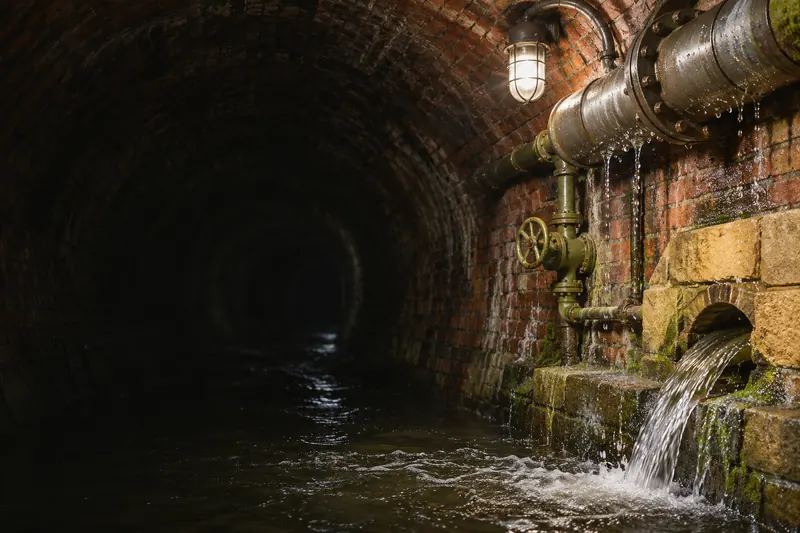
The tunnel is 25 kilometres long and runs mostly under the Thames from Acton in west London to Abbey Mills in the east, connecting 21 overflow points, some more than 150 years old. Work started in 2016. The first sewage flowed into the tunnel in September 2024, the final connection was made on 14 February 2025, and the tunnel was officially opened in May 2025.
Costs rose but less than on many British megaprojects. When it was announced in 2014 the tunnel was put at about £3.5 billion. Covid delayed completion from 2024 to 2025, and later estimates reached about £4.5 billion. Tideway’s 2025/26 annual report gave reported costs of £4.7 billion, a 2% increase driven mainly by weather and consents, while saying the impact on customer bills was unchanged.
Thames Water says the tunnel, together with the Lee Tunnel and upgrades to sewage works, should cut sewage discharges into the tidal Thames by about 95% in a typical year. Tideway says the tunnel intercepted over 20 million tonnes of storm sewage. The contrast with Thames Water itself is striking: the parent utility struggled with heavy debts and rising bills, while the ring-fenced tunnel company kept investment-grade ratings of Baa1/BBB+.
The model has influenced other projects. Regulators have considered similar arrangements for new reservoirs and for nuclear power, where customers or bill-payers contribute during construction in return for a lower overall cost of capital.
Key moments
An early full-tunnel estimate enters the planning debate.
Customers pay a measurable annual charge during construction.
The NAO examines the financing arrangement and exposure to overruns.
Tideway says the impact on customer bills stayed within £20–25 a year (2014/15 prices). Sources: Evening Standard via inkl; Tideway annual report 2025/26.
The trade-offs at the heart of the case
A comparison with Glas Cymru and Welsh Water: Who provides the first layer of protection?
In London a household began contributing to an asset under construction. At Welsh Water a household can help finance a reserve for works or shocks still to come. In both settings money collected from customers today can make a lender more comfortable. The reasons are different. Construction-period revenue helps finance a particular project. A reserve accumulated in a company without ordinary shareholders can support the utility across many assets and over several borrowing cycles. The boards can use the same test on very different proposals. Ask the treasurer what financing terms would change if customers supplied less cash today. Ask the engineer what service or resilience would change. Finally ask the regulator who would absorb an adverse surprise. If the finance case can be explained but the customer outcome cannot, a lower borrowing rate is an incomplete defence of the arrangement.
What to watch
A second city considering the same arrangement should ask its regulator to run two financing models on the same excavation schedule. In one, investors receive nothing until operation. In the other, customers pay during construction. Keep the underlying geology and engineering cost constant. The difference reveals what early revenue buys. Then reallocate a severe overrun to customers and present the change in their exposure beside the reduction in interest. That comparison makes visible a part of the bargain that a single interest rate cannot express.
For your seminar, paper or interview
- Q1
Which risks can a tunnelling contractor actually control?
- Q2
What bill path would persuade you that customers received value for paying early?
- Regulated asset base
- Construction-period revenue
- Government support package
- Cost of capital
How we would approach it
Simplifying Finance’s opinion, offered as a starting point for debate, not as fact or investment advice.
Keep construction-period revenue available, but make each material increase in the recoverable cost subject to an independent explanation of what changed. Separate design changes from ground conditions and from the contractor’s performance. Publish the effect of each category on a representative bill alongside the programme’s physical progress.
Charge customers during construction
Let Tideway earn revenue before the tunnel opened, lowering its borrowing cost.
Ring-fence the project
Put the tunnel in a separate licensed company, away from Thames Water’s balance sheet.
Back extreme risks with government
Provide state support only for rare, very large losses.
What this plan gives up
Early payments and a government backstop gave Tideway cheap finance, but they moved part of the construction risk onto households and taxpayers before any benefit arrived.
The strongest counter-argument
Strict approval gates can hold up work while experienced crews and equipment remain on site. A gate that costs more in delay than it saves on the disputed item is a poor protection. Give the delivery team limited discretion for time-critical items and review the evidence afterwards.
Metrics to watch
- Final outturn cost
- Spills into the tidal Thames
Propose your solution
Pick a discussion question and set out what you would do, why, and what it would cost. Strong, well-argued answers are reviewed and published below with your first name and programme.
Published solutions
Loading published solutions…
- National Audit Office: Review of the Thames Tideway Tunnel ↗
- National Audit Office: review summary and customer-bill projections ↗
- Dŵr Cymru Welsh Water: Glas Cymru ownership and finance ↗
- Tideway: Annual report 2025/26 ↗
- Evening Standard via inkl: Thames supersewer nears completion as cost climbs to £4.5bn ↗
- Thames Water: Annual results to 31 March 2025 ↗
- Construction Enquirer: London super sewer now fully connected ↗
- Image: AI-generated editorial illustration
Figures are as reported by the companies or cited outlets as of 22 November 2026. Check the source before quoting. Corrections: let us know through the solution form.