The three letters
Environmental covers emissions and resource use; Social covers workers, customers and communities; Governance covers boards, pay and shareholder rights.
How it is used
Investors may exclude certain industries, favour companies with better scores, or engage with companies to change behaviour. Each approach leads to a different portfolio.
Limits
Ratings agencies often disagree about the same company, and labels can overstate impact (“greenwashing”). ESG portfolios can also be more concentrated in certain sectors.
What ESG stands for
ESG means environmental, social and governance. Environmental covers emissions, energy and waste; social covers labour practices, safety and communities; governance covers board quality, shareholder rights and transparency.
Different approaches
Exclusion screens remove sectors such as tobacco or weapons. Best-in-class selects leaders within each sector. ESG integration considers ESG risks alongside financial analysis. Impact investing targets measurable positive outcomes.
ESG ratings
Providers such as MSCI and Sustainalytics rate companies. Ratings often disagree because they weigh issues differently; research has found low correlation between providers' scores.
Does ESG affect returns?
Evidence is mixed. Some studies find better governance linked to lower risk; others find no consistent return advantage. ESG funds' performance has also been driven by sector tilts, such as being underweight energy.
Sector tilts
ESG funds often hold more technology and less energy, mining and tobacco. In 2022, when energy shares soared, many ESG funds lagged; in other years the same tilt helped.
Greenwashing
Some funds market themselves as sustainable without meaningful changes to holdings. Regulators in Europe, the US and elsewhere have increased disclosure rules to address misleading claims.
Reading an ESG fund
Check the exclusions, how stocks are selected, the carbon intensity versus the parent index, the top holdings and the fees. Many ESG funds hold many of the same large companies as conventional indices.
Costs
ESG index funds have become cheaper, but some still charge more than plain index funds. Compare the total cost with a standard alternative before paying extra.
Regulation
Europe's Sustainable Finance Disclosure Regulation classifies funds as Article 6, 8 or 9 depending on their sustainability aims. The UAE has also developed sustainable finance frameworks and climate-related disclosure guidance.
ESG and Islamic investing
Sharia-compliant screens exclude certain sectors such as conventional finance and alcohol and limit leverage. There is some overlap with ESG exclusions, but the two frameworks are different.
Governance matters to all investors
Even investors indifferent to ESG labels benefit from good governance: clear accounts, independent boards, fair treatment of minority shareholders and sensible pay. Weak governance often precedes corporate failures.
Engagement and voting
Some ESG funds aim to influence companies by voting at meetings and engaging with management, rather than divesting. Check a fund's voting record if this matters to you.
Where ESG came from
Investing according to values has a long history, from religious investors avoiding certain industries to campaigns against apartheid-era South Africa in the 1980s. The term ESG became widely used after 2004, when a United Nations-backed report called Who Cares Wins encouraged investors to consider environmental, social and governance issues. The Principles for Responsible Investment followed in 2006.
Since then, ESG has moved from a niche into the mainstream. Large asset managers, pension funds and index providers now publish ESG policies and products, although enthusiasm has varied over time and between countries.
Measuring environmental impact
Climate is often the most closely measured part of ESG. Emissions are commonly grouped into three scopes. Scope 1 covers emissions a company produces directly, such as from its factories. Scope 2 covers emissions from the electricity it buys. Scope 3 covers emissions across its supply chain and from customers using its products, which is often the largest share and the hardest to measure.
Funds often report carbon intensity, which compares emissions with revenue, so that companies of different sizes can be compared. These figures are useful but imperfect, because data is often estimated and methods differ between providers.
The challenge of ESG data
Unlike financial accounts, which follow common accounting standards, ESG data has historically been less standardised. Companies report different things in different ways, and ratings providers fill the gaps with estimates and judgements. Studies have found that ESG ratings from different providers can disagree widely about the same company.
International efforts are improving this. The International Sustainability Standards Board published its first standards in 2023, aiming to create a common baseline for sustainability reporting. As more countries adopt them, comparisons should become easier.
ESG in the UAE
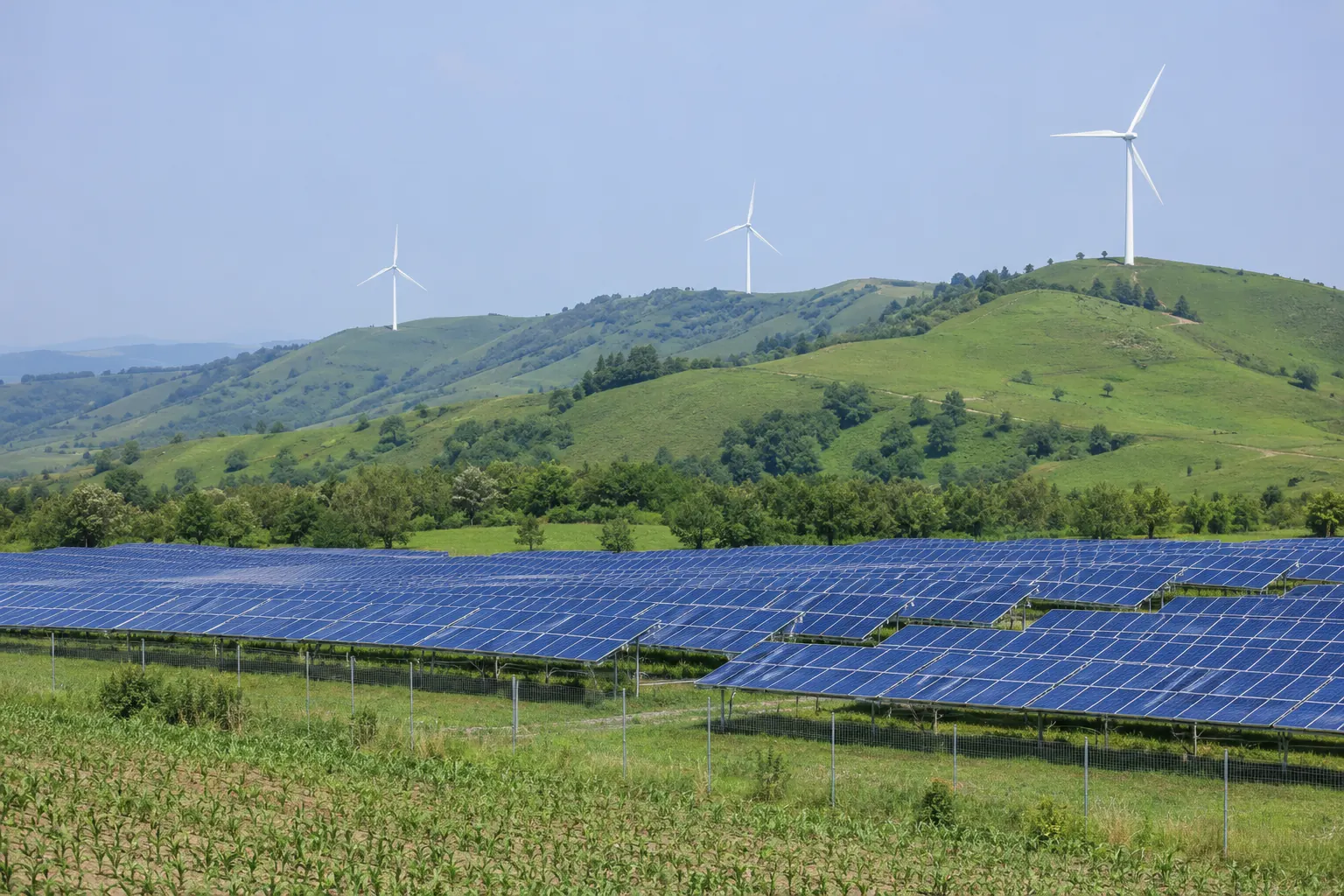
Sustainability has become a growing focus in the UAE. The country announced a Net Zero by 2050 strategic initiative in 2021 and hosted the COP28 climate conference in Dubai in 2023. Abu Dhabi and Dubai have invested heavily in solar power, including some of the world's largest solar parks, and Masdar has become a major international clean energy investor.
UAE exchanges have encouraged listed companies to publish sustainability information, and investors increasingly find ESG reports from large local companies alongside their annual accounts. Green bonds and sustainability-linked sukuk have also become more common in the region.
ESG, impact and exclusion: knowing the difference
Three approaches are often confused. Exclusion means avoiding certain industries entirely. ESG integration means considering ESG risks alongside financial analysis, without necessarily excluding anything. Impact investing aims to create measurable positive outcomes, such as renewable energy capacity or affordable housing, alongside a financial return.
A fund labelled ESG may use any of these approaches, or a mix of them. The label alone tells you little; the fund's documents explain what it actually does.
How to check what a fund really holds
The simplest test is to look at the top ten holdings and the sector breakdown. Many ESG funds hold largely the same large companies as standard index funds, with modest adjustments. That is not necessarily wrong, but it may not match what an investor expects from the name.
Fund documents should explain the screening rules, any minimum ESG ratings, how the manager votes at company meetings and how progress is measured. In Europe, funds must classify themselves under disclosure rules, and the classification gives a quick sense of how strong their sustainability commitments are.
Balancing values and returns
Investors choose ESG for different reasons. Some want to manage risks, such as climate regulation or governance failures, that could affect long-term returns. Others want their money to reflect their values, even if that means accepting a different pattern of returns from the broad market.
Both are legitimate. The important thing is to be clear about which matters more to you, because the best fund for reducing long-term risk is not always the same as the best fund for expressing a value.
Frequently asked questions
What does ESG stand for?
Environmental, social and governance: factors used to assess a company's sustainability and how it is run.
Does ESG investing reduce returns?
Evidence is mixed. Returns depend on the approach, sector tilts and the period studied.
How can I spot greenwashing?
Check a fund's top holdings, screening rules and voting record rather than relying on its name.
A worked illustration
Illustration: two funds might each claim to be ESG yet rate the same oil company very differently. One excludes it entirely; the other holds it because it leads its sector on emissions reduction.
Matching your values
Decide what matters to you: avoiding certain industries, lowering carbon exposure, or supporting specific outcomes. Then choose a fund whose method matches that aim, rather than relying on the label.
Common mistakes
Assuming all ESG funds are similar, ignoring sector concentration, paying high fees for minor changes and expecting guaranteed outperformance are common errors.
Checklist
What exactly does this fund exclude or include? How does it differ from the standard index? What does it cost? Does its approach match my values? Is its performance driven by sector tilts?
The short version
ESG investing applies environmental, social and governance criteria in different ways. Look beyond the label at holdings, method and cost, and choose an approach that matches what you actually care about.
Illustration: two rating providers might score the same oil company in the top quarter and bottom quarter of its sector, because they weigh emissions and governance differently.
ESG ratings differ widely between providers. Read what a fund actually holds, not just its label.
Written by Simplifying Finance. Figures in the worked example are illustrative.
Reviewed November 28, 2026. Examples and lab figures are hypothetical. Educational content, not personalized investment advice.