The idea
Buying a first home involves more than finding a place you like. It is a series of financial and legal steps that typically take several months. Each country has its own rules, but the broad sequence is similar almost everywhere.

Step 1: Set a realistic budget
Start with what you can comfortably pay each month, not the maximum a lender might offer. Include the mortgage, service charges or maintenance, insurance, utilities and any property taxes. Many people aim to keep total housing costs to around a third of take-home pay, though this varies by city and income.
Step 2: Save the deposit and costs
Lenders require a deposit, often 10% to 25% of the price depending on the country, property and buyer. On top of that come buying costs: transfer taxes or registration fees, legal fees, valuation, mortgage arrangement fees, agent commission in some markets, and moving costs.
Typical extra costs
| Cost | Example market | Typical size |
|---|---|---|
| Transfer or registration fee | Dubai | 4% of price to Dubai Land Department |
| Stamp duty | England | Tiered; reliefs for some first-time buyers |
| Agent commission | Dubai and many others | Often about 2% of price |
| Legal and conveyancing fees | Most markets | Fixed fee or percentage |
| Mortgage fees and valuation | Most markets | Varies by lender |
Step 3: Check your credit
Lenders look at your credit history, income, existing debts and employment. Paying bills on time, reducing card balances and avoiding new loans before applying can improve your chances and the rate you are offered.
Step 4: Get mortgage pre-approval
A pre-approval, or agreement in principle, shows how much a lender is likely to lend. It strengthens your position when making an offer and helps you search within a realistic price range.
Step 5: Search and inspect
Compare several properties and areas. Check transport, schools, noise, building condition and running costs. For apartments, ask about service charges, the reserve fund and any planned major works. For houses, a survey can uncover structural issues.
Step 6: Make an offer
Research recent sale prices of similar homes before offering. In some markets, a reservation deposit or memorandum of understanding is signed at this stage. Know your maximum and be prepared to walk away.
Step 7: Legal process and mortgage offer
A lawyer or conveyancer checks the title, contracts and any restrictions. The lender values the property and issues a formal offer. In Dubai, the transfer is completed at a trustee office registered with the Dubai Land Department, where fees are paid and the title deed is issued.
Step 8: Completion and moving in
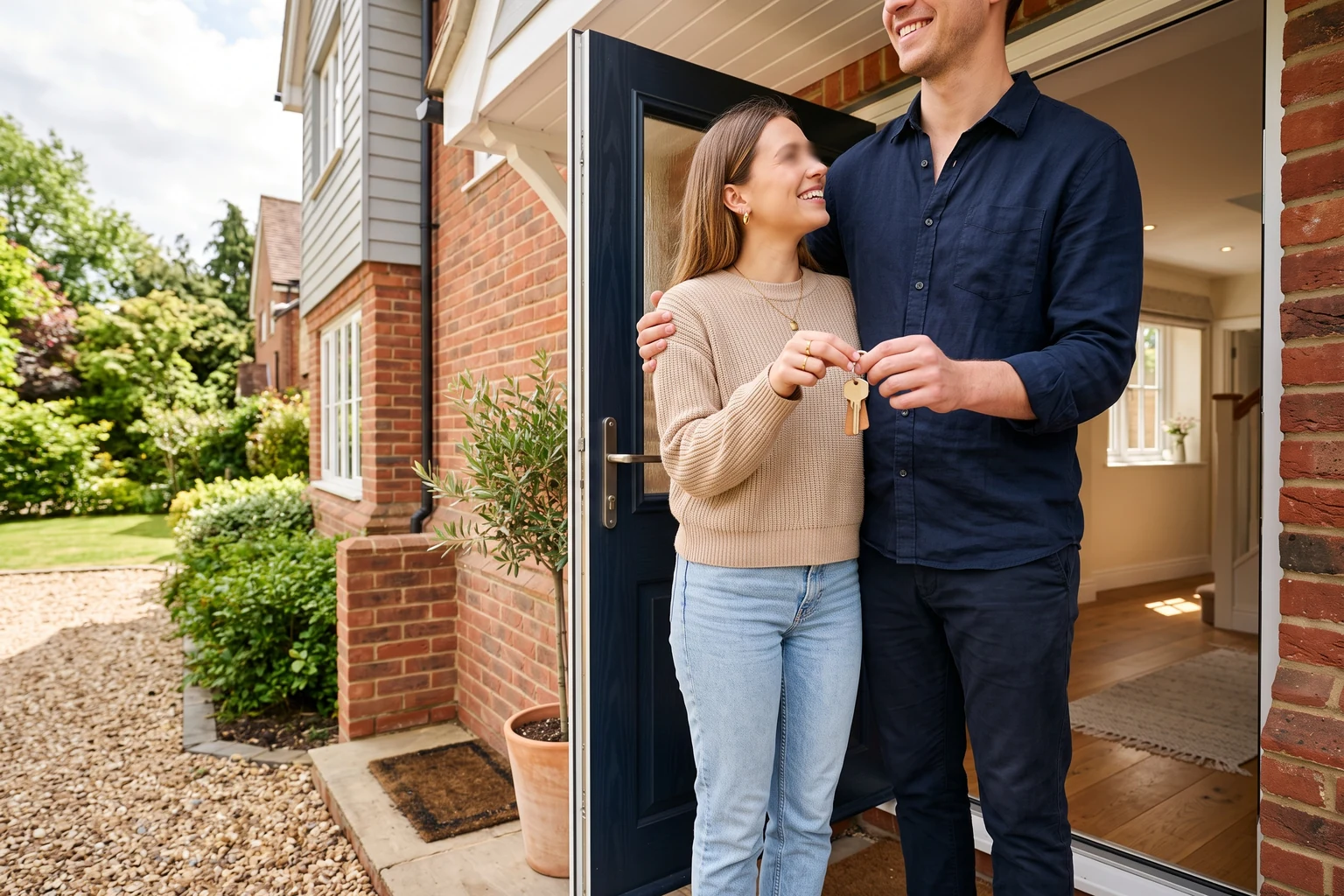
On completion, the funds are transferred, ownership changes and you receive the keys. Set up insurance from completion, transfer utilities and keep all documents safely.
First-time buyer support
Many countries offer help for first-time buyers, such as reduced stamp duty, government-backed schemes or special mortgage products. In the UAE, some developers and banks run first-time buyer programmes. Checking current schemes before buying can save money.
Common mistakes
Common mistakes include stretching to the maximum loan, underestimating extra costs, skipping a survey, buying in a hurry without comparing areas and leaving no emergency savings after completion.
Renting versus buying
Buying is not automatically better than renting. It makes most sense when you expect to stay for several years, have stable income and can afford the deposit while keeping savings. Comparing the full costs of each over five to ten years helps decide.
UAE mortgage rules
The Central Bank of the UAE sets maximum loan-to-value ratios for mortgages. For expatriate first-time buyers, the maximum is typically 80% on homes up to 5 million dirhams, meaning at least a 20% deposit, with lower limits on higher-value homes. UAE nationals can borrow a higher share.
A realistic scenario
Priya and Tom want a 1,500,000 apartment in Dubai. They need a 20% deposit of 300,000, plus about 4% transfer fee, 2% agent commission and other costs of roughly 110,000. They keep 50,000 aside as an emergency fund, so they need total savings of about 460,000 before buying.
Questions to ask yourself
- What monthly cost can I comfortably afford?
- Have I budgeted for all buying costs?
- Do I have a pre-approval?
- Have I compared several areas?
- Will I still have emergency savings?
The short version
Buying a first home follows a clear sequence: budget, save, check credit, get pre-approval, search, offer, legal process and completion. Budget for all extra costs and keep a safety buffer.
Illustration: price 1,500,000. Deposit 20% = 300,000. Transfer fee 4% = 60,000. Agent 2% = 30,000. Other fees about 20,000. Emergency fund 50,000. Total savings needed ≈ 460,000. Hypothetical figures.
Buying a first home is a sequence of steps, each with its own costs and checks. Knowing the order and budgeting for the extras keeps the process calm.
Primary educational references
Reviewed November 28, 2026. Examples are hypothetical illustrations. Educational content, not personalised investment, legal or tax advice.