The idea
High-frequency trading, or HFT, uses automated systems to place and cancel large numbers of orders at extremely high speeds, often measured in microseconds. Firms aim to earn very small profits per trade across millions of trades, usually ending the day with little or no open position.

Common strategies
| Strategy | What it does | Profit source |
|---|---|---|
| Market making | Quotes buy and sell prices continuously | Bid-ask spread and rebates |
| Arbitrage | Exploits tiny price gaps across venues | Price differences |
| Statistical arbitrage | Trades short-term patterns | Mean reversion and correlations |
| Event reaction | Responds instantly to news or data | Speed of reaction |
The race for speed
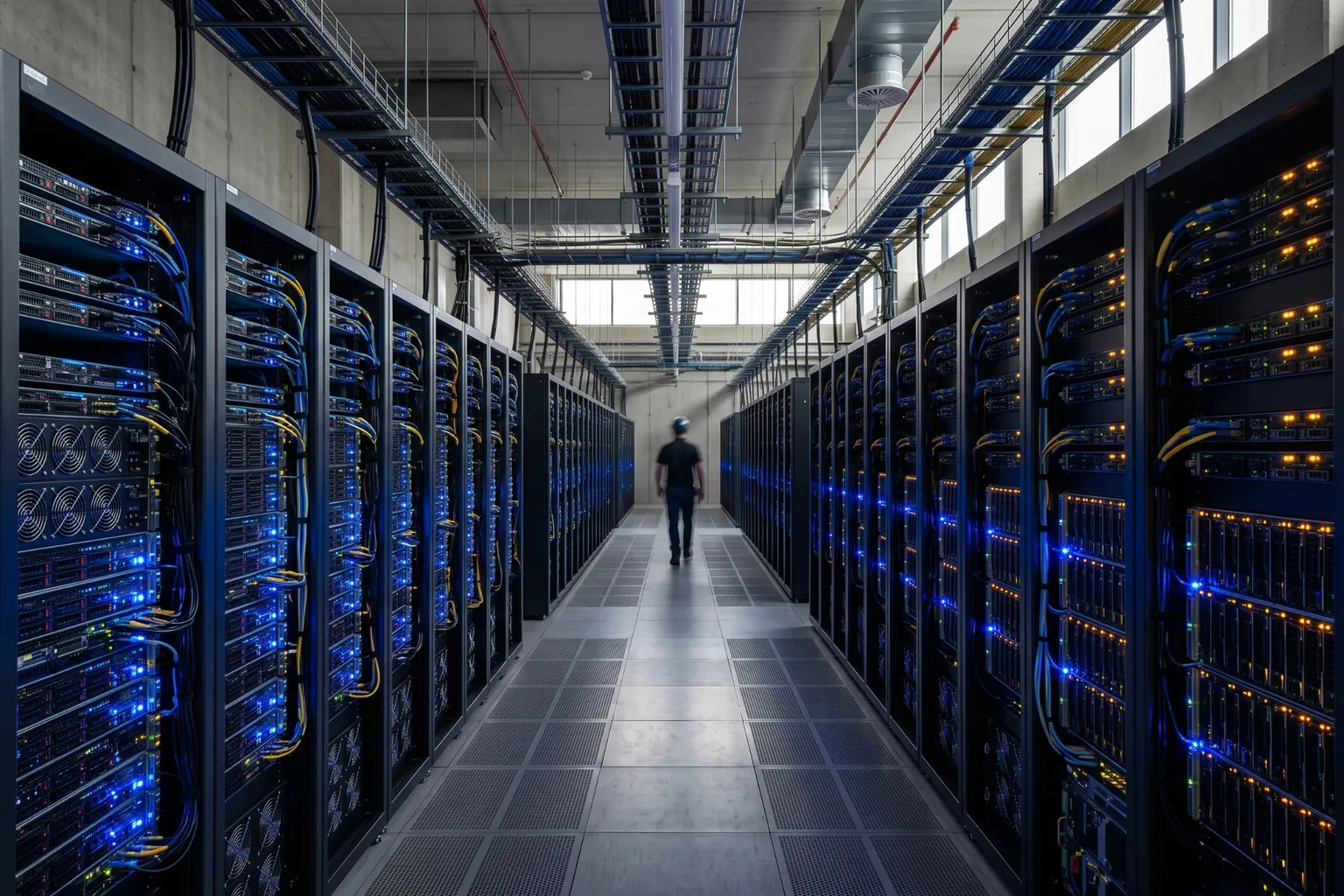
Speed comes from fast algorithms, specialised hardware and being physically close to exchange servers. Firms pay for co-location, placing computers in the same data centres as exchanges. Some built microwave networks between Chicago and New York because signals travel faster through air than through fibre-optic cable.
How much trading is HFT?
Estimates vary, but HFT is commonly estimated to account for around half of US equity trading volume, and a large share in futures and foreign exchange markets. Its share has been fairly stable or lower than at its peak around 2009 to 2010.
Arguments in favour
Supporters say HFT market makers narrow bid-ask spreads, reducing trading costs for everyone, and improve price discovery by quickly aligning prices across venues. Studies have often found that spreads and costs for small investors fell as electronic and high-frequency trading grew.
Arguments against
Critics argue HFT firms can trade ahead of slower investors, that liquidity can vanish in stress when algorithms withdraw, and that the arms race for speed wastes resources. Some argue large institutional orders face higher hidden costs because fast traders detect them.
The 2010 flash crash
On 6 May 2010, US stock indices fell sharply and recovered within minutes, with the Dow Jones Industrial Average briefly dropping about 1,000 points. Investigations found a large automated sell order in futures interacted with high-frequency traders, who traded rapidly among themselves and then withdrew, worsening the fall. Several individual stocks briefly traded at a penny.
Rules and safeguards
After 2010, US regulators introduced single-stock circuit breakers, which later became limit up-limit down rules, and stricter rules for erroneous trades. Europe’s MiFID II requires algorithmic traders to be authorised, test algorithms and keep records. Exchanges limit order-to-trade ratios and charge fees for excessive messages.
Spoofing and manipulation
Placing orders with no intention of executing them to mislead others, known as spoofing, is illegal in major markets. Some traders have been prosecuted, including a UK trader linked to the 2010 flash crash.
What it means for individual investors
For long-term investors placing occasional orders, HFT mostly shows up as tighter spreads. Using limit orders, avoiding trading during extreme volatility and not trying to compete on speed are sensible steps.
The Gulf angle
Exchanges in the UAE, including the Dubai Financial Market and Abu Dhabi Securities Exchange, operate electronic trading with rules on order types and market conduct. Algorithmic and high-speed trading are more limited than in the largest global markets but are developing as markets grow.
Payment for order flow
In the US, many retail brokers route customer orders to wholesale market makers, some of which are large high-frequency firms, in exchange for payments. Supporters say this lets brokers offer zero-commission trading and that customers often receive prices slightly better than the public quote. Critics argue it creates conflicts of interest and hides costs. The practice is banned or restricted in some other markets, including the UK and, under rules agreed in 2024, the European Union from 2026. Regulators continue to review how order routing affects the prices individual investors receive.
A realistic scenario
A market-making firm quotes a stock at 50.00 bid and 50.01 offer thousands of times a day. It earns a fraction of a cent per share on many trades. When news hits, its systems update quotes in microseconds or pull them if risk rises.
Questions to ask yourself
- Do I need to trade quickly at all?
- Am I using limit orders?
- How wide are spreads on what I trade?
- Could liquidity vanish in a sharp move?
- Am I investing for the long term?
The short version
High-frequency trading uses speed and automation to trade often for tiny profits. It provides much liquidity and narrower spreads, but raises concerns about fairness and stability. For long-term investors, limit orders and patience matter more than speed.
Illustration: earning 0.1 cents per share on 50 million shares a day produces 50,000 dollars of gross profit before costs, from tiny margins at enormous volume. Hypothetical figures.
High-frequency traders use fast computers and algorithms to trade very often and hold positions briefly. They supply much of today’s liquidity, but their speed raises questions of fairness and stability.
Primary educational references
SEC and CFTC · Findings regarding the market events of May 6, 2010 ↗
ESMA · MiFID II algorithmic trading ↗
Reviewed November 28, 2026. Examples are hypothetical illustrations. Educational content, not personalised investment, legal or tax advice.