The idea
Paying for something seems simple: you tap a card, scan a code or send a transfer, and the money moves. Behind the scenes, payments travel through a chain of banks, networks and settlement systems. Each type of payment uses different 'rails' with different speeds, costs and protections.
Understanding how payments work helps you choose the best method, avoid unnecessary fees and spot risks.

How a card payment works
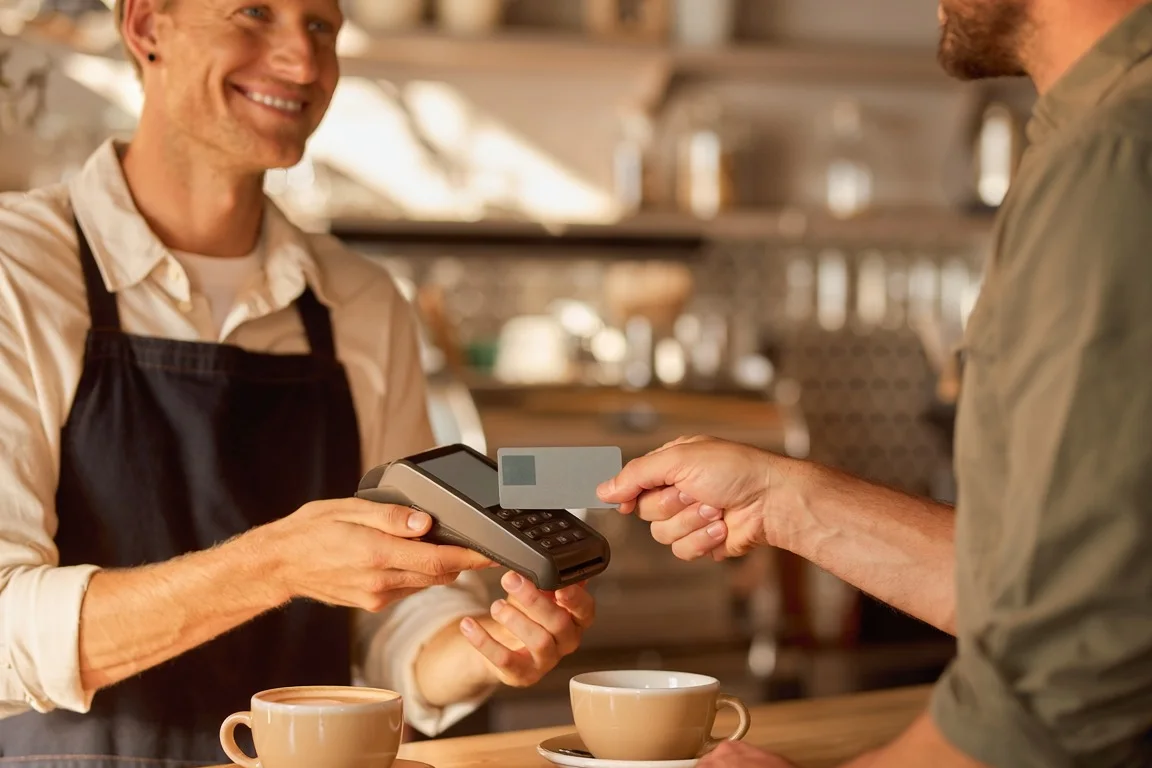
When you pay by card, the merchant's payment terminal sends the details to its bank or payment processor, known as the acquirer. The acquirer sends the request through a card network, such as Visa, Mastercard, UnionPay or a domestic network, to the bank that issued your card. Your bank checks your balance or credit limit and approves or declines the payment in seconds.
The money itself usually settles between banks later, often within a day or two. The merchant pays fees for this service, typically a percentage of the transaction, shared among the acquirer, the card network and your bank.
Bank transfers
Bank transfers move money directly between accounts. Traditional transfers often go through batch systems that process payments at set times, so money may take hours or days to arrive. Large-value payments between banks usually go through central bank real-time gross settlement (RTGS) systems, which settle each payment individually and immediately.
Fast and instant payments
Fast payment systems make money available to the recipient almost immediately, 24 hours a day, every day. The Bank for International Settlements' Committee on Payments and Market Infrastructures reported in 2016 that the number of fast payment services across its member jurisdictions had more than doubled since 2010, and adoption has accelerated since.
Well-known examples include the UK's Faster Payments, India's UPI, Brazil's Pix, the euro area's instant transfers, FedNow in the United States and Aani in the UAE. In India and Brazil especially, instant payments have become part of everyday life, from paying street vendors to splitting bills.
Comparing payment methods
Each payment type has strengths and weaknesses.
| Method | Speed | Cost to merchant | Consumer protection |
|---|---|---|---|
| Credit card | Approved instantly, settles later | Often 1% to 3% | Strong, e.g. chargebacks |
| Debit card | Approved instantly | Often lower than credit | Chargebacks usually available |
| Standard transfer | Hours to days | Low | Limited if you send to a scammer |
| Instant payment | Seconds, 24/7 | Usually low | Varies; often limited for authorised payments |
| Cash | Immediate | Handling costs | None if lost |
Who pays for payments
Payments aren't free; someone pays. With cards, merchants pay fees, which are often built into prices for everyone. Rewards cards are partly funded by these fees. Some countries cap card fees: the European Union, for example, limits interchange fees on most consumer card payments. Instant payment systems often cost merchants less, which is one reason governments and central banks promote them.
Protection differs
Card payments generally offer stronger consumer protection, such as chargebacks if goods don't arrive. Bank transfers and instant payments are harder to reverse once sent, because you authorised them. Scammers often target instant payments for this reason. Some countries have introduced reimbursement rules for certain scams, such as the UK's rules for authorised push payment fraud introduced in 2024, but protection varies widely.
Cross-border payments
Sending money across borders is usually slower and more expensive than domestic payments, because it may pass through several banks in different countries. Central banks and international bodies are working to make cross-border payments faster and cheaper, including by linking national fast payment systems.
Choosing how to pay
For everyday purchases, a debit or credit card paid off in full offers convenience and protection. For paying people you know, instant payments are quick and cheap. For large purchases from businesses you don't know well, a credit card can offer extra protection. Always double-check the recipient before sending an instant transfer.
Digital wallets
Digital wallets such as Apple Pay, Google Pay and Samsung Pay usually sit on top of card networks. When you pay with a phone, the wallet uses a token linked to your card rather than the card number itself, which adds a layer of security. The payment then travels through the card network like a normal card payment.
Payments in the UAE
The UAE has a fast-modernising payment system. The Central Bank's financial infrastructure supports instant payments between banks, allowing money to move between accounts in seconds at any time of day. Contactless card payments and mobile wallets are widely accepted across the country.
Cross-border remittances are especially important in the UAE, which is one of the world's largest sources of money sent home by expatriate workers. Banks, exchange houses and digital providers compete to offer faster and cheaper transfers.
Payment fraud and how to avoid it
Most payment fraud now relies on tricking people rather than breaking technology. Common examples include fake messages claiming to be from a bank or delivery company, requests to pay invoices to new bank details and offers that seem too good to be true.
Instant payments are difficult to reverse once sent, so it is important to check the recipient's details carefully, especially for first-time payments. Calling a known contact on a trusted number to confirm new payment details is one of the most effective defences against invoice fraud.
The future of payments
Payment systems around the world are moving towards faster, cheaper and more connected services. Central banks are linking instant payment systems across borders, and several, including the Central Bank of the UAE, have explored digital versions of their currencies for specific uses, such as cross-border settlement between banks.
For consumers, the likely result is quicker international transfers, more transparent fees and new ways to pay, while the basic principles of checking who you pay and protecting your details stay the same.
Frequently asked questions
How does a card payment work?
Your card details pass through the merchant's processor and card network to your bank for approval, then funds settle later.
Can an instant payment be reversed?
Usually not easily, so check the recipient's details carefully before sending.
What is the most common payment fraud?
Scams that trick people into paying, such as fake invoices or messages pretending to be from banks.
A realistic scenario
Rahul runs a small grocery shop in Pune. He used to accept mainly cash and cards. After displaying a UPI QR code, most customers pay instantly from their phones, and he pays little or nothing in fees on most of these payments. He keeps a card terminal for tourists and larger purchases, and checks his account in real time instead of counting cash at the end of the day.
Questions to ask yourself
- Which payment method offers the best protection for this purchase?
- Am I sure of the recipient before sending an instant transfer?
- Am I paying fees I could avoid with another method?
- Can I reverse this payment if something goes wrong?
- If I run a business, what do my payment methods cost me?
The short version
Payments travel through networks of banks, card schemes and settlement systems. Cards offer convenience and protection but cost merchants fees. Bank transfers vary in speed, while instant payment systems move money in seconds, often cheaply. Choose methods that balance cost, speed and protection, and always check recipients before sending instant payments.
Illustration: Ana runs a small café. Card payments cost her about 1.5% to 2% in fees, so a $10 coffee costs her up to 20 cents. When customers pay through her country's instant payment system by scanning a QR code, the fee is far lower and the money arrives in her account within seconds.
Every payment travels through a chain of banks and networks. Knowing how they work helps you choose cheaper, faster and safer ways to pay.
Primary educational reference
BIS Committee on Payments and Market Infrastructures · Fast payments: enhancing the speed and availability of retail payments (2016) ↗Reviewed November 28, 2026. Examples are hypothetical illustrations in AED or USD. Educational content, not personalised investment, legal or tax advice.