Benefits
Staged payments and potential price gains.
Risks
Delays, developer problems and changing markets.
Protection
Check escrow rules and developer records.
What does off-plan mean?
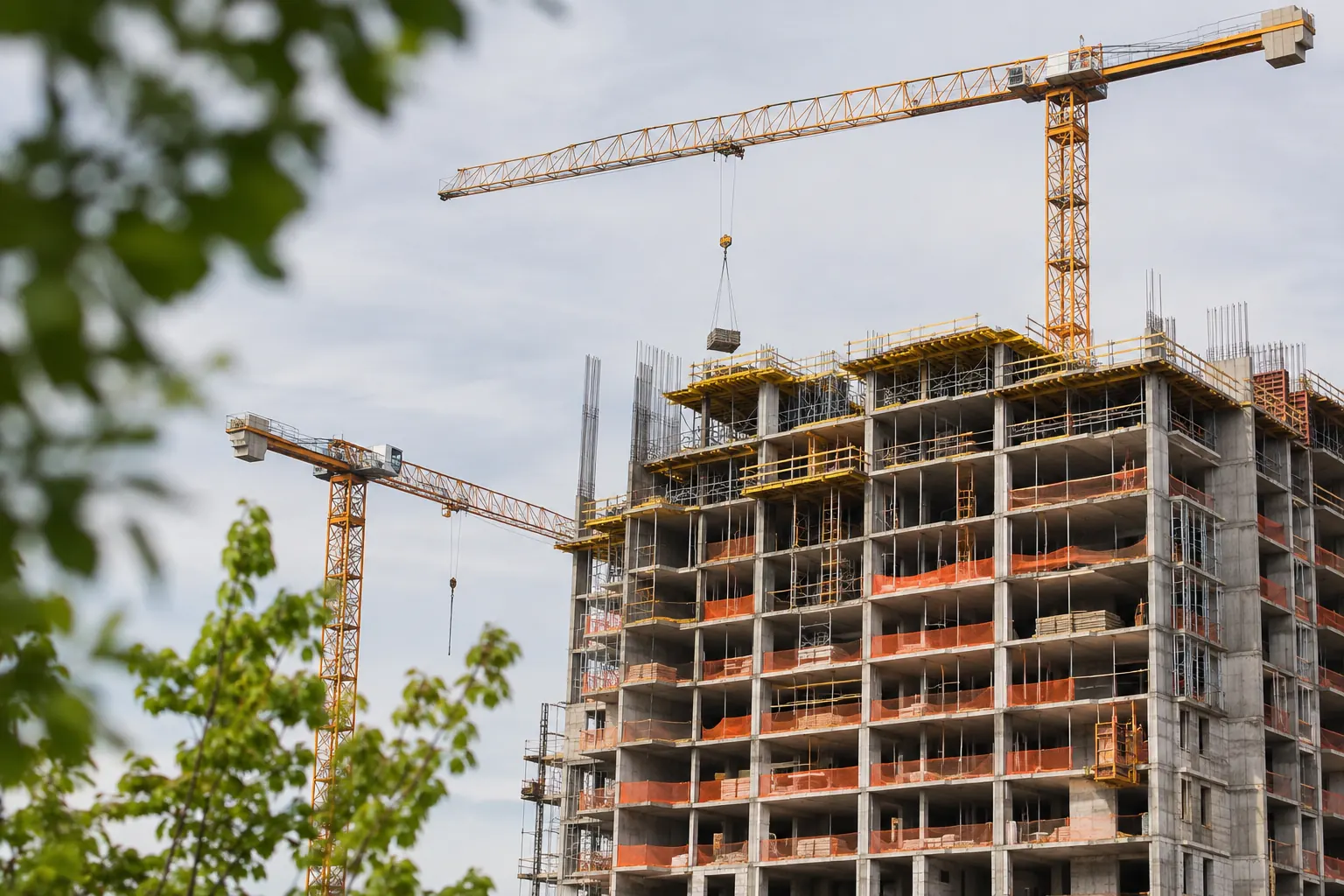
Buying off-plan means buying a property before it is built, or while it is still under construction, usually directly from the developer. The buyer pays in stages during construction and receives the finished property on completion, often two to four years later.
Off-plan sales are a major part of property markets in Dubai and other fast-growing cities. Developers use buyers' payments to help fund construction, and buyers gain access to new projects, often at lower prices than comparable completed homes and with flexible payment plans.
How payment plans work
Off-plan payment plans spread the price over time. A typical structure might involve a down payment of 10% to 20% on booking, further instalments linked to construction milestones and the balance on completion. Some developers offer post-handover plans, where part of the price is paid over several years after the buyer receives the keys.
Payment plans make off-plan property accessible without a large upfront sum, but they are a commitment. Buyers must be confident they can meet every instalment, including the final payment, which may need a mortgage if the buyer does not have cash.
Escrow protection in Dubai
Dubai has developed strong protections for off-plan buyers. Under Dubai's escrow law, introduced in 2007, payments for off-plan units must be deposited into a project escrow account held with an approved bank, and funds are released to the developer as construction progresses.
Projects must be registered with the Dubai Land Department and its regulatory arm, RERA, before units can be sold. These rules are designed to ensure buyers' money is used for the project they are buying into and have helped build confidence in Dubai's off-plan market.
Oqood and registration
In Dubai, off-plan purchases are registered on a system known as Oqood, which records the buyer's interest in the unit before the title deed is issued on completion. Registration fees are payable, commonly 4% of the purchase price to the Dubai Land Department, plus administrative fees.
Buyers should make sure the purchase is registered and keep copies of the sale and purchase agreement, payment receipts and the Oqood certificate. Paying only into the official escrow account, not to agents or third parties, is one of the most important safeguards.
Key risks to understand
- Delays: construction can take longer than planned, delaying rental income or moving in.
- Specification changes: the finished unit may differ slightly from the brochure.
- Market changes: prices may fall by completion, reducing value or making a mortgage harder to obtain.
- Financing: banks value the property at completion, and lending rules may change.
- Liquidity: selling before completion may require developer consent and fees.
Understanding these risks does not mean avoiding off-plan property, but it does mean choosing projects and payment plans carefully and keeping a financial buffer.
Choosing a developer
The developer's track record is one of the most important factors. Experienced developers with a history of delivering projects on time and to a good standard reduce many of the risks of buying off-plan. Checking past projects, visiting completed buildings and reading owner reviews all help.
The Dubai Land Department publishes information on registered projects, including construction progress, which buyers can check before and after purchase.
Flipping and assignments
Some buyers purchase off-plan units intending to sell them before completion at a profit, known as flipping. Developers often allow resale only after a certain percentage of the price has been paid and may charge fees for transferring the contract.
Flipping can be profitable in a rising market but risky if prices stall, because the buyer remains responsible for future instalments. Treating off-plan property as a short-term trade requires careful planning for what happens if a buyer cannot be found.
Comparing off-plan with ready property
Ready properties can be inspected, rented immediately and valued with confidence using property valuation methods. Off-plan properties offer payment plans, new specifications and sometimes lower prices, but involve waiting and uncertainty.
Investors focused on immediate rental income often prefer ready properties, while those who can wait and want flexible payments may consider off-plan. For a broader view of property as an investment, see the guide to property and REITs.
A worked payment plan example
A buyer agrees to purchase an off-plan flat for AED 1.6 million with a 60/40 payment plan. They pay 10% on booking, AED 160,000, plus the Dubai Land Department fee of about AED 64,000. A further 50%, AED 800,000, is paid in instalments during construction. The remaining 40%, AED 640,000, is due on completion, which the buyer plans to finance with a mortgage.
If the property is valued at AED 1.5 million on completion, a bank lending 80% of value would lend AED 1.2 million, still enough to cover the final payment. But if values had fallen further, the buyer would need more cash. Planning for different outcomes avoids surprises at handover. The figures are illustrative.
Frequently asked questions about off-plan property
Is buying off-plan in Dubai safe?
Dubai's escrow and registration rules provide important protections, but buyers still face risks such as delays and market changes. Checking the developer and paying only into the project escrow account are essential.
Can I get a mortgage for off-plan property?
Some banks offer off-plan mortgages, usually with stricter terms. Many buyers pay instalments in cash and arrange a mortgage for the final payment on completion.
What happens if a project is delayed?
Sale agreements and regulations set out the buyer's rights. Reviewing the contract terms on delays before signing is important.
Illustration: a buyer pays 10% upfront and 40% during construction; completion is delayed by a year.
Off-plan can offer lower prices and payment plans, but carries delivery and market risk.
Written by Simplifying Finance. Figures in the worked example are illustrative.
Reviewed November 28, 2026. Examples and lab figures are hypothetical. Educational content, not personalized investment advice.