The idea
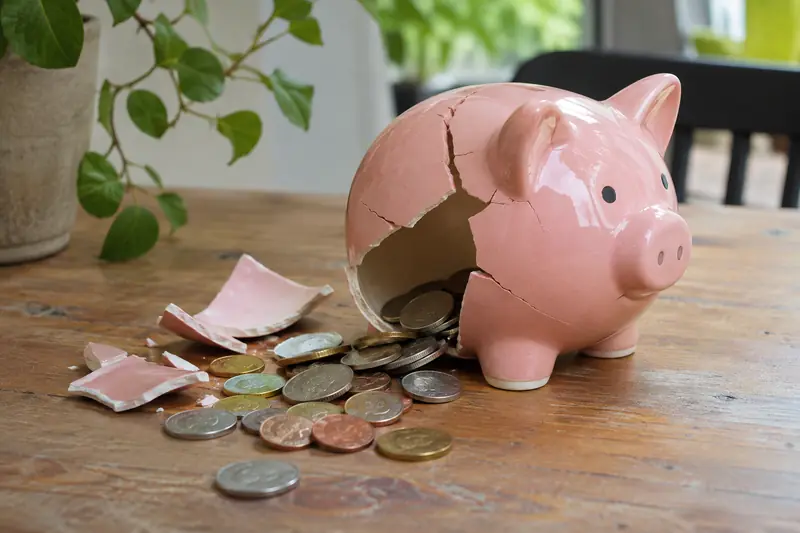
A government borrows by issuing bonds and taking loans. If its debts become unsustainable, it may stop paying or ask lenders to accept changes, such as lower interest, longer maturities or a reduction in principal. Because there is no international bankruptcy court, these restructurings are negotiated.

Why countries get into trouble
Common causes include large budget deficits, borrowing in foreign currency followed by a sharp fall in the local currency, falling commodity export prices, banking crises, sudden stops in foreign investment, and shocks such as pandemics or wars.
How restructuring works
| Step | What happens | Who is involved |
|---|---|---|
| Crisis | Payments missed or about to be | Government, markets |
| IMF programme | Funding with conditions and debt analysis | IMF, government |
| Negotiation | Terms offered to creditors | Bondholders, official lenders |
| Exchange | Old bonds swapped for new ones | Creditors vote on terms |
The haircut
The loss investors take is called a haircut. It can come from cutting the face value, lowering coupons or stretching maturities. Haircuts are often measured in present value terms. Studies of past sovereign restructurings find average haircuts of roughly 35% to 40%, with wide variation.
Collective action clauses
Older bonds often required each holder to agree to changes, which let holdouts block deals or sue for full payment. Argentina fought holdout creditors in US courts for years after its 2001 default. Most new sovereign bonds now include collective action clauses, letting a qualified majority bind all holders and reducing holdout problems.
The role of the IMF
The International Monetary Fund lends to countries in crisis and assesses whether debt is sustainable. Its analysis often sets the size of the debt relief needed. IMF programmes usually come with conditions on budgets and reforms.
Official and private creditors
Countries owe money to bondholders, banks, other governments and multilateral lenders. The Paris Club coordinates traditional official creditors. The G20 Common Framework, launched in 2020, aims to coordinate relief for low-income countries including newer lenders such as China. Coordination has often been slow.
Notable cases
Greece carried out the largest sovereign restructuring in history in 2012, cutting privately held debt by more than 100 billion euros. Argentina has defaulted several times, including 2001, 2014 and 2020. Sri Lanka defaulted in 2022, and Zambia and Ghana restructured in 2023 and 2024.
Effects on the country
Default can bring loss of market access, higher borrowing costs, banking stress, currency falls and recession. Successful restructurings, combined with reforms, can restore growth and market access over time.
What investors analyse
- Debt as a share of GDP and revenue
- Share of debt in foreign currency
- Upcoming maturities and reserves
- Political will and IMF involvement
- Legal terms of the bonds
Recovery values
Distressed sovereign bonds often trade at deep discounts before a deal. Specialist investors buy them hoping the restructured bonds will be worth more. Outcomes depend on negotiations, economic recovery and legal terms.
The Gulf angle
Gulf governments such as the UAE have strong credit ratings and sovereign wealth fund assets, which support their creditworthiness. Investors in emerging market bond funds may still hold debt from countries facing restructuring risk elsewhere, so fund holdings are worth checking.
Local and foreign law bonds
Sovereign bonds may be issued under the country’s own law or under foreign law, often New York or English law. A government can sometimes change its own laws to restructure local-law bonds more easily, as Greece did in 2012 by adding collective action provisions to its domestic bonds. Foreign-law bonds give investors more legal protection, which is why their terms and recovery values can differ. Investors therefore read the governing law and clauses closely before buying distressed government debt.
A realistic scenario
A commodity-exporting country loses export income when prices fall. Its currency drops, raising the cost of dollar debt. It enters an IMF programme, and bondholders agree to swap old bonds for new ones with lower coupons and longer maturities, a present-value loss of about 40%.
Questions to ask yourself
- How sustainable is this country’s debt?
- How much is owed in foreign currency?
- Do the bonds have collective action clauses?
- Is the IMF involved?
- What haircut might be needed?
The short version
When countries cannot pay, debt is restructured through negotiation, often guided by IMF analysis. Bondholders usually take losses through lower principal, coupons or longer maturities. Collective action clauses and coordination frameworks shape the outcome.
Illustration: a bond with face value 100 is swapped for a new bond worth 60 in present value terms. The investor takes a 40% haircut. If the old bond was bought at 35 during the crisis, the new bond still delivers a gain. Hypothetical figures.
There is no bankruptcy court for countries. Debt problems are resolved through negotiation, often with IMF support, and bondholders usually accept losses on what they are owed.
Primary educational references
Reviewed November 28, 2026. Examples are hypothetical illustrations. Educational content, not personalised investment, legal or tax advice.