The temptation
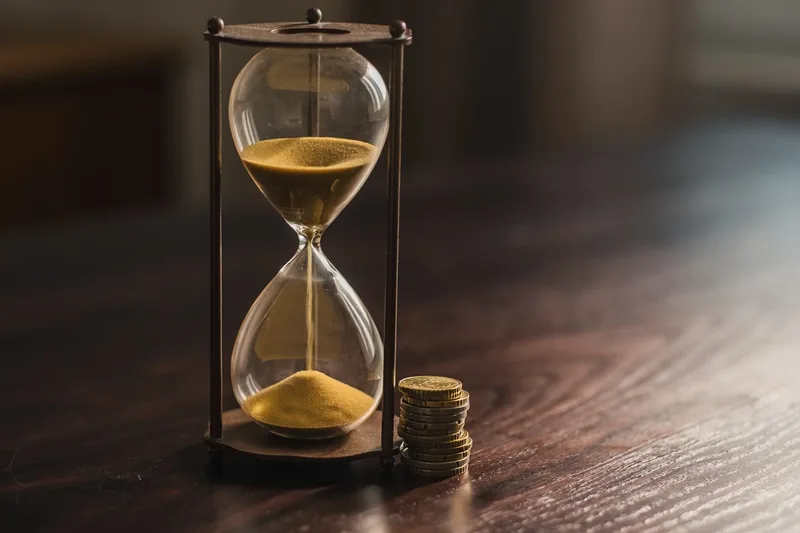
When markets fall, selling feels safe. When they rise, buying feels late. Trying to predict the turns is called market timing.
The problem
Large gains often happen during volatile periods, close to large falls. Investors who sell in fear often miss the rebound and buy back higher.
A better approach
Choose a mix you can live with in bad years, invest regularly, and rebalance. Staying invested through the cycle usually beats guessing.
The core idea
Staying invested through ups and downs has historically produced better results for most investors than trying to move in and out of markets based on predictions.
The cost of missing the best days
Many of the market's best days occur close to its worst days, often during volatile periods. Studies of US shares show that missing just the ten best days over a 20-year period can roughly halve the total return.
Why timing is so difficult
To time the market successfully you must be right twice: when to get out and when to get back in. Even professional investors rarely do both consistently, and the decision to re-enter is often delayed by fear.
Behaviour gap
Research by firms such as Morningstar, which compares fund returns with investors' actual returns, has found that investors often earn less than the funds they own, because they buy after strong performance and sell after falls.
Time reduces the chance of loss
Historically, the probability of a loss in broad US shares has fallen as holding periods lengthened: losses in roughly a quarter of single years, much less often over ten years and rarely over twenty. Past patterns do not guarantee the future.
Waiting for a crash
Investors who hold cash waiting for a big fall can miss years of gains. If the market rises 40% before falling 20%, the waiting investor still buys at a higher price than if they had invested earlier.
A worked illustration
Illustration: an index that rises 0.03% on an average day for 2,500 trading days grows about 112%. Remove the ten best days, each +4%, and growth falls to roughly 43%.
Time in the market is not blind faith
Staying invested works for diversified portfolios with sensible risk levels. It does not mean holding a single failing company or a portfolio far too risky for your needs.
When changing course makes sense
Changing your allocation because your goals, time horizon or circumstances change is sensible. Changing it because of headlines or predictions is market timing.
Regular investing
Investing monthly from salary keeps you in the market automatically and spreads entry points. It removes the need to choose a perfect moment.
Valuation and expectations
High valuations have historically been associated with lower long-term returns, but they are poor guides to timing. Markets can stay expensive or cheap for many years.
Staying invested in a crisis
Write a short plan stating what you will do in a 30% fall: keep contributing, rebalance, avoid checking daily. Having an emergency fund means you will not be forced to sell.
For UAE investors
Many UAE residents receive bonuses or gratuities as lump sums. Investing these promptly into a diversified plan, or over a few months if nervous, usually serves better than waiting for a perfect entry.
Time and compounding
The longer money stays invested, the more compounding works. Ten extra years at 6% roughly multiplies the outcome by 1.8; a decade out of the market costs far more than a few bad months.
Common mistakes
Selling after falls, waiting in cash for a dip, following forecasts and frequently switching funds are the main ways investors fall behind the very investments they hold.
Checklist
Is my portfolio diversified and suited to my risk tolerance? Do I have an emergency fund? Have I written down what I will do in a crash? Am I investing regularly? Am I making changes for personal reasons or for predictions?
The short version
Most investors do better by staying invested in a sensible, diversified portfolio than by trying to dodge falls. The best days often come right after the worst, and missing them is costly.
Illustration: a portfolio earning 0.03% a day on average for 2,500 trading days grows about 112%. Remove its 10 best days of +4% each and it grows only about 43%.
Many of the best days come right after the worst. Missing a few of them sharply reduces long-term returns.
Written by Simplifying Finance. Figures in the worked example are illustrative.
Reviewed November 15, 2026. Examples and lab figures are hypothetical. Educational content, not personalized investment advice.