The idea
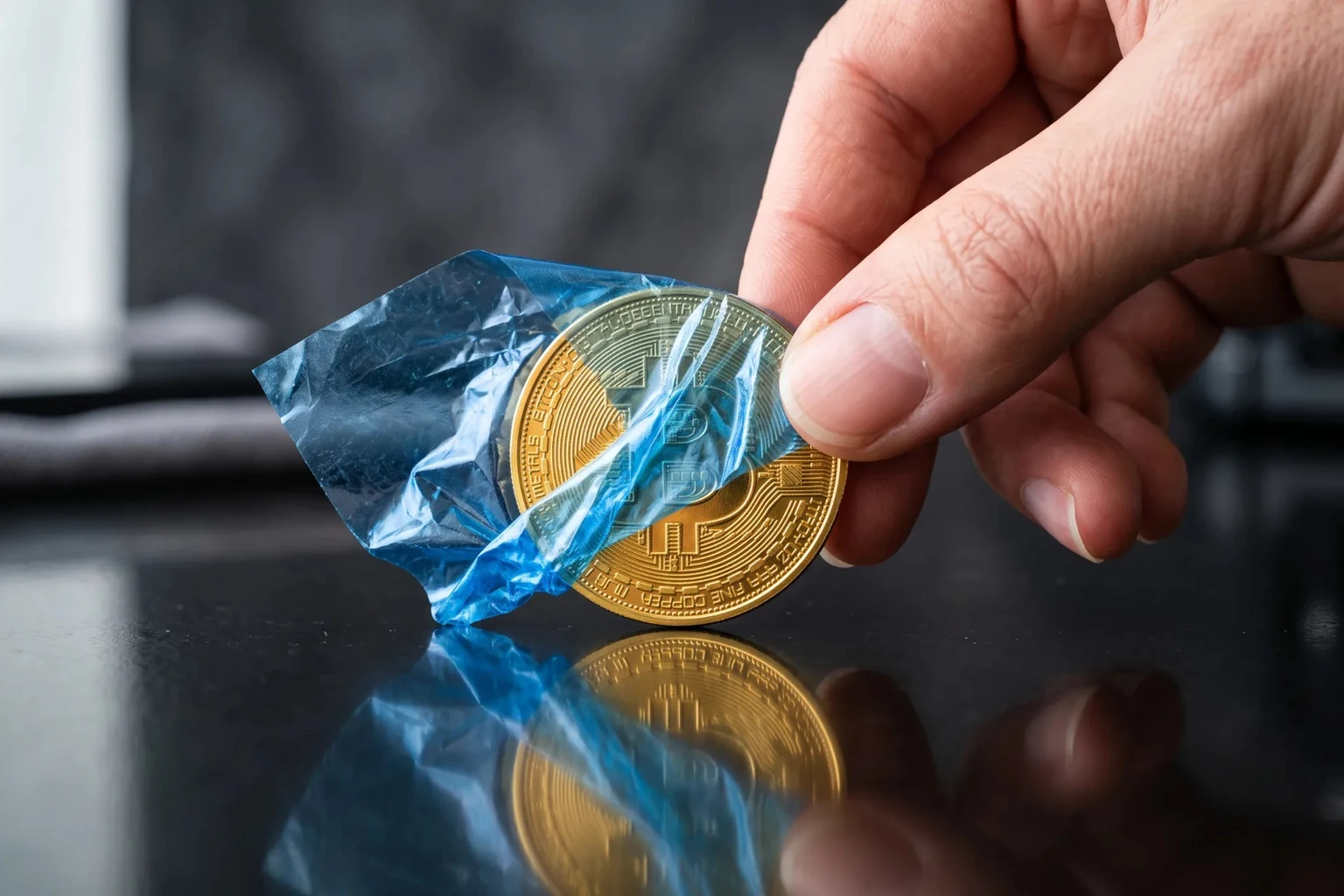
Different blockchains do not natively understand each other’s assets. Bitcoin cannot be used directly in Ethereum smart contracts. A wrapped token solves this by locking the original asset and issuing a token on another chain that represents it, usually one-for-one.

Common examples
| Token | Represents | How it is backed |
|---|---|---|
| Wrapped bitcoin (WBTC) | Bitcoin on Ethereum | Bitcoin held by custodians |
| Wrapped ether (WETH) | Ether as a standard token | Ether locked in a smart contract |
| Bridged tokens | Assets moved across chains | Locked in bridge contracts |
| Exchange-issued wrapped assets | Various coins | Held by the issuing exchange |
Wrapping and unwrapping
To wrap, a user or merchant deposits the original asset with a custodian or contract, which mints the wrapped token. To unwrap, the wrapped token is returned and burned, and the original asset is released. The supply of wrapped tokens should match the assets held.
Why wrap at all?
Wrapping lets holders use assets in decentralised finance on other chains, for example using bitcoin as collateral for a loan on Ethereum or providing liquidity in exchange pools. Wrapped ether exists because ether itself predates the common ERC-20 token standard, so wrapping makes it easier for contracts to handle.
Custodial risk
Many wrapped tokens rely on custodians holding the underlying assets. If a custodian is hacked, mismanages funds or becomes insolvent, the wrapped token may lose its backing. In 2024 changes to the custody arrangements for WBTC prompted some protocols to review their use of it, showing how governance can affect confidence.
Bridge and contract risk
Where wrapping relies on cross-chain bridges or smart contracts, bugs or attacks can drain locked assets. Bridge hacks have caused some of the largest losses in crypto, including the Ronin bridge hack of about 600 million dollars in 2022. Wrapped tokens on the affected chain can then become partly or fully unbacked.
Price differences
Wrapped tokens usually trade close to the original asset’s price because they can be redeemed. If confidence in the backing falls, or redemption is restricted, the wrapped token can trade at a discount, similar to a stablecoin losing its peg.
Proof of reserves
Some issuers publish on-chain addresses of custodial holdings or third-party attestations so users can check that reserves match supply. Checking this is a simple way to judge backing, though attestations are not full audits.
Tax and record-keeping
In some countries, wrapping or unwrapping may be treated as a disposal for tax purposes, potentially creating gains or losses. Rules are evolving, so keeping records of each wrap and unwrap is sensible.
The Gulf angle
In the UAE, regulated virtual asset service providers must meet custody and disclosure requirements set by authorities such as Dubai’s Virtual Assets Regulatory Authority. Using wrapped tokens through unregulated protocols means relying on the issuer’s and contract’s security without those protections.
Checklist
- Who holds the underlying asset?
- Is there proof of reserves?
- How is wrapping governed?
- Does it rely on a bridge, and how secure is it?
- Can I redeem it for the original asset?
Native alternatives
Some newer approaches aim to reduce reliance on a single custodian, for example by using groups of signers, threshold cryptography or protocols that verify the other chain directly. Others avoid wrapping by building applications on the original chain or using native layer-2 networks. Each design trades off security, speed, cost and decentralisation. No method is risk-free, so the size of any position in a wrapped asset should reflect the extra layers of risk compared with holding the original asset directly in self-custody or with a regulated custodian.
Keeping it simple
For many holders, the simplest choice is not to wrap at all unless there is a clear reason, such as a specific use in DeFi that justifies the added risks.
A realistic scenario
A user wants to earn yield on her bitcoin in a DeFi protocol on Ethereum. She converts it into a wrapped bitcoin token. She checks the custodian’s proof of reserves and limits the amount, knowing that if the custodian or protocol fails, the wrapped token could lose value even if bitcoin does not.
Questions to ask yourself
- Why do I need the wrapped version?
- What extra risks am I adding?
- How liquid is the wrapped token?
- Could it trade at a discount?
- What are the tax consequences where I live?
The short version
Wrapped tokens represent assets from one blockchain on another, usually one-for-one. They enable cross-chain use but add custodian, contract and bridge risk. Check what backs them and how they can be redeemed.
Illustration: if 100,000 wrapped tokens exist but a bridge hack removes 40% of the underlying assets, each wrapped token may effectively be backed by only 0.6 of the original asset. Hypothetical figures.
A wrapped token represents another asset, such as bitcoin, on a different blockchain. It is only as good as the custodian or contract holding the original asset.
Primary educational references
Ethereum.org · Wrapped ether ↗
Chainalysis · Cross-chain bridge hacks ↗
Reviewed November 28, 2026. Examples are hypothetical illustrations. Educational content, not personalised investment, legal or tax advice.