What happened
AboitizPower is the power arm of the Aboitiz group, which traces its roots to Cebu over a century ago. It generates electricity from coal, hydro, geothermal, solar and oil plants and distributes power in cities such as Davao and Cebu. It is the largest contributor to its parent, Aboitiz Equity Ventures.
Like most Philippine generators, AboitizPower built coal plants to meet fast-growing demand and provide reliable ‘baseload’ power that runs day and night. The Philippines relies heavily on coal and imported fuels, which exposes consumers to global price swings.
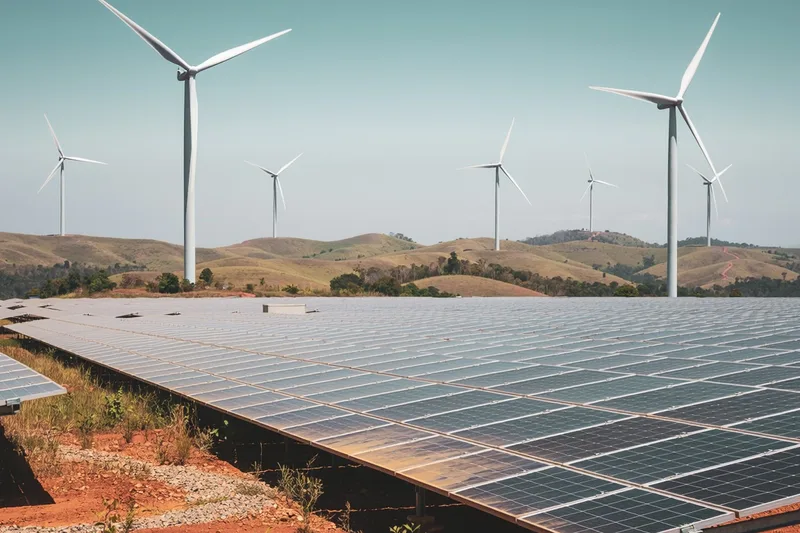
The government has set goals to increase renewable energy’s share to 35% by 2030 and 50% by 2040, and has a moratorium on new coal plants. AboitizPower aims to add 3,600 MW of renewables by 2030 for a total of 4,600 MW, within a total portfolio of 9,200 MW.
In 2025 AboitizPower bought the 797-MW Caliraya-Botocan-Kalayaan (CBK) hydro complex in Laguna for ₱36.3 billion, a major step toward cleaner capacity. It also completed a complex deal involving GNPower Mariveles, a coal plant, booking about ₱13.9 billion in non-recurring losses. Higher depreciation and interest from its newer GNPower Dinginin coal plant also weighed on results.
Core net income slipped 1.7% to ₱33.1 billion, while reported net income fell 43% to ₱19.5 billion, including a fourth-quarter net loss of ₱3.9 billion. Energy sales rose 21%, and higher contracted capacity protected the company from falling spot prices. In 2026 profits rebounded strongly, with first-half net income up 45%, helped by new solar plants and higher power prices.
The case explores the energy transition for utilities with large fossil-fuel assets, the role of contracts and the interpretation of non-recurring items.
Baseload coal plants provide steady power but emit carbon and expose owners to future climate policy. Renewables are cleaner but intermittent; solar produces only in daylight. Utilities must balance reliability, cost and emissions, often keeping coal while adding renewables and battery storage.
Hydro is valuable because it can be dispatched when needed, unlike solar and wind. The CBK complex includes pumped-storage capacity, which stores energy by pumping water uphill when power is cheap and releasing it when demand is high.
Contracted capacity, power sold under long-term agreements to distributors or large users, gives predictable revenue. Spot market sales can earn more when prices are high but expose companies to volatility.
Distribution adds stability. AboitizPower owns electricity distribution utilities serving cities such as Davao and parts of Cebu. Distribution earns regulated returns on its network, providing steady income that balances the more volatile generation business.
Capital spending is large: AboitizPower and partners planned ₱62 billion of investment in 2026, mostly in renewables and battery storage, so financing costs and execution will shape returns.
For the Philippines, reliable affordable power is essential for attracting factories and data centres.
Investors will judge the transition by whether core profit grows as coal’s share falls.
Grid constraints also matter. Many renewable projects are in provinces far from Metro Manila, and transmission lines must be built to carry their power. Delays in grid upgrades can leave new plants unable to deliver electricity, reducing returns.
Solar projects in places such as Olongapo, Armenia in Tarlac and Calatrava came online in 2025–2026, contributing to stronger results and showing the pipeline turning into earnings. Each new plant reduces the group’s average emissions per unit of electricity.
Key moments
AboitizPower formed.
Expands coal capacity.
Sets renewable targets.
Buys CBK hydro; one-off losses on coal deal.
Reported profit falls 43%.
Profit up 45% on new solar and prices.
Sources: Manila Bulletin; Power Philippines.
The trade-offs at the heart of the case
Reliability vs. emissions
Coal is steady but carbon-intensive.
Transition speed vs. cost
Fast change requires heavy investment.
Contracts vs. spot exposure
Contracts bring stability; spot sales bring upside.
For your seminar, paper or interview
- Q1
Why does AboitizPower still rely on coal?
- Q2
Why was the CBK hydro acquisition strategically important?
- Q3
How should investors interpret large one-off losses?
- Q4
How can utilities manage intermittency of renewables?
- Q5
What should the Philippine government do to speed the transition?
- Energy transition strategy
- Asset portfolio management
- Contract vs. merchant risk
- Earnings quality
How we would approach it
Simplifying Finance’s opinion, offered as a starting point for debate, not as fact or investment advice.
AboitizPower should keep its coal fleet running reliably while accelerating renewables and storage, using long-term contracts to protect returns and setting a clear timeline for coal phase-down.
Add storage
Pair solar and hydro with batteries.
Contract more renewables
Sign long-term deals with large users.
Plan coal phase-down
Set retirement dates for older plants.
Manage debt
Fund the transition without overleveraging.
What this plan gives up
Rapid coal retirement could raise power prices and reduce reliability.
The strongest counter-argument
Some argue the Philippines needs coal for years to keep electricity affordable and reliable, so utilities should not rush the transition.
Metrics to watch
- Renewable capacity added
- Contracted capacity
- Core net income
- Debt levels
- Coal plant availability
Propose your solution
Pick a discussion question and set out what you would do, why, and what it would cost. Strong, well-argued answers are reviewed and published below with your first name and programme.
Published solutions
Loading published solutions…
- Manila Bulletin: AboitizPower profit slips ↗
- Power Philippines: Aboitiz Power net income ₱19.5B ↗
- Context.ph: Aboitiz Power’s 2025 profit slips ↗
- Daily Tribune: AboitizPower H1 profit surges 45% ↗
Figures are as reported by the companies or cited outlets as of 22 November 2026. Check the source before quoting. Corrections: let us know through the solution form.