What happened
On 30 May 2022 AGL abandoned a proposed separation into AGL Australia and Accel Energy. Its board cited expected turnout and opposition from some investors, including Grok Ventures, in assessing the prospect of reaching the required 75 per cent approval threshold. It also announced a strategic review and leadership renewal. No completed demerger vote established the precise level of opposition. The decision rested on the board’s assessment of likely voting and the costs of continuing.
A retail electricity book and a generation fleet can provide partial natural protection against wholesale price changes. Separating them can make risks and investment mandates more transparent. It can also replace internal balancing with external hedges, collateral calls and contracts between companies. Generation units facing retirement require capital to close responsibly. A standalone retail entity also needs dependable capacity when customer demand is high.
For readers elsewhere, the AGL case is a clear example of how company law shapes power. Many countries require a special majority, often 75%, for major changes such as schemes and demergers. That protects minority holders, but it also means a single investor with a stake of around 11% can come close to blocking a proposal on its own, because many smaller shareholders do not vote. Activists use this arithmetic: they do not need to own the company, only enough votes to stop it doing something. Boards respond by counting likely votes in advance and sometimes withdrawing proposals rather than losing publicly. When judging a contested plan, look at who owns the shares, how many usually vote, and whether opponents have a credible alternative strategy, not just objections.
AGL Energy, Australia’s largest electricity generator and biggest greenhouse gas emitter, planned to split into AGL Australia, a retailer, and Accel Energy, which would own its coal power stations. In February 2022 a consortium of Brookfield Asset Management and Mike Cannon-Brookes’ Grok Ventures proposed to buy AGL for A$7.50 a share, planning to close its coal plants by 2030. A revised offer of A$8.25 was rejected in March, and the consortium withdrew.
In May 2022 Grok Ventures bought 11.28% of AGL, becoming its largest shareholder, to vote against the demerger at the meeting scheduled for 15 June. Because the scheme needed 75% of votes cast, opposition from just over a quarter of the votes would defeat it. Grok argued that the split would cost at least A$260 million to set up and A$35 million a year more to run.
On 30 May 2022 AGL withdrew the demerger, saying it was unlikely to pass. Its chair and chief executive stepped down, and it announced a strategic review. Grok later won board seats in a separate vote.
The case shows how voting thresholds give large minority holders power, and how activism can change corporate strategy without a takeover.
Key moments
AGL prepares two-company proposal
Board assesses likely voting support
Proposal withdrawn and review announced
Both proposals from Brookfield and Grok Ventures were rejected. Grok then bought 11.28% of AGL, and the demerger needed 75% of votes cast. Sources: pv magazine; Reuters (via Investing.com).
The trade-offs at the heart of the case
Testing the evidence
To investigate the claim empirically, define a consistent unit of observation. Compare retail load previously hedged by group generation with equivalent load covered through external contracts, using liquidity required in a wholesale price spike as the principal measure. Document plant outages and counterparty collateral terms before examining the result. Otherwise a researcher could select whichever adjustment makes the original recommendation look strongest. Report how many observations drop out and whether missing records cluster around difficult operating periods. The most informative starting material would be hourly generation, retail load and contractual margin requirements. Obtain the population before drawing a sample. A file containing only completed or profitable outcomes discards the very observations needed to understand downside. Include an explicit category for pending or unresolved cases.
For your seminar, paper or interview
- Q1
What information would let a shareholder compare the cost of decarbonisation under one balance sheet and two?
- Q2
How would you use equivalent load covered through external contracts to test changes in liquidity required in a wholesale price spike, while allowing for plant outages and counterparty collateral terms?
- Q3
Compare the recommended course with a funded transition programme within the integrated company. Which commitment would you make first, and what result would cause you to change course?
- Shareholder activism
- Demergers
- Voting thresholds
- Energy transition
How we would approach it
Simplifying Finance’s opinion, offered as a starting point for debate, not as fact or investment advice.
Compare the separation with a funded transition plan inside one company. Specify who pays for replacement capacity, employee transition and closure obligations, then compare collateral requirements under wholesale stress. A board seeking shareholder approval should also lay out what remains achievable if the resolution fails, before large implementation costs become unavoidable.
Buy a blocking stake
Acquire enough shares to defeat a resolution needing 75% approval.
Make a public case
Publish arguments against the plan to win other investors.
Seek board seats
Push for representation to influence the new strategy.
What this plan gives up
Blocking the demerger kept AGL whole and pushed it toward earlier coal closures, but it meant a strategic reset, leadership changes and uncertainty for a company running critical power stations.
The strongest counter-argument
An integrated transition budget can keep retail and generation cash together while imposing dated closure and replacement milestones. Its credibility depends on enforcement when commodity prices make delay profitable. A separation can sharpen accountability while increasing funding and hedging costs. Identify the party that would finance replacement capacity on the timetable customers require. A transition budget should identify which expenditure is discretionary and which cannot safely be delayed. Deferring maintenance or rehabilitation may improve short-term distributable cash while increasing long-term liabilities. A board comparing ownership structures should use equivalent standards for both alternatives. Otherwise one plan may look financially superior simply because it shifts unavoidable work beyond the forecast horizon. That matters particularly when an entity expected to fund closure will have fewer operating assets available to generate cash in later years. Show projected cash through the final closure date and identify any obligations falling beyond it. That last reconciliation matters to both lenders and electricity customers.
Metrics to watch
- AGL coal closure dates
- Investment in renewables and storage
Propose your solution
Pick a discussion question and set out what you would do, why, and what it would cost. Strong, well-argued answers are reviewed and published below with your first name and programme.
Published solutions
Loading published solutions…
- AGL · Withdrawal of demerger proposal, May 2022 ↗
- AGL · 2022 annual report ↗
- Reuters (via Investing.com): Cannon-Brookes takes 11.28% of AGL ↗
- pv magazine: AGL abandons demerger ↗
- UNSW: Australia’s biggest carbon emitter buckles ↗
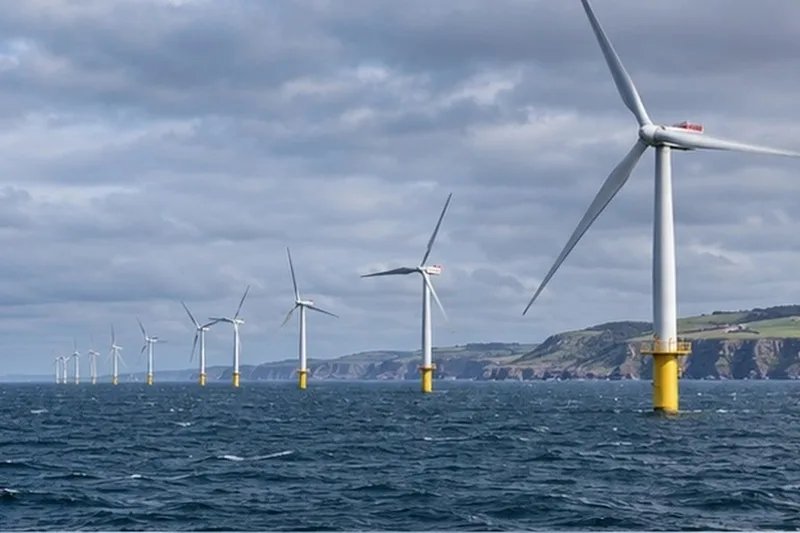
- Image: AI-generated editorial illustration for Simplifying Finance. Illustrative scene.
Figures are as reported by the companies or cited outlets as of 22 November 2026. Check the source before quoting. Corrections: let us know through the solution form.