What happened
On 4 December 2023 Origin held a scheme meeting for a proposed acquisition involving a Brookfield-led consortium and EIG. The resolution attracted 68.92 per cent of votes cast in favour. It fell short of the 75 per cent threshold, and Origin subsequently announced termination of the scheme implementation deed. It is possible to believe the bid offered an attractive immediate premium and still prefer a standalone investment if future cash needs and opportunities are valued differently.
An energy business combines activities whose needs can conflict. A buyer might attach different values to generation, retail relationships and interests exposed to international gas markets. Existing shareholders must decide whether to sell that portfolio or fund its transition. Rejecting an offer preserves potential gains while leaving holders responsible for capital expenditure, commodity risk and future financing. It is a decision to keep funding a business.
Large pension and superannuation funds are long-term owners. They often hold shares for decades and may think a company’s assets, here gas production and a pathway into renewable energy, are worth more than a bidder offers today. Private equity and infrastructure buyers, by contrast, need to earn a return on what they pay, so they try to buy when prices are attractive. A scheme vote forces these views into a single decision. Investors who wanted the premium had to accept the risk that Origin’s shares would trade below the offer after the vote failed. Others judged that the company’s long-term cash flows justified waiting. The case shows that a takeover premium is only attractive relative to what shareholders believe the company is worth on its own.
In November 2022 Origin Energy, a large Australian electricity retailer and gas producer, received a proposal from Brookfield and EIG. Brookfield would take Origin’s energy markets business and EIG’s MidOcean Energy its stake in the Australia Pacific LNG project. Brookfield promised a 10-year A$20 billion to A$30 billion investment plan, including 14 gigawatts of renewable energy. The bid was later raised, and the competition regulator approved it.
AustralianSuper, the country’s largest superannuation fund, built a stake of about 17% and called the offer too low. At the scheme meeting on 4 December 2023, 68.92% of votes cast supported the scheme and 31.08% opposed it, short of the 75% required. About 77.83% of shares were voted.
Origin’s board had also rejected an alternative proposal that would have needed only a simple majority, under which shareholders would have received A$9.08 a share. After the vote, Origin remained independent, and AustralianSuper said it was open to providing capital.
The case shows how a single large investor can decide a scheme vote, and why price, long-term value and turnout all matter.
Key moments
Origin considers consortium proposal
Scheme resolution fails
Implementation deed terminated
AustralianSuper, with about 17% of shares, opposed the bid. 77.83% of Origin shares were voted. Sources: Origin; Reuters; LNG Prime.
The trade-offs at the heart of the case
Turnout changes the negotiation
An investor opposing a scheme has greater blocking power when some other holders do not vote. An apparently small movement in final support may therefore require a large effort to persuade previously inactive holders. The transaction team should distinguish changing existing votes from obtaining additional votes. Equally important, it should understand why owners dissent. A long-term holder may genuinely value the investment pipeline differently, while another may favour a bid but require a higher price. Those views call for different responses. A uniform increase transfers value to every selling shareholder, including those already prepared to accept. A shareholder confident in Origin’s standalone strategy still needs to distinguish enterprise value from the return per existing share. If substantial new equity is required at a discount, part of the future value goes to the providers of new funds. If borrowing funds the programme, debt service and refinancing change the distribution of outcomes. Model those financing choices alongside operating cash. A high headline valuation for a proposed project is not automatically value that the existing shareholder can collect.
For your seminar, paper or interview
- Q1
Would a higher offer be worth accepting if it shifted the risks of energy investment to a better-funded owner?
- Q2
How would you use comparable projects assumed under the bid model to test changes in value per share after required new funding, while allowing for gas prices and financing conditions?
- Q3
Compare the recommended course with accepting a revised offer that compensates shareholders for the funded standalone option. Which commitment would you make first, and what result would cause you to change course?
- Schemes of arrangement
- Institutional investors
- Takeover premiums
- Energy transition
How we would approach it
Simplifying Finance’s opinion, offered as a starting point for debate, not as fact or investment advice.
Value the standalone path after funding commitments and compare the resulting per-share cash with the offer. Publish an explicit timetable for investment if the board believes remaining independent can create more value. A failed vote establishes what shareholders decided. It cannot demonstrate that either valuation was proved correct by the ballot.
Vote against a low price
Use a large holding to block a deal seen as undervaluing long-term assets.
Offer an alternative
Propose supplying capital to the company instead of selling it.
Show turnout matters
Recognise that thresholds count votes cast, not all shares.
What this plan gives up
Rejecting the bid let shareholders keep Origin’s future upside, but they gave up a certain cash premium and the bidders’ promised investment in renewables.
The strongest counter-argument
A revised offer could convert uncertain long-term cash into a more attractive immediate payment. A standalone plan preserves upside if management can fund and deliver it. The decisive comparison is per existing share after future financing, rather than the gross value of an investment pipeline. The risks borne during construction belong in the discount applied to that pipeline. A scheme vote has at least two audiences. Directors need to understand the support required to complete the transaction. Investors deciding how to vote need a price and an alternative business plan. Better polling can solve the first problem without improving the second. The board’s most durable response to rejection is a capital allocation record against which shareholders can compare the independent outcome they chose. Publish funding milestones early enough for shareholders to distinguish a credible, viable independent plan from a retrospective justification for the failed transaction.
Metrics to watch
- Origin share price versus offer
- Origin’s investment in storage and renewables
Propose your solution
Pick a discussion question and set out what you would do, why, and what it would cost. Strong, well-argued answers are reviewed and published below with your first name and programme.
Published solutions
Loading published solutions…
- Origin · Results of the scheme meeting, December 2023 ↗
- Origin · Termination of scheme implementation deed ↗
- Origin: Results of the Scheme Meeting (2023) ↗
- LNG Prime: Origin shareholders reject takeover bid ↗
- Reuters (via Yahoo): Origin investors reject Brookfield bid ↗
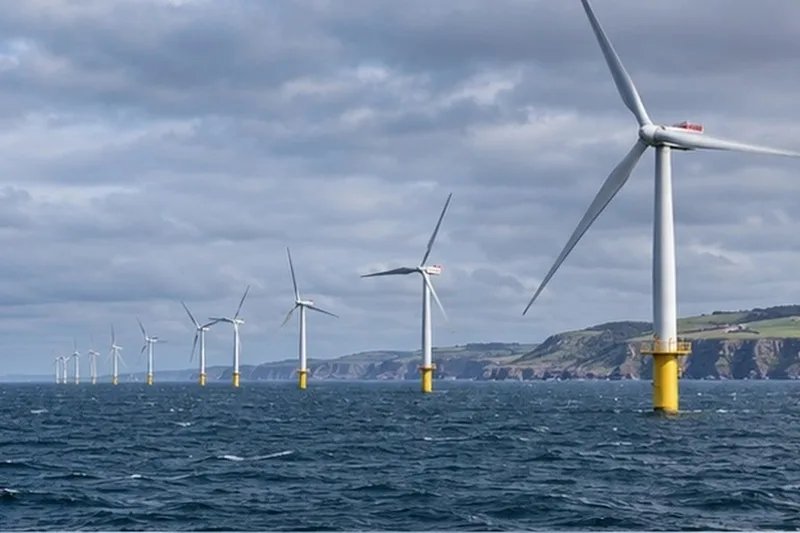
- Image: AI-generated editorial illustration for Simplifying Finance. Illustrative scene.
Figures are as reported by the companies or cited outlets as of 22 November 2026. Check the source before quoting. Corrections: let us know through the solution form.