What happened
The initial decree commonly associated with the corralito restricted cash withdrawals above 250 pesos or US dollars per week, using the account-holder and institution scope in the text. Cash access mattered in a country where some transactions depended on notes. A ledger balance could still be a financial asset while being difficult to use for a particular purchase. The rule therefore made the distinction between a bank’s liquidity and a customer’s liquidity unusually visible.
It is also important to specify whose accounts are being aggregated. The decree described a weekly limit across a holder’s accounts at each institution. Treating that limit as an amount per individual account in the same bank would overstate access for a customer with several accounts. A historical simulation should state the holder structure, institution and date before applying any rule. The broader lesson is visible without constructing a loophole: the unit to which a rule attaches matters for interpreting liquidity. An analyst comparing households should also record existing cash holdings and access to suppliers willing to accept alternative settlement, since these conditions affect immediate hardship.
By late 2001 Argentina had been in recession since 1998. Savers feared both a devaluation and bank failures, and in the first 11 months of 2001 they withdrew about US$18 billion from banks, including US$3.6 billion between 28 and 30 November. Central bank reserves fell from about US$36 billion at the start of the year to about US$15 billion in December.
On 3 December 2001 economy minister Domingo Cavallo’s Decree 1570 limited cash withdrawals to 250 pesos or dollars per week per holder at each bank, initially for 90 days. The measure became known as the corralito, ‘little fence’. It froze much of the cash economy, broke payment chains and triggered protests. After riots on 19 and 20 December, President Fernando de la Rúa resigned on 20 December.
Argentina then declared the largest sovereign default of its time and abandoned the peg. In 2002 dollar deposits were converted into pesos at 1.4 per dollar. GDP fell 10.9%, poverty reached 57.5% and unemployment 24.1%.
The corralito was soon replaced by the corralón, which reprogrammed term deposits into long-dated payments, and thousands of savers went to court to recover their dollars. The legacy lasted decades: Argentines still keep a large share of their savings in US dollars outside the banking system, and bank credit remains small relative to the size of the economy. For any bank, the episode is a reminder that liquidity depends on confidence, and that a deposit guarantee is only as strong as the reserves and currency behind it.
Key moments
Decree 1570 introduces the initial withdrawal restrictions.
The cash cap applies to aggregate accounts at each institution under the decree.
Households and firms must match obligations to available payment channels.
About US$3.6bn left between 28 and 30 November alone, just before the corralito. Sources: Diario de Cuyo; La Nación.
The trade-offs at the heart of the case
Core tensions
A restriction that slows a run can also damage confidence in deposits. A shop losing cash sales may cut orders to suppliers, spreading the problem beyond depositors who tried to withdraw. Effects differ between businesses whose customers and suppliers can use electronic payment instruments and those whose transactions rely on cash. A national deposit total misses that distribution. An emergency measure may be defended on system-wide stability grounds while still imposing concentrated costs on cash-dependent people. Track essential purchases and payroll access for those groups, then evaluate whether feasible exemptions or payment alternatives address the problem without undoing the measure’s purpose.
Testing the evidence
The appropriate unit of observation is one week of cash-only obligations. Track cash shortfall after accessible payment alternatives and record the baseline before the decision. The most useful records are dated decree text, till receipts and supplier payment records. Align their dates and definitions before drawing an inference. In particular, allow for changes in suppliers’ willingness to accept transfers. A change in that factor can move the reported outcome even when the intervention has had no effect. Split obligations by whether settlement is legally and practically possible without cash. Verify availability at the time payment is due. A promise that a payment channel will work tomorrow does little for a supplier requiring notes before releasing goods today.
For your seminar, paper or interview
- Q1
How could a solvent shop fail to pay a supplier despite having more money in the bank than it owed?
- Q2
How would you measure cash shortfall after accessible payment alternatives for one week of cash-only obligations using the available records?
- Q3
Which assumption in “A shop’s daily cash channel” would you challenge first, and how would changing it affect the decision?
- Q4
Could changes in suppliers’ willingness to accept transfers explain the observed change? What evidence would distinguish that explanation?
- Q5
Under what conditions would you prefer expanding usable noncash settlement channels for essential purchases, and who would bear the residual risk?
- Bank runs
- Capital controls
- Liquidity vs solvency
- Currency crises
How we would approach it
Simplifying Finance’s opinion, offered as a starting point for debate, not as fact or investment advice.
Assess emergency measures against the availability of everyday payment alternatives, with evidence on the groups most reliant on notes. Monitor payment failures and access to necessities alongside banking-system outflows. Historical analysis should date each rule because the original decree cannot stand in for every subsequent restriction.
Limit cash withdrawals
Cap withdrawals at 250 pesos or dollars a week per holder per bank.
Keep electronic payments open
Allow transfers and card payments within the banking system.
Convert deposits
Later, convert dollar deposits into pesos at a fixed rate.
What this plan gives up
The controls slowed the run on banks, but they froze the cash economy, deepened the recession and destroyed trust in banks for years.
The strongest counter-argument
For the payments policy team, the alternative worth costing is expanding usable noncash settlement channels for essential purchases. Give both choices the same information date. Specify what can still be reversed, who absorbs the cost if the forecast is wrong, and the point at which new evidence would justify changing course. Make the decision conditional on an observable change in cash shortfall after accessible payment alternatives. That condition lets someone outside the original decision team distinguish a sensible revision of the plan from an attempt to explain away poor results.
Metrics to watch
- Bank deposits as a share of GDP
- Households’ preference for holding dollars
Propose your solution
Pick a discussion question and set out what you would do, why, and what it would cost. Strong, well-argued answers are reviewed and published below with your first name and programme.
Published solutions
Loading published solutions…
- BCRA: Compendium of legal texts, original Decree 1570/2001, Article 2(a) ↗
- La Nación: Corralito, la medida ‘por 90 días’ ↗
- Diario de Cuyo: El histórico salto bancario al vacío ↗
- Canal 26: A 20 años del corralito ↗
- CNN Español: 20 años del corralito ↗
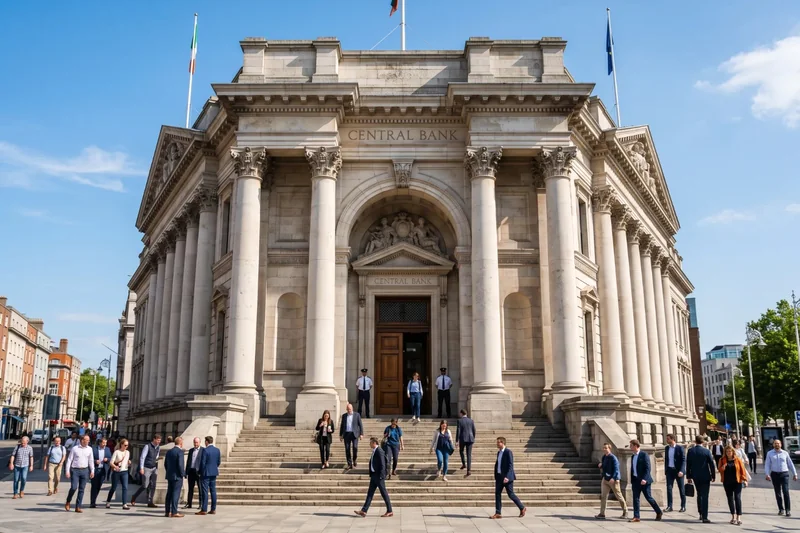
- Image: AI-generated editorial illustration
Figures are as reported by the companies or cited outlets as of 22 November 2026. Check the source before quoting. Corrections: let us know through the solution form.