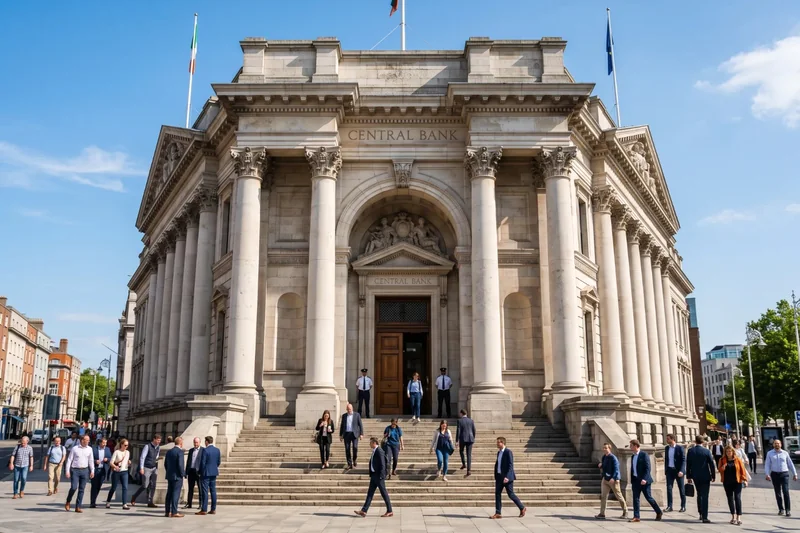
What happened
The unit of account creates a practical reconciliation problem for readers following the programme over time. Compare each original SDR commitment and disbursement before comparing the dollar amounts quoted beside them. A change in the translation rate can alter the dollar value of the same SDR claim without any new lending decision. A second adjustment concerns uses of the funds. If part of a draw immediately replaces an existing liability, gross disbursement can be large while net cash available for other purposes rises by less. Both adjustments can be made with dated entries. Neither requires guessing whether a headline reserve movement represents stronger underlying external earnings.
Using the rounded dollar equivalents at approval, US$12 billion is 60% of US$20 billion. The remaining US$8 billion was the approximate undrawn balance of the approved facility at that point. It was not cash already in the central bank, and a later dollar translation could differ as the SDR exchange rate changed. Future releases depended on programme terms.
President Javier Milei took office in December 2023 promising to end chronic deficits and inflation. After a sharp devaluation and spending cuts, Argentina negotiated a new IMF programme. On 11 April 2025 the IMF Board approved a 48-month Extended Fund Facility of SDR 15.267 billion, about US$20 billion or 479% of quota, with an immediate disbursement of about US$12 billion. That 60% upfront share was described as unprecedented.
The first review was completed on 31 July 2025, releasing about US$2 billion more and bringing disbursements to about US$14 billion. Pressure on the peso returned before the October 2025 midterm elections. The US Treasury, led by Scott Bessent, bought pesos and agreed a US$20 billion swap line with the central bank, signed on 20 October 2025. Milei’s party went on to win the midterms.
Argentina remains the IMF’s largest borrower, owing it roughly US$56.8 billion, and this was its 23rd IMF programme since 1958.
For companies and investors, the programme mattered because it came with the removal of most currency controls on individuals, known as the cepo, and a move to a peso floating within a widening band. That let firms plan imports and dividend payments more easily, but it also exposed them to exchange-rate swings around elections. The case shows how official lenders, not only markets, can set the conditions under which private capital returns.
Reviews of the programme focus on targets for reserves and the budget. Missing a reserve target can delay the next payment, so markets watch each review closely as a signal of the government’s room for manoeuvre.
Key moments
IMF staff announce a staff-level agreement.
The Executive Board approves the extended arrangement.
The arrangement provides an immediate disbursement equivalent to about US$12 billion.
The upfront share (60%) was unusually large. The US Treasury separately agreed a US$20bn currency swap in October 2025. Sources: IMF press releases; FARN; BCRA.
The trade-offs at the heart of the case
Core tensions
A government wants a liquid buffer that reassures importers, depositors and creditors. Borrowing to create that buffer introduces future repayment needs. Its success depends partly on what happens before repayment: export earnings, voluntary financing, fiscal developments and the durability of the monetary framework. A single day’s reserve figure cannot resolve these questions. Front-loading official finance can support a more credible transition if it allows a new policy regime to function through short-term shocks. The benefit shrinks if borrowed funds leave without improving future currency earnings or financing access. Observe both flows through successive reviews.
Testing the evidence
The appropriate unit of observation is one reserve reporting date. Track usable liquidity after near-term foreign obligations and record the baseline before the decision. The most useful records are IMF release schedules, reserve accounts and debt maturities. Align their dates and definitions before drawing an inference. In particular, allow for valuation changes between the SDR and the dollar. A change in that factor can move the reported outcome even when the intervention has had no effect. Track the value date of each inflow and the date each existing obligation can be called. Record the original SDR amount alongside its dollar equivalent. A programme review that is delayed and a review that changes the amount available have different effects on the liquidity profile.
For your seminar, paper or interview
- Q1
How could gross reserves rise on disbursement day without an equivalent improvement in net external wealth?
- Q2
How would you measure usable liquidity after near-term foreign obligations for one reserve reporting date using the available records?
- Q3
Which assumption in “How much buffer survives a delayed review?” would you challenge first, and how would changing it affect the decision?
- Q4
Could valuation changes between the SDR and the dollar explain the observed change? What evidence would distinguish that explanation?
- Q5
Under what conditions would you prefer holding a larger liquid buffer against delayed future disbursements, and who would bear the residual risk?
- Front-loaded financing
- Reserves and confidence
- Exchange-rate bands
- Official bilateral support
How we would approach it
Simplifying Finance’s opinion, offered as a starting point for debate, not as fact or investment advice.
Show gross official liquidity, borrowed funds, upcoming foreign obligations and conditional future access separately. Stress the payment calendar under delayed reviews and weaker external receipts. State the date and currency basis of every financing figure so an SDR movement cannot masquerade as a new lending decision.
Front-load the money
Disburse US$12bn immediately to rebuild reserves.
Loosen currency controls
Move to a floating band for the peso.
Add bilateral support
Secure a US$20bn swap line with the US Treasury.
What this plan gives up
Front-loading money strengthened reserves quickly, but it increased Argentina’s debt to the IMF further and left less leverage for later reviews.
The strongest counter-argument
For the public treasury and reserve managers, the alternative worth costing is holding a larger liquid buffer against delayed future disbursements. Give both choices the same information date. Specify what can still be reversed, who absorbs the cost if the forecast is wrong, and the point at which new evidence would justify changing course. Make the decision conditional on an observable change in usable liquidity after near-term foreign obligations. That condition lets someone outside the original decision team distinguish a sensible revision of the plan from an attempt to explain away poor results.
Metrics to watch
- Net reserves
- Peso within the band
Propose your solution
Pick a discussion question and set out what you would do, why, and what it would cost. Strong, well-argued answers are reviewed and published below with your first name and programme.
Published solutions
Loading published solutions…
- IMF: Executive Board approval of the 48-month arrangement, April 2025 ↗
- IMF: Staff-level agreement announcement, 8 April 2025 ↗
- IMF: Executive Board approves 48-month US$20 billion arrangement ↗
- IMF: Completes first review of the EFF ↗
- BCRA: Agreement with the US Treasury ↗
- Buenos Aires Times: IMF backs Milei’s reforms in third review ↗
- Rio Times: Argentina’s IMF programme explained ↗
- Image: AI-generated editorial illustration
Figures are as reported by the companies or cited outlets as of 22 November 2026. Check the source before quoting. Corrections: let us know through the solution form.