What happened
Defence companies sell to a small number of governments on long contracts. That gives them visibility over revenue, but makes them dependent on politics and budgets. After Russia’s invasion of Ukraine, European and allied defence spending rose sharply.
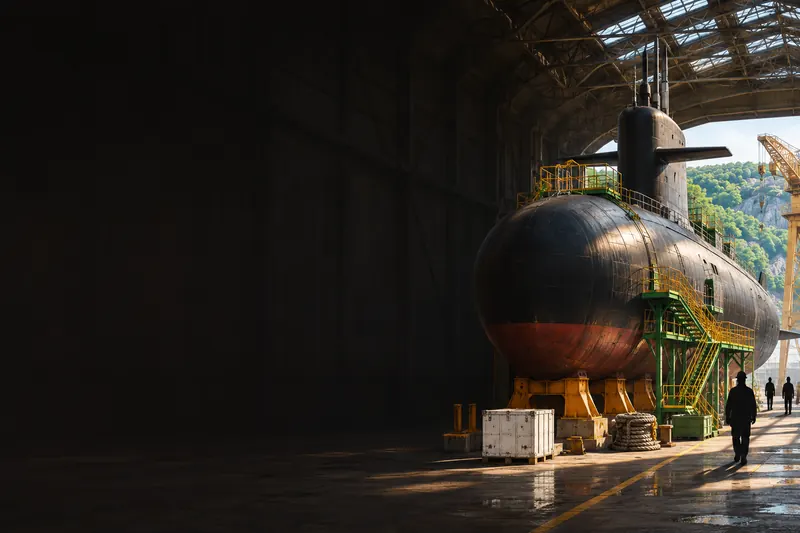
BAE’s challenge is capacity: building more shells, ships and submarines needs skilled workers and new factories, which take years. It also faces ESG questions from some investors, and the risk that budgets fall again in the future.
The lessonLong government contracts bring visibility, but growth depends on investing in capacity before the orders are certain.
Key moments
British Aerospace merges with Marconi Electronic Systems to form BAE Systems.
Bribery investigations end with about £290m in US and UK penalties.
A planned merger with EADS (now Airbus) collapses over government objections.
BAE buys Ball Aerospace in the US for about $5.6bn.
Record sales and backlog; work starts on the first Dreadnought nuclear submarine.
For your seminar, paper or interview
- Q1
Why do defence companies have such large order backlogs?
- Q2
What risks come from selling mainly to governments?
- Q3
Should investors with ESG goals own defence companies?
- Backlog analysis
- Customer concentration
- Capacity planning
Propose your solution
Pick a discussion question and set out what you would do, why, and what it would cost. Strong, well-argued answers are reviewed and published below with your first name and programme.
Published solutions
Loading published solutions…
- BAE Systems: 2025 full year results ↗
- UK Defence Journal: record sales and backlog ↗
- FlightGlobal: BAE backlog on defence demand ↗
Figures are as reported in the cited sources. Check the source before quoting. Corrections: let us know through the solution form.