What happened
BMW and SGL opened a carbon-fibre plant in Moses Lake to supply BMW’s i programme. The partners were committing specialist upstream capacity before customers had bought the finished i3 in volume. A lighter structure might improve vehicle performance, but the fibre supplier still needed steady orders and manufacturing yield to cover its costs.
Carbon fibre is much lighter than steel and stronger than many metals, but in the 2000s it was expensive and used mainly in aircraft, racing cars and sports equipment.
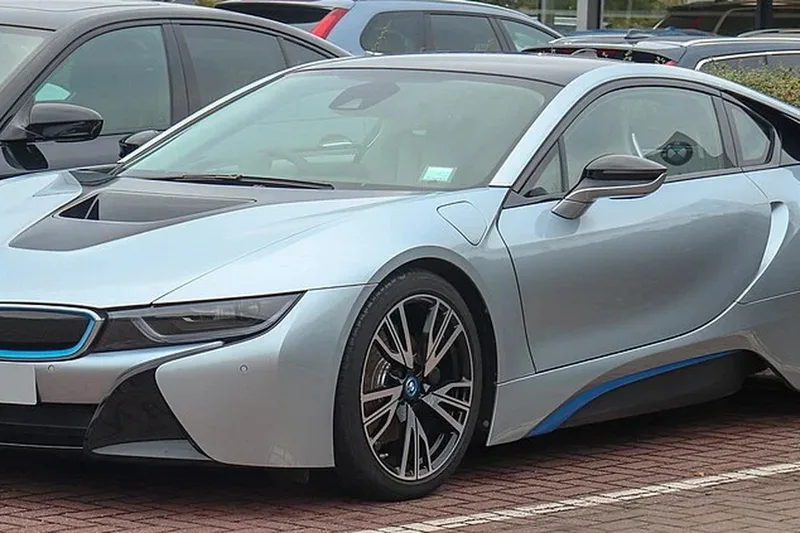
For the i3 and i8, BMW planned a passenger cell made of carbon-fibre reinforced plastic, the first time the material would be used in a mass-produced car body.
In 2009 BMW and SGL Group formed a joint venture, SGL Automotive Carbon Fibers, in which BMW held 49 percent, according to BMW of North America.
The partners chose Moses Lake in Washington State mainly because of its supply of clean, low-cost hydroelectric power, which matters because making carbon fibre uses a great deal of energy.
Construction began in July 2010, and the plant officially opened on 1 September 2011 after about ten months of building work. The initial investment was about $100 million, with 80 local jobs.
The plant started with two production lines, each able to make 1,500 tonnes of carbon fibre a year, for a total of about 3,000 tonnes.
The fibre was shipped to a second joint-venture plant at Wackersdorf in Germany, where it was processed into material used to make the body parts.
In May 2014 the partners announced a further $200 million investment to triple capacity to 9,000 tonnes a year, which they said would make Moses Lake the world’s largest carbon-fibre plant, with about 200 workers.
BMW later sold its stake in the joint venture to SGL in 2017, and the i3’s successors used more conventional materials.
The exhibit shows how quickly BMW and SGL planned to grow the plant. Tripling capacity within a few years signalled confidence that carbon fibre would play a growing role in car making.
Committing to capacity before a product has customers is a classic supply-chain dilemma. Too little capacity can delay a launch, while too much leaves expensive equipment idle.
A joint venture splits that risk. Each partner contributes money and expertise, and each shares the losses if demand falls short.
For BMW, the partnership gave access to SGL’s know-how in carbon materials. For SGL, it secured a large, long-term customer.
Energy costs were central to the choice of location. Carbon fibre production uses so much electricity that cheap hydropower significantly reduces both costs and emissions.
Capital spending of this kind is recovered over many years through the cost of each kilogram of fibre produced, so high utilisation matters.
When later BMW models moved away from carbon-fibre bodies, the value of the dedicated capacity depended on finding other customers, a reminder that specialised assets carry risk.
Around the world, car makers are now making similar bets on battery cells, often through joint ventures with specialist suppliers.
Students can compare the Moses Lake decision with today’s battery gigafactory investments, which face the same questions about demand, technology and timing.
The case also shows the value of planning capacity in stages, adding lines as demand is confirmed rather than building everything at once.
Key concept: supply chains. A supply chain is the network of suppliers, factories, transport links and distributors that turns raw materials into a finished product in a customer’s hands. Decisions about who supplies what, where parts are made and how much stock to hold affect cost, speed and resilience.
A lean chain with few suppliers and little stock is cheap to run but vulnerable to disruption, while a chain with backup suppliers and buffer stock costs more but recovers faster from shocks. Car makers worldwide have spent the past decade rebalancing that trade-off.
Key concept: capital versus operating spending. Capital expenditure, or capex, buys long-lived assets such as factories, machines and tooling; its cost is spread over many years through depreciation. Operating expenditure, or opex, covers day-to-day costs such as wages, energy and materials.
Key moments
BMW and SGL establish a carbon-fibre venture
Moses Lake plant opens
BMW i3 enters series production
Source: BMW Group, 2011 and 2014.
The trade-offs at the heart of the case
A closer look
A fibre lot can meet its supplier specification and still lead to expensive rework when a downstream process turns it into a body part. Trace one accepted lot all the way through to a conforming structure. Which party controls the step with the largest material loss? That party is a better candidate to guarantee yield than the one that happens to issue the invoice for the raw fibre.
The alternative on the table
For comparison, consider the option to buy composite material as and when the vehicle programme orders it. The related case “What a nine-year electric-car run taught BMW” supplies a useful reference point. The i3 entered series production in 2013 with an electric drivetrain and an unusual body construction. Moses Lake required upstream commitment before the finished i3 proved its volumes. The later production milestone is information managers did not possess at the original decision. Ask what purchasing flexibility was worth at the time.
For your seminar, paper or interview
- Q1
Where in the carbon-fibre chain would you measure and allocate yield losses?
- Q2
Which finding in the records on yield of fibre accepted for composite structures would persuade you to buy composite material as and when the vehicle programme orders it?
- Q3
Compare this decision with “What a nine-year electric-car run taught BMW”. Which difference between the cases would change your recommendation?
- Vertical integration
- Joint ventures
- Capacity commitment
- Materials strategy
How we would approach it
Simplifying Finance’s opinion, offered as a starting point for debate, not as fact or investment advice.
We think BMW was right to secure its own carbon-fibre supply for the i programme. No outside supplier could guarantee the volumes and costs it needed, and a joint venture shared the risk with a specialist. The bet was that lightweight materials would become central to electric cars; in the end the i3’s successors moved to cheaper steel and aluminium structures.
Share the risk
Partner with a specialist to build new capacity.
Choose clean power
Locate energy-heavy plants near renewable electricity.
Plan for flexibility
Make sure capacity can serve other customers.
What this plan gives up
Committing capacity early secures supply but risks unused output.
The strongest counter-argument
Some argue buying fibre on the open market would have avoided the investment.
Metrics to watch
- Plant utilisation
- Cost per kilogram of fibre
Propose your solution
Pick a discussion question and set out what you would do, why, and what it would cost. Strong, well-argued answers are reviewed and published below with your first name and programme.
Published solutions
Loading published solutions…
- BMW Group PressClub • The Carbon Age Begins – BMW Group / SGL Group Joint Venture opens the new Moses Lake Plant +++ Start of carbon fiber production for BMW i3 and BMW i8 +++ ↗
- BMW Group PressClub • Source document — Buying lightweight capacity before the i3 had customers ↗
- BMW Group PressClub • The Carbon Age begins: Moses Lake plant opens ↗
- BMW Group PressClub • Moses Lake to triple capacity ↗
- WardsAuto • BMW and SGL to triple Moses Lake capacity ↗
- BMW Group PressClub USA • BMW NA 50 stories: carbon fibre ↗
- Photo: Woven carbon fiber fabric by Acheolg, CC BY-SA 4.0 (cropped and resized) ↗
Figures are as reported by the companies or cited outlets as of 22 November 2026. Check the source before quoting. Corrections: let us know through the solution form.