What happened
The M1 required a production chain BMW Motorsport had never operated. BMW was to supply the technical components while Lamborghini handled body and chassis work. Delays forced a reorganisation of the chain. BMW brought the car to market and the Procar series gave it prominent races alongside Formula One weekends.
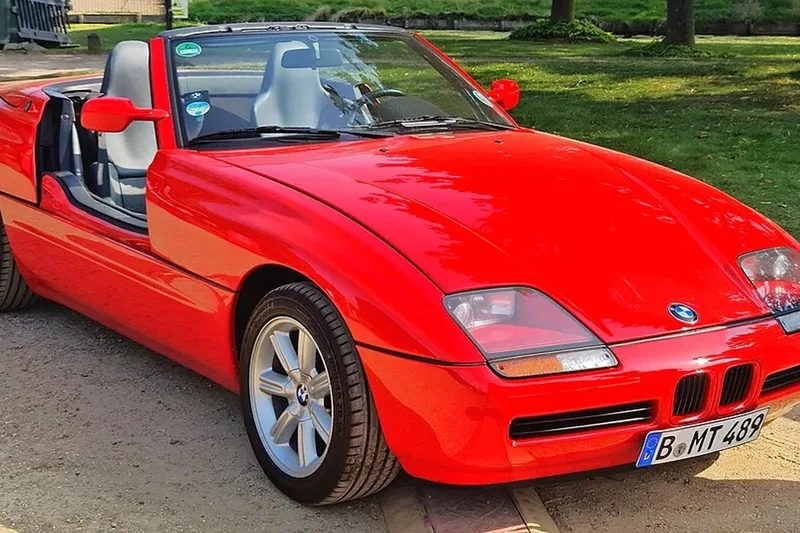
The M1 was BMW’s first mid-engined sports car and the first car developed by BMW Motorsport. It was designed to compete in sports car racing, which required a minimum production run for homologation.
Its fibreglass body was designed by Giorgetto Giugiaro at Italdesign, inspired by the 1972 BMW Turbo concept car. The chassis was developed with the help of Gianpaolo Dallara.
BMW originally agreed with Lamborghini to build the car, since BMW lacked capacity for small-series production. But Lamborghini ran into serious financial difficulties, and BMW took back control of the project.
Production was reorganised, with bodies and chassis built by Italian suppliers and final assembly by Karosserie Baur in Stuttgart. The M1 was presented in 1978.
A series of about 400 cars was planned for homologation. Ultimately, 453 M1s were built between 1978 and 1981.
The delays meant the M1 missed its intended racing category. BMW created the Procar series, in which Formula One drivers raced identical M1s before Grand Prix races in 1979 and 1980, to give the car a stage.
The M1 remains the rarest M car and is highly valued by collectors.
Outsourcing production to a partner can save investment, but if the partner fails, the company may have to rescue the project at extra cost.
Similar partner failures have affected projects in aerospace, electronics and other industries.
The exhibit shows that BMW planned about 400 M1s for homologation and eventually built 453. The car did reach its production target, but too late for its intended racing class.
Outsourcing production to Lamborghini made sense on paper. BMW lacked a small-series factory, and Lamborghini had experience building low-volume sports cars.
The risk was concentrated in one partner. When Lamborghini’s finances weakened, the project stalled, and BMW had to reorganise production across several suppliers.
This is a supply-chain lesson. A company that depends on a single supplier for a critical stage of production needs to monitor that supplier’s health and have a plan if it fails.
BMW also faced a sunk-cost decision. Much money had already been spent on design and tooling. The question was whether finishing the car would bring enough value to justify the extra spending, regardless of what had been spent already.
BMW chose to complete the car and find a new purpose for it. The Procar series kept the M1 in the public eye and gave the new motorsport division a showcase.
In the long run, the M1 became an important part of BMW’s heritage as the first M car, though its commercial impact at the time was limited.
Partner failures continue to affect projects worldwide, making supplier risk management a key skill for managers.
Another lesson from the M1 is the importance of timing. Racing regulations change, and a car designed for one set of rules may arrive too late to compete as intended.
Delays in large projects are common, whether in cars, aircraft or construction. When a deadline is fixed by an outside body, any delay can reduce the value of the whole project.
BMW’s response was flexible. Rather than accept a car with no purpose, it created a new racing series that suited the M1 and gave it publicity.
That kind of creative response can turn a disappointing project into something useful, even if it does not meet the original plan.
Managers can learn to build time buffers into projects with outside deadlines and to consider alternative uses for a product if the main plan fails.
The M1 also had an important legacy inside BMW. It gave the new motorsport division its first complete car project, experience it later drew on when developing road-going M cars.
Its engine, a six-cylinder unit developed by BMW Motorsport, was later used in modified form in the first M5 and M635 CSi, showing how investment in one project can benefit later products.
In that sense, part of the value of the M1 was realised years after it left production.
Judging a project only by its immediate sales can therefore miss the skills and components it leaves behind for future products.
For BMW, the M1 also became a powerful heritage symbol, used decades later in concept cars and anniversary celebrations of the M division.
Key moments
Lamborghini to supply body and chassis
BMW presents the M1 after reorganising manufacture
Procar gives the model a racing series
Sources: web.de; BMWBlog citing MDataWorks production data.
The trade-offs at the heart of the case
A closer look
A half-built car can have a negative value to the incoming contractor if its inspection records are incomplete. Before accepting the work, that contractor needs to know which assemblies it can certify without dismantling them. A transfer schedule for tools, drawings and signed checks can be worth more than an optimistic percentage-complete figure. It also lets the finance team release money against something independently observable.
For your seminar, paper or interview
- Q1
What would you require a new contractor to verify before accepting incomplete M1s?
- Q2
Which finding in the records on handover quality and subcontractor completion dates would persuade you to abandon the unfinished programme and redirect the team?
- Q3
Compare this decision with “Two sports cars share a development bill”. Which difference between the cases would change your recommendation?
- Outsourcing
- Partner risk
- Project management
- Homologation
How we would approach it
Simplifying Finance’s opinion, offered as a starting point for debate, not as fact or investment advice.
We think BMW was right to finish the M1 after its Italian partner could not, because abandoning it would have wasted the investment and damaged its credibility in motorsport. But the delays meant the car missed its intended racing class, a reminder of the risks of relying on a single partner.
Assess partner strength
Check finances before outsourcing.
Keep a backup plan
Prepare to take work in-house.
Adapt the goal
Find new uses if the original plan fails.
What this plan gives up
Outsourcing saves capacity but creates dependence on the partner.
The strongest counter-argument
Some argue BMW should have cancelled the project once delays began.
Metrics to watch
- Project milestones
- Partner financial health
Propose your solution
Pick a discussion question and set out what you would do, why, and what it would cost. Strong, well-argued answers are reviewed and published below with your first name and programme.
Published solutions
Loading published solutions…
- BMW Group • The BMW M Story. 40 Years BMW M GmbH. ↗
- BMW Group • ICONS FOR CONNOISSEURS - THIRTY YEARS OF THE BMW M1 ↗
- bmw-m1.org • BMW M1 History, 1976–81 | BMW M1 ↗
- Wikipedia • BMW M1 ↗
- BMWBlog • How many M cars has BMW built? ↗
- web.de • BMW M builds its millionth car ↗
- Photo: BMW M1, front right (Brooklyn) by Mr.choppers, CC BY-SA 3.0 (cropped and resized) ↗
Figures are as reported by the companies or cited outlets as of 22 November 2026. Check the source before quoting. Corrections: let us know through the solution form.