What happened
The Z3 gave BMW’s South Carolina operation a product made exclusively there. The first example came off the line in September 1995. Its appearance in the James Bond film GoldenEye made the production debut a consumer event. Demand creation and plant readiness suddenly had to operate on the same calendar.
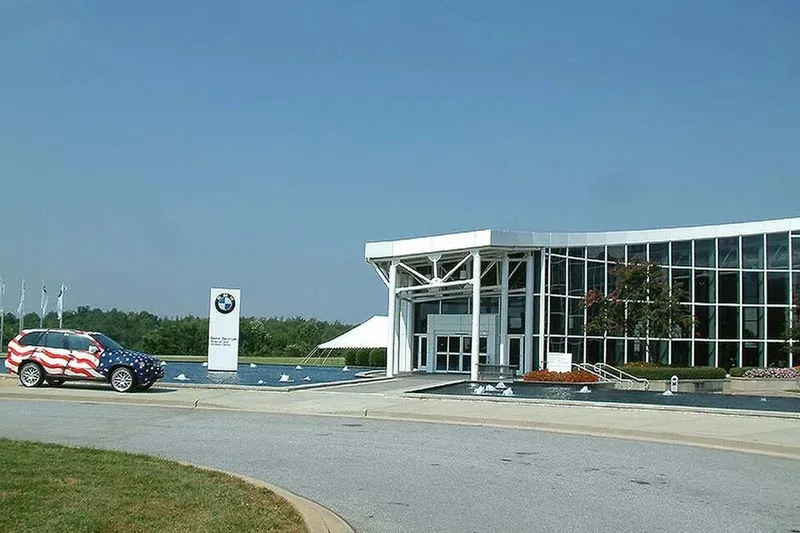
In 1992 BMW decided to build a factory in Spartanburg, South Carolina. It began production in 1994, making BMW one of the first European car makers to build a full manufacturing plant in the United States.
The Z3 was chosen as the first model built only at Spartanburg. It was also the first BMW built exclusively outside Germany, according to Autocar.
The car was based on a shortened version of the E36 3 Series platform and was initially offered with four-cylinder engines, followed later by six-cylinder and M versions.
Production began on 20 September 1995. Two months later, the Z3 appeared in GoldenEye, the first film in which James Bond drove a BMW rather than an Aston Martin.
The film gave the car enormous publicity. According to Wikipedia, more than 15,000 Z3s had been ordered by the time it was introduced.
Product placement can create demand on a fixed date, but a factory cannot always increase output quickly. A new plant with a new workforce faced the added challenge of learning to build a new model while demand was already high.
The Z3 was produced until 28 June 2002, with 297,087 built, more than any previous BMW roadster.
It was replaced by the Z4, which was also built at Spartanburg in its first generation.
The exhibit shows the scale of the Z3 compared with its specialised M Roadster version. Most buyers chose the standard car, while the high-performance model sold in much smaller numbers at a higher price.
Customer acquisition is costly in the car industry, so free publicity from a hit film is valuable. GoldenEye put the Z3 in front of millions of viewers worldwide before many dealers had the car.
But publicity only pays off if customers can actually buy the product. If waiting times become too long, some interested buyers may lose patience and choose a rival.
That made supply-chain planning central to the launch. The new Spartanburg plant needed suppliers able to deliver parts reliably, and a workforce trained to build cars to BMW standards.
Building a model exclusively in one plant has advantages. It concentrates investment and skills, and gives the plant a clear role within the company.
The risk is that any disruption at that plant affects worldwide supply of the model. Car makers often weigh that risk against the efficiency of a single production site.
The Z3’s success helped prove that BMW could build cars to its standards in the United States, paving the way for the X5 and later X models at Spartanburg.
Product placement in films remains a common marketing strategy worldwide, but the Z3 is one of the best-known examples in the car industry.
Students can consider how a company should balance the timing of marketing campaigns with the realities of factory ramp-up.
The Z3 also shows how a model can define a plant’s reputation. Workers and suppliers at Spartanburg built their skills on the roadster, then applied them to larger and more complex vehicles.
Today the plant builds BMW’s biggest and most expensive SUVs, a long way from its start with a small two-seater.
For managers, the lesson is that the first product at a new site does not have to be the most important one. It needs to be one the plant can learn on while still delivering quality to customers.
Students can compare this approach with plants that launch with a company’s highest-volume model and face greater pressure from the start.
The Z3 is also remembered as the car that introduced many Americans to BMW, at a time when the brand was still growing its presence in the United States. That exposure helped the dealer network that later sold the X5.
Key moments
First Z3 built at Spartanburg
GoldenEye brings the car to movie audiences
Delivery capacity meets publicity-generated interest
Sources: BMWBlog (total); GTspirit (M Roadster).
The trade-offs at the heart of the case
A closer look
Film exposure has a calendar that a launch team cannot move cheaply. Compare two disruptions: a missed opening weekend and a missed customer delivery after the film has opened. The first loses attention, the second can turn attention into disappointment. A launch allocation held near the customers most likely to convert could be worth more than the same number of cars added late to total annual output.
The alternative on the table
For comparison, consider the option to spread the Z3 across several factories. The related case “Making room for an SUV in a sports-saloon brand” supplies a useful reference point. The first X5 rolled off the Spartanburg line in September 1999. The X5 gave the same location a route to a different segment. Concentrating the Z3 in one factory simplified responsibility for its launch but concentrated disruption risk. Compare the cost of backup supply with a launch-specific interruption scenario.
For your seminar, paper or interview
- Q1
How would a missed film launch change the value of an extra Z3 production shift?
- Q2
Which finding in the records on test-drive bookings linked to eventual retail deliveries would persuade you to spread the Z3 across several factories?
- Q3
Compare this decision with “Making room for an SUV in a sports-saloon brand”. Which difference between the cases would change your recommendation?
- Product launch
- Product placement
- Capacity planning
- Plant strategy
How we would approach it
Simplifying Finance’s opinion, offered as a starting point for debate, not as fact or investment advice.
We think launching the Z3 alongside a James Bond film was a bold and successful piece of marketing, and making it only at Spartanburg gave the new plant a clear identity. The risk was that publicity would run ahead of supply, but the car became BMW’s most successful roadster to that date.
Align supply with publicity
Have cars ready when demand peaks.
Give a new plant a flagship
Build a model that is exclusive to it.
Track conversion
Measure how interest turns into orders.
What this plan gives up
Film exposure creates demand on a fixed date that factories may struggle to meet.
The strongest counter-argument
Some argue the Z3 would have sold well without the film tie-in.
Metrics to watch
- Orders before launch
- Delivery times
Propose your solution
Pick a discussion question and set out what you would do, why, and what it would cost. Strong, well-argued answers are reviewed and published below with your first name and programme.
Published solutions
Loading published solutions…
- BMW Group • BMW NA 50th Anniversary | 50 Stories for 50 Years Chapter 20: “The Z3 Roadster Phenomenon: Freedom and Fun from Spartanburg”. ↗
- BMW Group PressClub • Efficient Dynamics ↗
- BMW Group PressClub • Source document — Launching the Z3 from South Carolina ↗
- BMW Group PressClub USA • The Z3 roadster phenomenon ↗
- BMWBlog • Remembering the BMW Z3 ↗
- Wikipedia • BMW Z3 ↗
- Autocar • The story of BMW’s Z cars ↗
- Photo: 1999 BMW Z3 2.3 roadster, front right, 08-24-2024 by MercurySable99, CC BY-SA 4.0 (cropped and resized) ↗
Figures are as reported by the companies or cited outlets as of 22 November 2026. Check the source before quoting. Corrections: let us know through the solution form.