What happened
BMW described remote software upgrades for vehicles running Operating System 7.0. The ability to send software after delivery changed the route by which improvements reached owners. A downloaded file and a successfully updated vehicle are different milestones. An incomplete installation may still require assistance or a workshop visit.
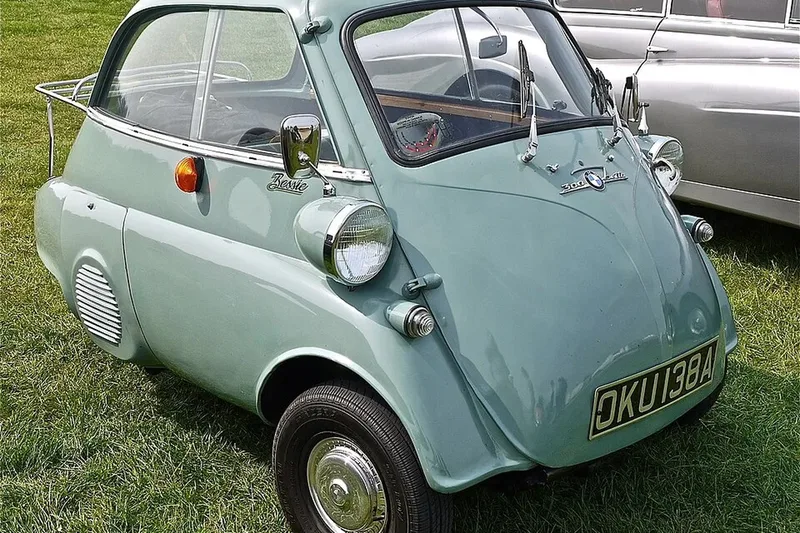
For most of the car industry’s history, a car’s software was fixed when it left the factory. Changes required a visit to a dealer.
Over-the-air updates allow manufacturers to send new software to cars remotely, much as smartphones receive updates.
BMW introduced Remote Software Upgrades for cars with its Operating System 7, which requires BMW Live Cockpit Professional.
In October 2020 BMW announced its biggest remote upgrade to date, bringing a new version of Operating System 7 to more than 750,000 vehicles worldwide.
BMW said it was the largest over-the-air update ever rolled out by a European manufacturer.
The upgrade added new and improved functions, including BMW Maps, Google Android Auto and eDrive Zones for plug-in hybrids.
Customers received a notification in the car or in the BMW app when the update was available, and could install it free of charge.
Remote updates are becoming standard across the industry as cars rely more on software.
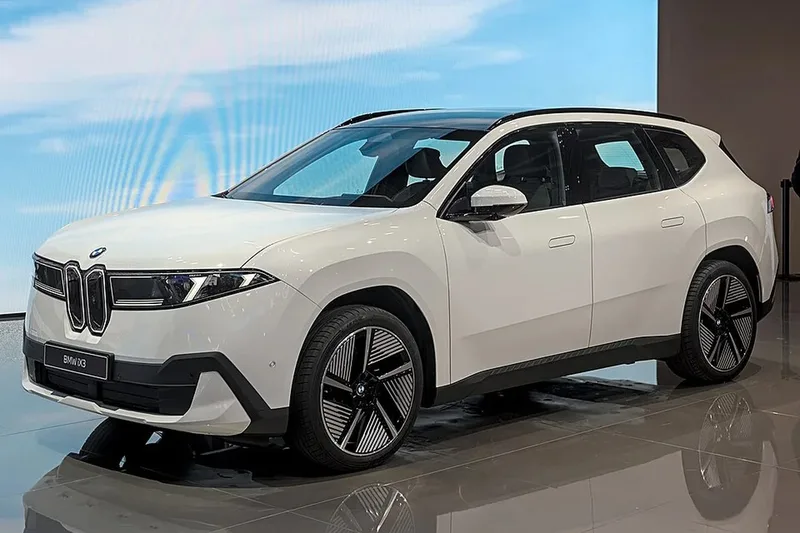
The exhibit shows the scale of BMW’s 2020 update. Reaching three-quarters of a million cars at once would have been impossible with dealer visits.
Remote updates change unit economics after the sale. Fixing problems remotely costs less than bringing cars into workshops.
They also allow companies to add features, which can increase customer satisfaction and loyalty.
Some carmakers have experimented with selling features as subscriptions, a model that has proved controversial with customers.
Reliability is crucial. A failed update can leave a car with problems, so careful testing and fallback systems are needed.
Cybersecurity also matters, since any channel that can change a car’s software must be protected from attack.
Regulators in many countries now require carmakers to manage software updates and cybersecurity throughout a vehicle’s life.
Tesla popularised over-the-air updates, and most major carmakers now offer them.
For students, the case shows how cars are becoming more like connected devices, with value created over time.
Key concept: unit economics. Unit economics looks at the revenue and costs linked to a single unit, such as one car or one customer. If each unit earns more than it costs to make and sell, growth adds profit; if not, growth adds losses.
Fixed costs such as development and tooling are spread across all units, so the cost per unit falls as volume rises. That is why low-volume products need high prices, and why volume matters so much in the car industry.
Key concept: economic moats. An economic moat is a lasting advantage that protects a company’s profits from competitors, much as a moat protects a castle. Sources include strong brands, patents, cost advantages, networks and high switching costs for customers.
Brands with deep heritage and loyal customers can charge higher prices for many years, but moats must be maintained: a brand that disappoints customers can lose its advantage.
Key concept: customer acquisition cost and lifetime value. Customer acquisition cost (CAC) is what a company spends to win a new customer, through advertising, promotions and sales effort. Lifetime value (LTV) is the profit that customer brings over the whole relationship.
A business is healthy when lifetime value comfortably exceeds acquisition cost. In the car industry, a customer who returns for several cars over the years can be worth far more than the first sale suggests.
Key concept: risk and return. In business and investing, higher potential returns usually come with higher risk. Entering a new market or launching a new kind of product can bring large rewards, but the chance of failure is also greater.
Managers weigh the size of the possible gain against the likelihood and cost of failure, and they often reduce risk by testing ideas on a small scale before committing large sums.
Key concept: opportunity cost. Opportunity cost is the value of the best alternative given up when making a choice. Money and time spent on one project cannot be spent on another.
Key moments
A dealer visit is one route to new software
BMW describes remote upgrades for OS 7.0
Installation and support determine completed coverage
Source: BMW Group, October 2020.
The trade-offs at the heart of the case
A closer look
Classify an interrupted download, an installation failure and a successful update followed by a workshop visit as three distinct events. Each consumes a different mix of network capacity, support time and technician hours. A tally of files delivered cannot reveal which intervention is cheapest. The operations team needs the failure point before deciding whether to improve connectivity, diagnostics or customer instructions.
The alternative on the table
For comparison, consider the option to perform the same software changes at scheduled maintenance visits. The related case “Which parts belong in a 3D-printing centre?” supplies a useful reference point. BMW opened a dedicated additive manufacturing campus near Munich in 2020. A printed spare shortens a physical supply chain. A remote release can eliminate a physical visit. Count the visit as avoided only when it was actually needed and would not have coincided with service already booked.
For your seminar, paper or interview
- Q1
Which type of software-update failure would justify spending on workshop support?
- Q2
Which finding in the records on successful installations and follow-up workshop visits would persuade you to perform the same software changes at scheduled maintenance visits?
- Q3
Compare this decision with “Which parts belong in a 3D-printing centre”. Which difference between the cases would change your recommendation?
- Over-the-air updates
- Software-defined vehicles
- Customer lifetime value
- Digital services
How we would approach it
Simplifying Finance’s opinion, offered as a starting point for debate, not as fact or investment advice.
We think remote software upgrades change the economics of owning a car. Improvements can reach owners after purchase, which keeps cars feeling fresh, reduces workshop visits and opens the door to selling new features later. The key is reliable installation, since an incomplete update can create new problems.
Update reliably
Make sure updates install fully.
Add real value
Deliver features customers notice.
Communicate clearly
Tell owners what changed.
What this plan gives up
Updates add value but raise expectations of constant improvement.
The strongest counter-argument
Some customers worry about privacy and paying for features later.
Metrics to watch
- Update success rate
- Customer satisfaction after updates
Propose your solution
Pick a discussion question and set out what you would do, why, and what it would cost. Strong, well-argued answers are reviewed and published below with your first name and programme.
Published solutions
Loading published solutions…
- BMW Group PressClub • Upgrading into the future. ↗
- NHTSA • Attachment to B651519 ↗
- BMW Group PressClub • Source document — Updating cars after customers have taken delivery ↗
- BMW Group PressClub • BMW rolls out biggest Remote Software Upgrade in company history ↗
- BMW Group PressClub • Media information, 16 October 2020 ↗
- Photo: 2019 BMW 840d xDrive Automatic 3.0 Front by Vauxford, CC BY-SA 4.0 (cropped and resized) ↗
Figures are as reported by the companies or cited outlets as of 22 November 2026. Check the source before quoting. Corrections: let us know through the solution form.