What happened
The first 5 Series appeared in 1972 as the successor to the four-door New Class. The E12 also introduced a systematic name customers could use as the range grew. A buyer had to recognise a family of cars and then decide which engine and equipment justified the price. The name gave BMW’s dealers a language for both decisions.
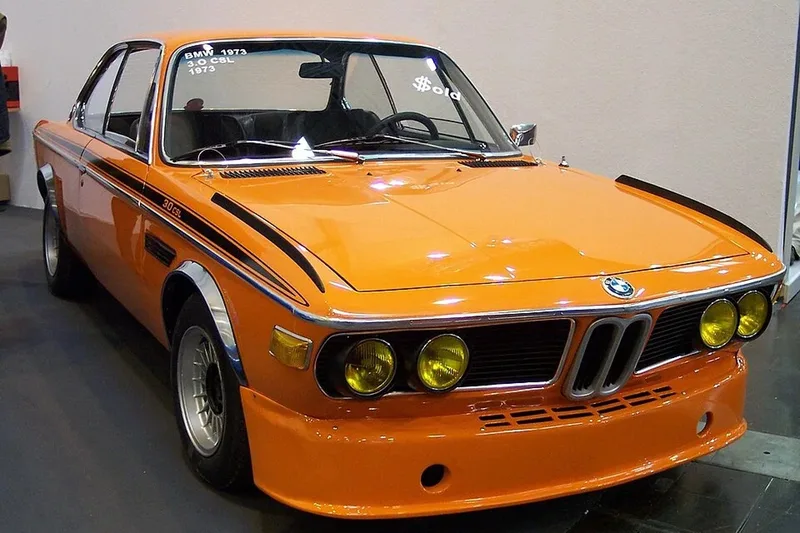
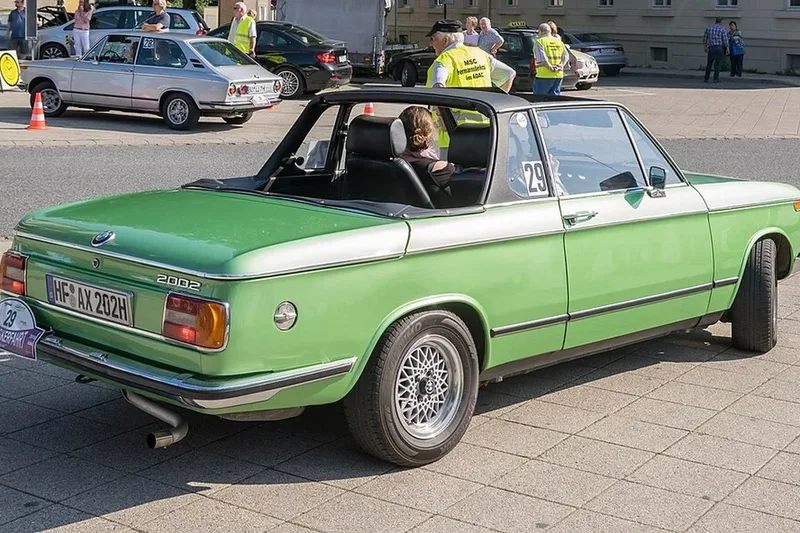
Before 1972 BMW’s models were named mainly by engine size, such as the 1500, 1800 and 2002. As the range grew, that system became confusing.
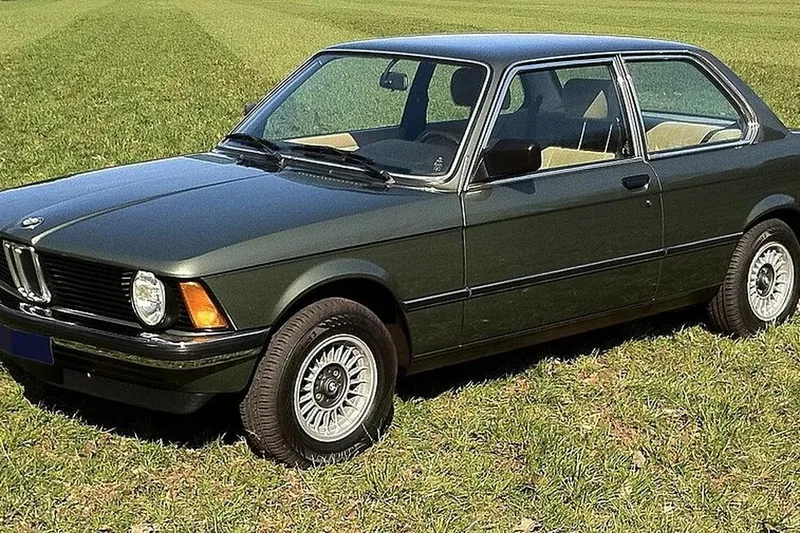
The E12, launched in 1972, replaced the New Class saloons and was the first car to be called the 5 Series. It introduced the naming system BMW still uses: a series number for the model line, followed by digits that originally indicated engine size, such as the 520.
The 3 Series followed in 1975, the 6 Series coupé in 1976 and the 7 Series in 1977. For the first time, BMW had a full range from compact saloon to flagship.
The E12 was designed under Paul Bracq, with Marcello Gandini of Bertone contributing to the exterior. It was built at Dingolfing in Germany and also in South Africa.
BMW built 699,094 E12s in Germany between 1972 and 1981, according to BMWBlog, with another 23,100 assembled in South Africa for the local market.
A consistent naming system helps buyers understand a range and helps a company move customers up from one series to the next as their incomes rise.
It also supports pricing. A higher number signals a larger, more expensive car, which allows a premium price.
Mercedes-Benz, Audi and many other manufacturers adopted similar alphanumeric naming systems.
The 5 Series became one of BMW’s core model lines and has continued through many generations.
The exhibit compares the New Class saloons with the first 5 Series. The E12 sold about twice as many cars, helped by a larger, more modern design and a clear place in a growing range.
Naming may seem like a marketing detail, but it shapes how buyers understand a company’s products. A simple number told customers the car’s size and status at a glance.
The system also gave BMW room to grow. When it added the 3 Series, 6 Series and 7 Series, the new names fitted naturally into a hierarchy buyers already understood.
Investment in the E12 included development and production at Dingolfing, a plant BMW acquired when it took over Glas in 1966. Spreading the range across plants increased capacity.
Production in South Africa showed that BMW was beginning to think internationally. Rosslyn became BMW’s first plant outside Germany in 1973.
A clear range structure supports a strong brand, which in turn can become an economic moat. Buyers who trust a name are more willing to pay for it and to move up to the next model.
Today, many companies across the world, from carmakers to technology firms, use numbered product families for the same reasons.
There are also risks in a naming system. Once buyers associate a number with a particular size or price, it becomes hard to change. Over the decades BMW has had to adjust the meaning of its numbers as engines shrank and new body styles appeared.
That flexibility problem shows that a naming system is a long-term commitment. It should be designed with future products in mind, not just the current range.
Still, the clarity it brought in the 1970s helped BMW present itself as a company with a complete, coherent range rather than a collection of separate cars.
Students can compare BMW’s approach with brands that use names instead of numbers and consider which makes it easier for customers to understand a product line.
The 5 Series also shows the importance of the middle of a range. Mid-size executive saloons sell in large numbers to both private buyers and company fleets, especially in Europe, where many cars are provided by employers.
That made the E12 a significant source of volume and profit for BMW, supporting investment in other models.
Key concept: opportunity cost. Opportunity cost is the value of the best alternative given up when making a choice. Money and time spent on one project cannot be spent on another.
Good decisions compare options against each other, not just against doing nothing.
Key concept: unit economics. Unit economics looks at the revenue and costs linked to a single unit, such as one car or one customer. If each unit earns more than it costs to make and sell, growth adds profit; if not, growth adds losses.
Fixed costs such as development and tooling are spread across all units, so the cost per unit falls as volume rises. That is why low-volume products need high prices, and why volume matters so much in the car industry.
Key moments
New Class saloons establish a market
E12 introduces the 5 Series designation
Engine derivatives sit inside a model family
Sources: Carscoops (New Class total); BMWBlog citing BMW (E12).
The trade-offs at the heart of the case
The alternative on the table
For comparison, consider the option to retain individual model names for every engine. The related case “The financial case for a common dashboard interface” supplies a useful reference point. The 2001 7 Series introduced iDrive. A badge system and a dashboard controller both make a larger set of choices intelligible. A name can survive technical changes over decades. The investment earns more when buyers remember the hierarchy even after engines and equipment have changed.
For your seminar, paper or interview
- Q1
Which finding in the records on buyers correctly locating the model in the range would persuade you to retain individual model names for every engine?
- Q2
Compare this decision with “The financial case for a common dashboard interface”. Which difference between the cases would change your recommendation?
- Naming strategy
- Product architecture
- Range planning
- Brand hierarchy
How we would approach it
Simplifying Finance’s opinion, offered as a starting point for debate, not as fact or investment advice.
We think introducing the 5 Series name in 1972 was a valuable strategic step. A clear numbering system told buyers where each model sat in the range and let BMW add new series without confusion. The E12 nearly doubled the sales of the New Class saloons it replaced.
Create a system
Use names that show size and price.
Stay consistent
Apply the same logic to future models.
Support with product
Ensure each name reflects real differences.
What this plan gives up
A naming system adds clarity but limits flexibility later.
The strongest counter-argument
Some argue names matter less than product quality.
Metrics to watch
- Brand recognition
- Sales by series
Propose your solution
Pick a discussion question and set out what you would do, why, and what it would cost. Strong, well-argued answers are reviewed and published below with your first name and programme.
Published solutions
Loading published solutions…
- BMW Group PressClub • THE HISTORY OF THE BMW 5 SERIES ↗
- BMW Group PressClub • 030624 History of BMW 5 Series ↗
- BMWBlog • BMW 5 Series history: first generation E12 ↗
- BMWBlog • BMW car history at a glance ↗
- Wikipedia • BMW 5 Series (E12) ↗
- Photo: BMW 525 (3538948081) by nakhon100, CC BY 2.0 (cropped and resized) ↗
Figures are as reported by the companies or cited outlets as of 22 November 2026. Check the source before quoting. Corrections: let us know through the solution form.