What happened
The Philippines needs much more electricity as its economy grows, and it has committed to raising the share of renewable energy in its power mix. Solar power has become one of the cheapest sources of new electricity, but building solar farms requires large upfront investment in land, panels, inverters and grid connections.
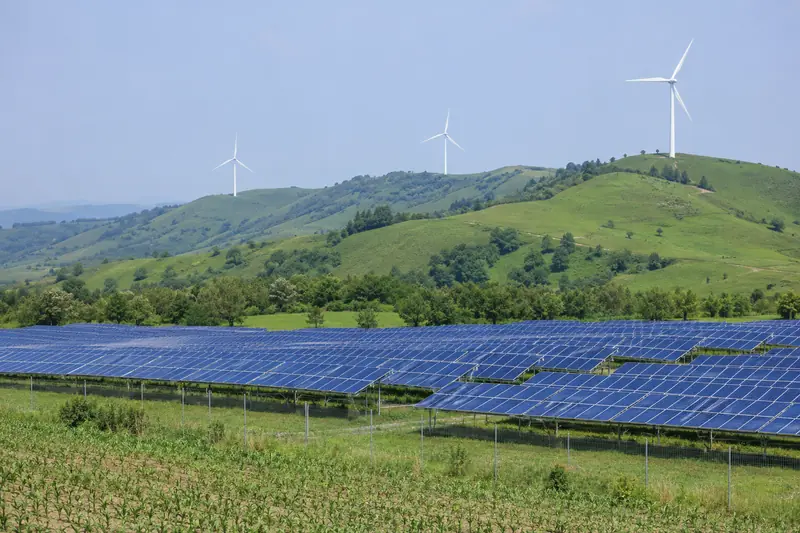
Citicore Renewable Energy Corporation, or CREC, is part of the group of Edgar Saavedra, the engineer behind Megawide Construction. Citicore built and operates solar farms across the country and also sells electricity directly to businesses. In 2022 it listed a real estate investment trust, Citicore Energy REIT, which owns land leased to solar projects; that REIT rose 11% on its debut.
To fund rapid expansion, CREC planned its own initial public offering. Its target was ambitious: to add about 1 gigawatt of ready-to-build or under-construction solar capacity every year for five years, reaching 5 gigawatts by 2028.
The IPO came in a difficult market. Philippine stocks were weak, foreign investors were cautious and only one other company, OceanaGold Philippines, had listed in 2024. CREC set a maximum price of ₱3.88 per share but priced the offer at ₱2.70, a 30% discount, to attract investors. Analysts said the discount left more upside for buyers.
The offer raised about ₱5.3 billion from about 1.79 billion new shares, plus an over-allotment option of up to 179 million existing shares. The UK government’s MOBILIST programme, which supports listed investments in sustainable infrastructure in emerging markets, invested about ₱731 million, its first IPO investment in the country.
CREC listed on 7 June 2024. Its shares opened at ₱2.75, slightly above the IPO price, but closed flat at ₱2.70. The listing gave it a market value of about ₱24.1 billion. Around the same time, CREC sold ₱5 billion of shares in its REIT to SM Investments and signed financing deals with banks, giving it additional capital.
The company said it would use the IPO proceeds to develop new solar projects in its pipeline.
CREC’s model illustrates capital recycling in renewables. A developer builds projects, transfers land or mature assets to a REIT, sells REIT shares to investors and reinvests the cash in new projects. This lets the developer grow faster than it could by holding all assets itself.
Risks remain. Solar developers face construction delays, land acquisition challenges, grid connection bottlenecks and changes in electricity prices. Rapid growth requires large amounts of debt as well as equity. Investors must judge whether projects will earn returns above the cost of capital.
The decision to cut the IPO price reflects a common trade-off. Pricing lower raises less money and dilutes existing owners more, but improves the chance of a successful listing and a stable share price, which helps future fundraising.
For the Philippine market, CREC’s listing added a pure-play renewable energy company, giving investors exposure to the energy transition.
For students, CREC is a case in renewable energy finance, IPO pricing, capital recycling through REITs and the role of development finance in emerging markets.
The size of the discount tells a story about the market at the time. Few companies were listing in 2024, and foreign funds were selling Philippine shares. In such conditions, issuers must decide whether to wait for better markets or accept a lower price now. Citicore chose to proceed, judging that securing capital for its pipeline was more important than achieving the highest valuation.
The involvement of a development finance programme matters. Such investors can act as anchors, giving other buyers confidence that the company has passed careful due diligence on governance and environmental standards. Their participation also reflects a policy goal: using public money to attract private capital into clean energy in emerging markets.
Solar projects have a distinctive financial profile. Most of the cost is spent before the plant produces any power, while operating costs afterwards are low. Revenue depends on long-term contracts or market electricity prices. This makes the cost of capital crucial: a small change in interest rates can change whether a project earns a good return. Developers that can recycle capital through a REIT, sell stakes and borrow on good terms have an advantage.
There are also physical constraints. Large solar farms need suitable land, permits and connections to the transmission grid. In many countries, including the Philippines, grid expansion has lagged behind the pace of new projects. Students should consider whether Citicore’s targets depend as much on the national grid operator as on the company itself.
Finally, the flat first-day close shows that discounting does not guarantee a jump in price. It may instead set a stable starting point, which can matter more for a company that will return to markets repeatedly.
Key moments
Citicore begins building solar projects.
Citicore Energy REIT lists and rises 11%.
IPO priced at ₱2.70, 30% below maximum.
UK MOBILIST invests ₱731m.
CREC lists and closes flat.
Target to add about 1 GW of solar per year.
Sources: Inquirer; BusinessWorld.
The trade-offs at the heart of the case
Growth vs. capital
Gigawatt targets need billions.
Price vs. success
Discounted IPO to ensure demand.
Developer vs. REIT
Recycling assets between group firms.
For your seminar, paper or interview
- Q1
Why did CREC cut its IPO price by 30%?
- Q2
How does capital recycling through a REIT work?
- Q3
What risks do solar developers face?
- Q4
What role did the UK MOBILIST programme play?
- Q5
Is a 1 GW-per-year target realistic?
- Renewable energy finance
- IPO pricing
- Capital recycling
- Development finance
How we would approach it
Simplifying Finance’s opinion, offered as a starting point for debate, not as fact or investment advice.
CREC chose a sensible discount to list in a weak market and assembled multiple funding sources for an ambitious solar plan. Execution and grid access will determine whether the growth story delivers returns.
Deliver projects
Hit construction timelines.
Secure offtake
Sign long-term power contracts.
Manage leverage
Balance debt with equity.
Work on grid access
Coordinate with transmission plans.
What this plan gives up
Rapid expansion increases risk of delays and cost overruns.
The strongest counter-argument
Some investors worry about related-party transactions between the developer, its REIT and group companies.
Metrics to watch
- Megawatts completed
- Power prices
- Grid connections
- Debt levels
- REIT dividends
Propose your solution
Pick a discussion question and set out what you would do, why, and what it would cost. Strong, well-argued answers are reviewed and published below with your first name and programme.
Published solutions
Loading published solutions…
- Inquirer: Citicore IPO at P2.70, offering 30% discount ↗
- Manila Bulletin: UK’s MOBILIST invests in CREC IPO ↗
- Rappler: Edgar Saavedra’s Citicore Renewable Energy IPO ↗
- BusinessWorld: CREIT climbs 11% on market debut ↗
Figures are as reported by the companies or cited outlets as of 22 November 2026. Check the source before quoting. Corrections: let us know through the solution form.